



Senior military officers from the UK and other nations will meet this week to discuss how to secure the Strait of Hormuz as Iran’s selective blockade of the waterway threatens to tank economies around the world.
The Ministry of Defence declined to disclose which countries will attend the meeting on Tuesday in London. Any plans to safeguard shipping through the strait will, however, be implemented only once hostilities between the US, Iran and Israel have ended – an outcome over which other countries have no control.
“There is not, and never has been, any military way of forcing Iran to open the Strait of Hormuz if it does not choose to,” said a senior military source. “The bar is getting commercial ships through – with zero risk of being attacked in any way.”
Donald Trump reminded Iran on Saturday of his threat to bomb the country’s energy infrastructure unless it opened the strait by Monday.
‘There has never been any military way of forcing Iran to open the strait. The bar is getting ships through’
‘There has never been any military way of forcing Iran to open the strait. The bar is getting ships through’
Senior military source
“Time is running out,” he wrote on Truth Social. “48 hours before all Hell will reign [sic] down on them. Glory be to GOD! President DONALD J. TRUMP.”
In comments carried by Iranian state media, an Iranian spokesperson said: “Do not forget that if aggression expands, the entire region will turn into a hell for you.”
“The illusion of defeating the Islamic Republic of Iran has turned into a swamp in which you will sink.”
Trump’s comments were his latest seesaw in messaging over the strait. In his first address to the nation last week, the US president suggested the war could end without the strait reopening, and urged countries that import oil from the Gulf to take action themselves.
This has left the UK and other allies grappling with how to act without becoming more involved in the war. Iran’s chokehold on the waterway has resulted in the biggest oil supply disruption in history, with consequences for everything from manufacturing to aviation and agriculture.
A UN vote on a resolution calling for “defensive measures” and a monitoring mission to safeguard shipping was delayed for a second time on Saturday. The resolution, which has faced resistance from China, Russia and others, had already been toned down.
Newsletters
Choose the newsletters you want to receive
View more
For information about how The Observer protects your data, read our Privacy Policy
The UK last week hosted a virtual summit with representatives from more than 40 countries including Gulf nations, Japan, Germany, Australia and France – but not the US. They agreed to increase pressure on Iran, including through the UN, while rejecting the imposition of any tolls. If the strait remains closed, they would explore economic and political measures such as sanctions.
Iran has reportedly mined much of the strait, leaving a narrow channel through which it is allowing some ships to pass. To remove the mines, the UK and other nations would have to deploy minesweepers. Vessels acting as “motherships” send out underwater drones to scan the seabed for mines, then send torpedoes to destroy them.
“They are a lot easier to lay than they are to clear up,” said Emma Salisbury, a senior fellow at the Foreign Policy Research Institute. “It’s really slow and painstaking work… You pretty much have to sweep the whole strait to make it definitely safe for traffic.”
Doing that under fire from Iran would be hugely risky. Even after hostilities end, some factions in Iran could refuse to comply with any ceasefire order.
Iran is entrenching its control over the strait, with a parliamentary committee last week approving a plan that would require vessels to pay transit fees. The bill would also block passage for ships linked to the US, Israel or any country that joined unilateral sanctions.
Iranian officials have likened the proposed toll system to that operating at the Suez Canal, which brings in billions of dollars a year for Egypt.
A toll would generate a windfall for the regime. It also puts shipping firms in a bind: unless they pay, Iran could attack their vessels. But paying up risks violating sanctions and being frozen out of the financial system.
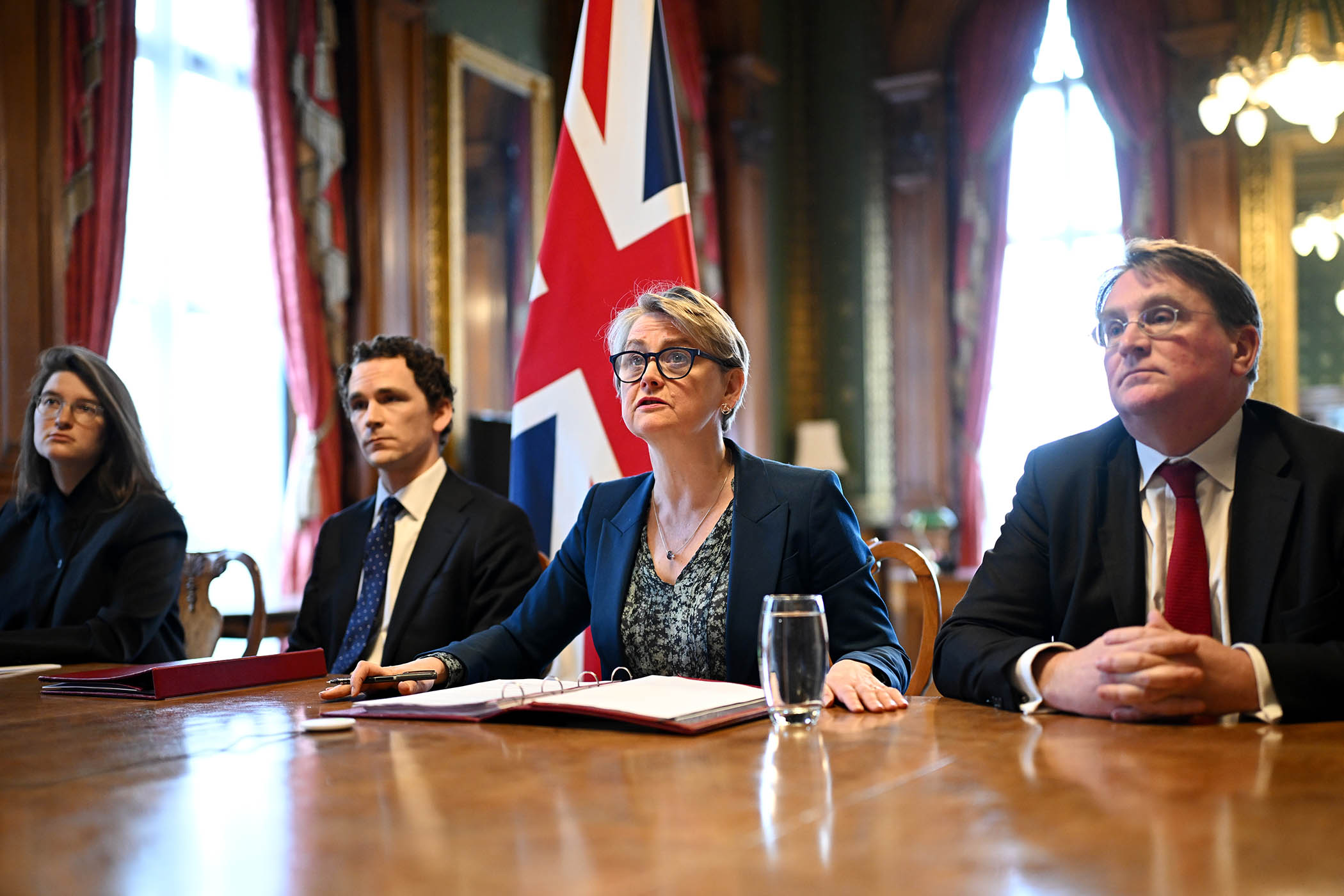
The foreign secretary, Yvette Cooper, said Britain will “comprehensively reject” any attempt by Iran to charge ships to sail through the strait. But countries including China and Pakistan have already struck deals for safe transit, effectively accepting the new status quo. A day after Emmanuel Macron called Trump “unserious”, Iran allowed a French ship though the strait – the first western European vessel to pass since the conflict began. It is not clear whether it paid a fee.
Paying for passage also undermines a key principle of international law. Unlike the Suez canal, which runs through sovereign territory, the Strait of Hormuz is a natural passage between Iran and an exclave of Oman. International law permits free transit through such waterways.
For Iran’s Gulf neighbours, which export all their energy and other goods through the strait,Iranian control is unacceptable. The Wall Street Journal reported that the UAE is so concerned it is urging a coalition effort to forcibly reopen the waterway.
As the war enters its second month, the endgame remains uncertain, but one thing is clear. Iran invested in its nuclear programme to deter enemies, but its most potent weapon has proved to be an accident of geography.
Photograph by Leon Neal/Getty Images