
In what now look like prophetic words, Venezuela’s opposition leader María Corina Machado predicted three weeks ago that President Nicolás Maduro would leave power “whether it is negotiated or not negotiated”.
Speaking from Oslo, where she collected the Nobel peace prize, Machado said she was “focused on an orderly and peaceful transition”. She appears to have been right about the first point, but wrong about the second.
Anyone hoping that the extraction of Maduro might trigger the collapse of the “revolutionary socialist” regime that has plagued Venezuela since 1999 may be sorely disappointed. Most Venezuelans were asleep when American bombs fell on key military installations in and around Caracas.
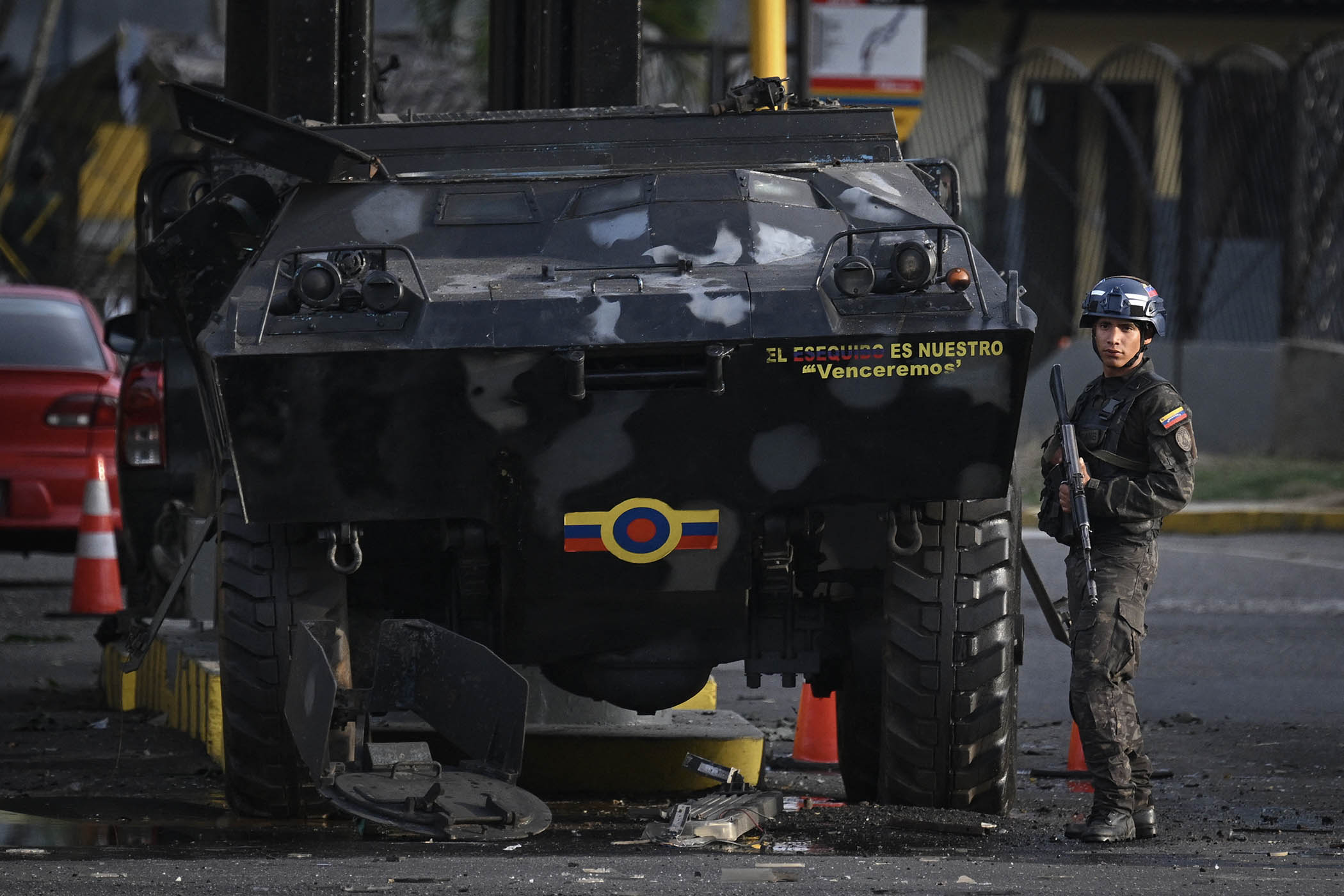
There were no reports of a military uprising. Friends I spoke to in Caracas said people were hunkering down, leaving home only to buy essentials. The US bombed the Fuerte Tiuna military base and La Carlota airstrip, but left the Miraflores presidential palace untouched.
Machado is far from alone in wanting an end to Chavismo, the self-styled revolutionary socialist project launched by former President Hugo Chávez more than a quarter century ago. It has dismantled what was once one of Latin America’s most successful democracies, driven the majority of the population into poverty, and forced some eight million Venezuelans to flee the country.
Machado enjoys widespread popular support and would likely have won the 2023 election had she been allowed to run. But the US attack looks unlikely to dislodge a regime that has embedded itself deeply in Venezuela’s political and security institutions.
Within hours, Interior minister Diosdado Cabello appeared on state television in a flak jacket to denounce a “cowardly terrorist attack”. Vice president Delcy Rodríguez — who would constitutionally replace Maduro if he is incapacitated — appeared live from Moscow, demanding that Donald Trump provide proof of life of the leader and his wife.
Argentina’s president, Javier Milei, cut a lonely figure in the region by voicing support for Trump’s action. Most Latin American leaders predictably condemned the attack, invoking a long tradition of popular distrust of US intervention in Washington’s southern “backyard”.
Trump said Maduro was captured in his compound before he could close the door on his safe room
Trump said Maduro was captured in his compound before he could close the door on his safe room
At the time of writing, details of how Maduro and his wife were removed remain unclear. Trump said Maduro was captured in his compound before he could close the door on his safe room.
The details will matter, and will inevitably be contested amid a fog of disinformation. But despite the strike and the continuing blockade of Venezuela, the regime appears intact — and some Venezuelans fear it may now become even more repressive.
Newsletters
Choose the newsletters you want to receive
View more
For information about how The Observer protects your data, read our Privacy Policy
In her statement, Rodríguez reminded Venezuelans that Maduro had predicted a US attack “driven by the desperation and energy hunger of the United States”. She said he had ordered a “perfect fusion of military, popular and police” resistance to any invasion.
Trump said the United States government would “run” Venezuela for an indeterminate period, a proposition that was greeted with incredulity by Venezuelan analysts. Trump appeared to lend weight to claims that the real prize was Venezuela’s oil, declaring that US companies would be “very much involved” in the sector after Maduro’s removal. Even this modest objective looks doubtful.
Venezuela is often cited as holding the world’s largest oil reserves, but the figure is misleading
Venezuela is often cited as holding the world’s largest oil reserves, but the figure is misleading
Venezuela is often cited as holding the world’s largest oil reserves, but the figure is misleading: much of it is low-value tar oil that is expensive and difficult to extract. Foreign control of oil resources was a political lightning rod for Chávez’s revolution, after which most international oil companies left under negotiated settlements. Production has since collapsed by 70%.
Chevron is now the only American firm still operating in Venezuela. ExxonMobil refused to negotiate its exit, instead pursuing arbitration — which it eventually won — against the Chavista state.
Under Venezuela’s constitution, oil belongs to the state, meaning any US involvement would have to be on commercial terms with a sovereign government. Even regime change would not alter that reality.
History suggests there is no bottom to the despair inflicted by Chavismo and a transition to a democratic Machado government remains a distant dream. The latest US intervention is unlikely to open any new or positive horizon for Venezuela’s long-suffering people.
Tom Ashby is a former foreign correspondent. He covered the rise to power of Hugo Chavez for Reuters news agency in Caracas from 1997 to 2001
Photograph by Federico Parra / AFP via Getty