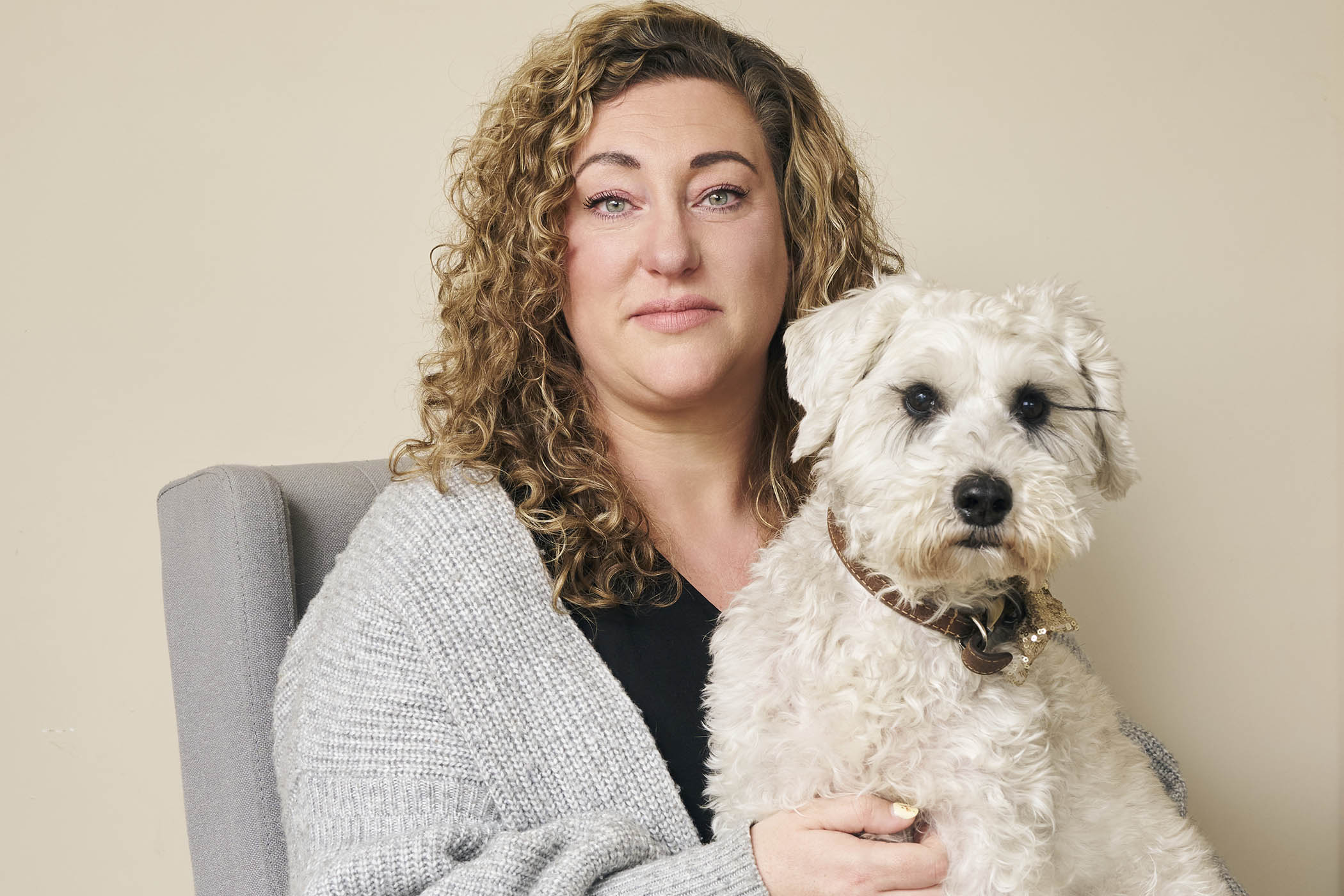

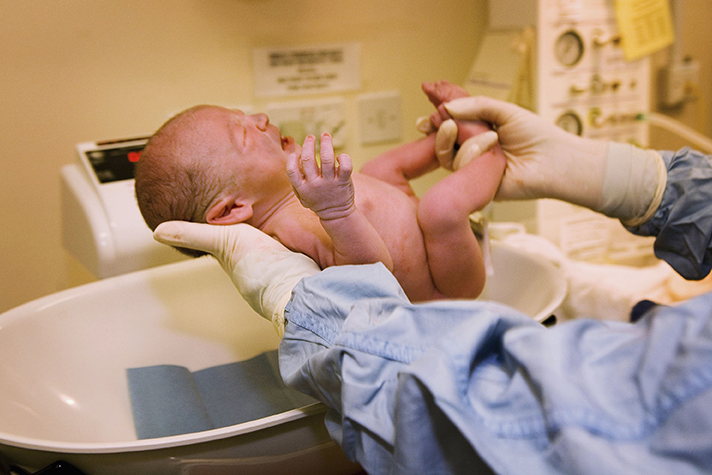
Jess was discovered beside a lane in Suffolk as a newborn baby in October 1987. Ever since she learned about being a foundling, she has wanted to find out why she was abandoned. This is the latest instalment in our series, Foundling. In part one, Jess discovered she has a half-sister who was also abandoned at birth, and suspicion was raised about Jennifer, the young nanny who found Jess on the roadside.
Abandoned children raise fundamental questions about what a mother owes her child; questions impossible to answer without barrelling into the freighted ideas of women and their place in the world as unconditionally loving, self-sacrificing caregivers. But Jess’s mother sits at the extreme – a woman who abandoned two children and has, ever since, refused to fill in the story of why.
The same month Jess discovered her half-sister, Helen, she received another piece of news.
A man responded to a post on a family reunion site from years earlier to say that his sister, Jennifer, had been a nanny in Suffolk in 1987, and that she’d found a baby there. He had a hunch, he told Jess, that she hadn’t just discovered that baby girl – she had given birth to her.
Then Jess spotted another detail, hidden in her DNA results. A surname she recognised – Jennifer’s surname.
By itself it wasn’t a guarantee that the pair were mother and daughter – she could be a relation of the person who’d given birth to Jess – but it was highly likely. Taken with all the other hints and evidence she had amassed, Jess felt the realisation land with absolute certainty. The nanny who claimed to have found her on the roadside in Suffolk was her birth mother.
Sylvia Murphy Tighe, a midwife and public health researcher at the University of Limerick in Ireland, is one of the few people to have studied concealed pregnancies and the reasons why women abandon their babies. In 2013 she put an advertisement in a local newspaper calling for women who’d hidden their pregnancies to get in touch.
Thirty women came forward from all over the country, and Murphy discovered that they were united by one commonality in their pregnancies: fear. Fear of telling their families, fear of losing their jobs or fear of their abusive partners. In a country where the Catholic church had such power, these women coped by telling no one and keeping the pregnancy hidden. Murphy’s research showed that the women who had given birth alone were all scarred by the experience. It “left a ripple that lasted a lifetime”, she said.
After Jess and I began this investigation of her past, I started to research the political and social attitudes towards single mothers in the UK in the late 1980s. The Catholic church did not have such power in this country, but politically single mothers were still vilified. Margaret Thatcher’s government had launched a sustained campaign against single mothers, who were portrayed as a burden on the welfare state and a threat to traditional family values.
Newsletters
Choose the newsletters you want to receive
View more
For information about how The Observer protects your data, read our Privacy Policy
In 1986 Conservative MP Rhodes Boyson referred to single mothers as “evil”. Even in 1992 Peter Lilley, the social security secretary, made an infamous speech at the Conservative party conference referring to “young ladies who get pregnant just to jump the housing list”.
To become pregnant accidentally, to raise a child alone, was fraught with shame and fear. Fiona Gibson was an editor of Just Seventeen, the bestselling teen magazine, at the time. “Becoming pregnant by accident as a teenager in those days, you can hardly imagine anything more terrifying and awful,” she said. “None of my friends had frank conversations with their mothers about sex. I wouldn’t have gone to my doctor about anything remotely embarrassing because my mum saw the same doctor.”
Although abortion was legal, it wasn’t easy to access and often meant travelling far from home. Two doctors had to certify that the procedure was justified, and the majority required a general anaesthetic.
A few weeks after Jess was told about her half-sister, Helen, the producers of ITV’s Long Lost Family arranged a date for them to meet for the first time, on camera. As the moment approached, both women were nervous. Filmed by half a dozen cameras as she prepared for the meeting, Jess felt optimistic: “We’re going to connect on a big level,” she predicted. Helen, a mother of two in her mid-30s who had been left at a hospital as a baby, also felt the weight of the occasion. “This is going to be for the rest of our lives. It’s exciting,” she said.
In November 2020, at a country hotel halfway between where they lived, they finally embraced, tearfully, lost for words. They sat and talked, stories about their two lives tumbling out. Helen knew nothing about the woman Jess believed to be their birth mother, and Jess was eager to share everything she’d discovered.
The half-sisters talked into the small hours, long after the TV cameras had been switched off, and made plans to meet each other’s children. The next morning they hugged goodbye and went back to their separate lives. “Never in a million years did I think that was the one and only time I’d ever see her,” Jess says, five years on from her only face-to-face encounter with Helen. Their relationship, which had started with a surge of hope and relief, crumbled over the following months.
At the heart of the rift was a fundamental question: what kind of relationship should they build with Jennifer? According to Jess, Helen wanted a relationship with Jennifer so badly that she was willing to forgive her for abandoning her as a baby. For Jess, that step was much harder to take.
Jennifer was the middle child of three, and both her parents were teachers. She was clever and did well at school, but people who knew the family said that her father had a controlling side in private, that he could be at times a psychological and physical bully. Jennifer was said to have been “petrified” of her father finding out about her pregnancy.
But 30 years later, as the ITV show was nearing broadcast, Jennifer decided to tell her family about her two abandoned daughters. Jess, buoyed by the discovery of her half-sister, wondered if their mother would soon make contact with her too.
But Jess heard nothing. Instead she got a call from Jennifer’s parents – her new grandparents. They visited one another. “My grandad [was] a fantastic cook,” Jess said. “They made us feel really welcome and it was lovely.” She got to know a new aunt and uncle – Jennifer’s brother and sister. They shared meals together, talked and communicated on the phone and via WhatsApp. But still nothing from Jennifer herself. Jess’s new family encouraged her to contact her mother, but it was not what she wanted. She felt torn between wanting answers and not wanting a relationship.
Then, one evening in April 2021, seven months after a DNA test confirmed that Jennifer was her birth mother, Jess’s phone rang as she was giving her two children a bath and preparing them for their 7pm bedtime. An unknown number flashed up. On the other end of the line was Jennifer, sobbing, hardly able to speak.
Feeling ambushed, Jess shut the conversation down. “I’m not interested in a relationship with you. I never have been,” she told Jennifer. They exchanged text messages. And then nothing. That’s the only direct communication there has been between them.
Jess felt sure that her mother wouldn’t provide her with the answers she was seeking. Why had she been abandoned? Why had Helen been left in a box, outside a hospital, whereas she had been led to believe she was left in a plastic bag on a remote country lane? Jess might have identified her birth mother after three decades of wondering, but when they were in contact, she veered between wanting answers and wanting distance. In that phone call, Jennifer might have been ready to speak, but Jess wasn’t.
So she turned her focus to her biological father. Returning to her DNA profile, she remembered that more than half of it was described as “Germanic heritage”. Jennifer’s sister, Rachel, had recalled a man Jennifer dated around 1987 who still lived with his family in the same town and had a “Germanic” surname.
A few days later, Jess received a text message sent from Jennifer’s phone. But it wasn’t from her birth mother – it was, allegedly, written by her therapist. “Leave it alone…” the message read. “Please back off and let sleeping dogs lie … Jennifer genuinely does not know who the father is … Please have some consideration for the impact another search could have on another family.”
But Jess would not heed the pleas to stop. She had found her mother but felt no closer to the truth. She went in search of her father.
Next week: Jess’s new family grows and she discovers a terrible secret
Additional reporting by Katie Gunning
Photograph by Suki Dhanda/The Observer