Photograph by Tom Pilston
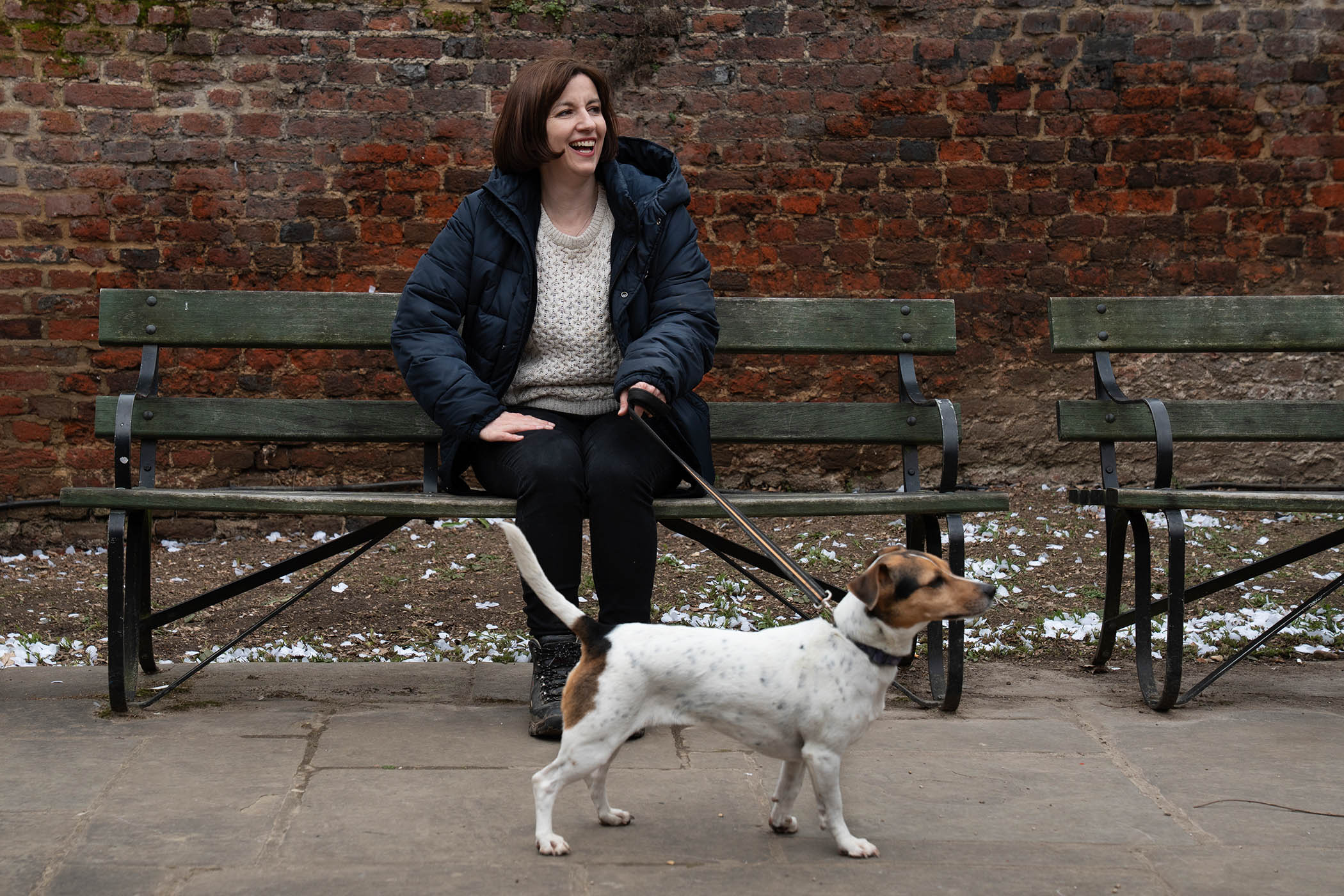
Bridget Phillipson arrives for our walk accompanied by the family’s jack russell, Maisie, whose tail is wagging with excitement. “It was the children who ran a campaign to get a dog during the pandemic,” the education secretary says. “One of the conditions was: if we got a dog, then they had to come out and go for walks with the dog.” Her daughter and son are now 14 and 10 but she says: “They’ve pretty much stuck with it.”
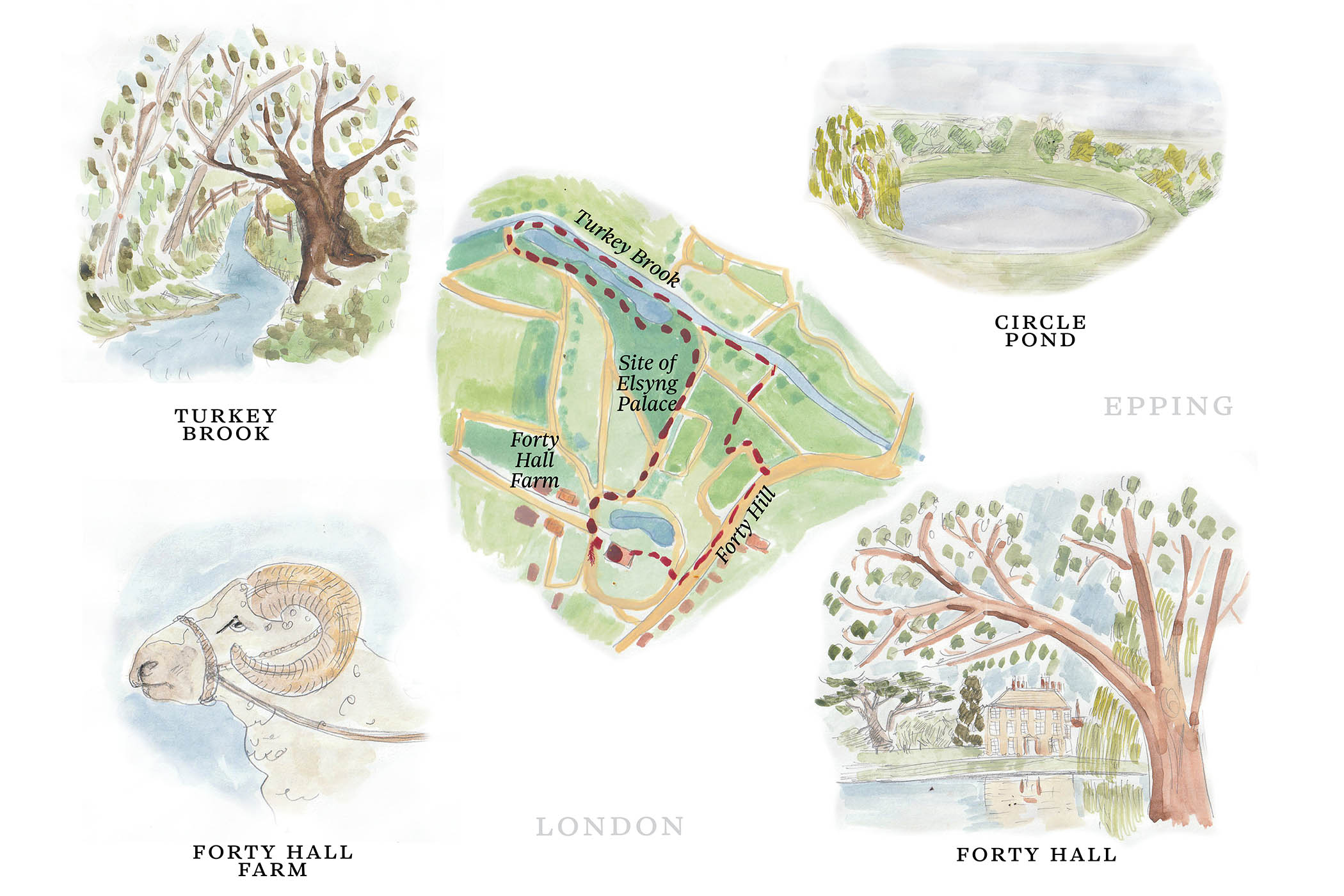
We meet at Forty Hall, a Grade I-listed Jacobean manor house, surrounded by grounds, in Enfield on the outskirts of north London. “When Maisie was a puppy, we brought her here with the kids and it was a nice place to come and walk and think.” It is lambing weekend on the estate’s farm, and ducks are sitting on the grass beside a sign asking people not to feed them bread.
The 110-hectare (273-acre) 18th-century estate, with its ornamental lake, medieval fishing ponds, walled garden and meadows, could not be more different from the council estate in Washington, the former mining town in Tyne and Wear where Phillipson lived as a child. Her house was on a terrace street, sandwiched between a disused railway line and an industrial wasteland, but, as we head towards the lake, she says she has always loved exploring nature.
“The thing that I like here is the open space. Where I grew up was an area that had its challenges, but we were surrounded by countryside and the river and lots of parks. A big part of my childhood was spending time outdoors. We had dogs. My grandma had grown up in rural Ireland on a farm, so we always used to go for long walks. My mam would bring the kids who lived a couple of doors down as well.”
We cross over a track into the park and head down an avenue of trees. Phillipson lets Maisie off the lead and she bounds across the grass. As a girl, the education secretary sensed she was living “on the margins” of society. She was so painfully shy that she refused to open her mouth in front of strangers – people would ask her mother whether she had a speech impediment.
“We didn’t have much at all. My mam brought me up as a single parent, and wasn’t able to work until I started at primary school. There was no childcare, really, in those days. We had a fire in the living room, and that heated the downstairs, but there was no heating upstairs, and it was all rotten, single-glazed windows. So we used to go to bed with a number of layers of clothes and quite a lot of blankets.”
Many of the homes on her road were boarded up. The only advantage was that there were no cars, because nobody could afford one, so the children could safely play in the street. Now she worries that kids are too often locked up inside. “We’ve ended up in a funny kind of paradox, where we can keep in touch with children more. We can know where they are and what they’re doing, but at the same time, parents are more reluctant to let children go out on their own, develop, grow as individuals, have that sense of independence,” she says.
‘I don’t think we’ve thought seriously enough abouthow we should be supporting families’
‘I don’t think we’ve thought seriously enough abouthow we should be supporting families’
“We talk a lot about the amount of time children spend at home on screens but, as parents, we’ve got to feel comfortable in letting our children spread their wings – walk to school by themselves, pop down the road to see a friend, get on the bus. All of those things allow children to develop their sense of identity and have things to do that don’t involve just being sat in their bedrooms looking at devices.”
The mental health impact of social media is well documented, but Phillipson warns that the danger of radicalisation is just as worrying. “Where what in society would feel like quite a niche view is massively amplified online, where you can find communities of people who are like-minded. That can be a good thing - they are able to get to know people of similar interests and keep in touch with friends outside of school – but there are risks, particularly for those who are susceptible to exploitation.”
Newsletters
Choose the newsletters you want to receive
View more
For information about how The Observer protects your data, read our Privacy Policy
The government is consulting on a social media ban for under-16s. Talking to The Observer last week, Keir Starmer, who was previously against a ban, has said he is now “open-minded” to the idea. Yet the education secretary insists that ministers are not the only ones who have to face up to the challenge.
“While the government has a role to play in making sure children are kept safe, and that tech companies are taking action to remove material that shouldn’t be online, parents have responsibilities too.”
We turn down a muddy track into a bluebell wood. Maisie dashes off between the trees. Last week, the Department for Education published guidance for parents, saying children under five should not have more than an hour of screentime a day. Phillipson insists it is not nanny statism to give advice. “Parents tell us they want this; they feel that they've been on their own in a very fast, changing world, and they want more from the government to provide them with clarity and evidence.”
Over the last few years, she says: “We’ve seen a steady erosion of some of the norms around parenting.” A quarter of children are now arriving at school in England still in nappies and a third are unable to eat and drink independently.
“I think this shift accelerated during the pandemic, where if you hadn’t been able to see a health visitor and you weren’t spending time around other families, then you wouldn’t necessarily think: ‘Oh, all of the other children my child’s age, are now able to use the toilet independently – maybe I should be thinking about that too.’
“It started to shift expectations about what children are capable of at different ages. There has been quite a profound change. We see more and more children arriving at school not able to do the things you would normally expect of a four-year-old. That challenge is often more pronounced in communities where there is disadvantage.”
The government has a target that 75% of children should be “school ready” by 2028, but at the moment, almost half of white working-class children are arriving in reception without basic skills. “The pressures families have been under, and so many of the challenges that they’ve experienced, especially around poverty, have just made life really hard, and a real grind,” Phillipson says. But she does not think deprivation is the whole answer.
Her family was different. She might have been on free school meals but she was always neatly dressed for class, with her hair in plaits. “While we didn’t have very much in material terms, we were a family that really prized and valued education; not just formal education but also the value of what you can learn beyond the school gate too – so reading at home.
“I’d go with my grandad on trips to museums. We’d go to the library. We’d go to the beach. Children learn from being in school, and that’s essential, but you also learn through being outdoors and new experiences – often experiences that don’t cost a lot of money.”
Her grandparents had moved to England from Ireland looking for a better life and, like many immigrants, they had a phenomenal sense of drive. “The first time my grandmother had ever been on a train or a boat was when she left Ireland and came to England to train as a nurse. That’s quite brave. To do that at 18, you are highly motivated: it’s a big leap into the unknown,” Phillipson says. “But you also have quite a lot to prove.” She never knew her father, even though he was a teacher nearby. He left when her mother was pregnant with her and never contributed a penny to his daughter’s upbringing. “The fact that my dad took the decision to walk away as an adult who should have, frankly, known better is not my responsibility. But family is important. Without my family, I wouldn’t be doing what I’m doing today.”
The mud is getting deeper underfoot but we persevere, the rain just about holding off. Phillipson became a star pupil at her comprehensive, getting into Oxford. Now she insists schools must do more to engage children from all backgrounds. “We need a focus on children achieving, but children also thriving, making sure that all young people are able to find things that they love, whether that’s through the outdoors, sport, music, drama.”
Critics have accused her of undermining standards by removing some academy freedoms and reforming the Ofsted grading system. “I’ve always believed that belonging and achievement go together,” she says. “Where young people feel motivated to be in school, they’re more likely to achieve good outcomes in academic terms.”
She worries that British children are some of the unhappiest in the world. “I’m not sure we really know why. Part of it is, I think, the lack of wider family support. I don’t think we’ve thought seriously enough about how we should be supporting families. I’ve always believed that as a party of the left, it’s not wrong to talk about families. We shouldn’t cede that ground to rightwing parties. That’s not the same as making judgments about people’s family shape or size. What children need is love and stability and support.”
Phillipson sees early years education as a “moral mission”, and the best way to level the playing field between rich and poor. The government is announcing on Sunday that 200 new Best Start family hubs will open this week – bringing together health services, education and parenting support – and the education secretary wants to open 1,000 by the end of the parliament. “It’s a revitalised Sure Start for a new generation of children,” she says, a reference to the key New Labour preschool programme.
Sure Start, however, was universal, whereas the current government’s 30 hours of free childcare in England is only available to working parents, even though those who need the support most may be unemployed. The system also creates perverse incentives, with a cliff edge that means wealthier families lose the whole benefit instantly if one partner starts earning more than £100,000.
The education secretary says she is looking again at the targeting and allocation of state-funded childcare. “It was a huge undertaking to make sure that we delivered on 30 hours for working families from nine months up. It’s £9bn that we’re spending this year on expanding that support. But it’s a system that lacks coherence. It should be simpler for parents.” Her priority is improving outcomes “for children from less well-off backgrounds” for whom “the impact of early years education has the biggest benefits”.
Phillipson, 42, says she now has a “middle-class lifestyle”. Her husband, Lawrence, works in financial services. “My kids have it a lot easier than I ever did, but you never forget where you’re from. I’m always out for a bargain. I’m always careful about money. That’s what happens when you’ve grown up not having much. This jumper is from Primark.”
The MP for Houghton and Sunderland South always looks immaculate at work, in smart suits and dresses, with a neat bob and makeup. “I do like to buy nice clothes, but I try to find them on Vinted.” She looks momentarily nonplussed when I ask what her favourite luxury is. “When I’m not working, during school holidays, I just like to spend more time with the kids in Sunderland,” she says. “I want people to have good lives, where they can enjoy things like a decent car, going on holiday, a day trip, a meal in a restaurant. We shouldn’t regard it as a luxury… I don’t think a lot of people that live quite nice lives fully understand how hard it can be for families that don’t.”
The Independent Schools Council (ISC) once called Phillipson, when she was shadow education secretary, “very chippy” after she vowed to push ahead with Labour’s plans to add VAT on private school fees. The ISC meant it as an insult but she is happy to embrace the label. “I am proud of where I’m from, and I don’t want young people to be held back because of their background,” she says. “There has always been a significant degree of snobbery that people from working-class backgrounds – those with accents – have experienced and I’m no different. But I think the extent of the fervour that a relatively limited measure of VAT on school fees has driven shows the outsized impact that private schools have on our national debate.
“The vast majority of kids go to the local state school. I make no apology for focusing on delivering improvements there and using the money raised through private schools to make that happen.”
Phillipson might now be in the cabinet but she still feels like an outsider at Westminster. “That’s a good thing,” she says. “I should be impatient for change. I’m not here to defend the status quo, I’m here to deliver better life chances for children, so you need a bit of disruption and challenge. Being an outsider brings a different perspective.”