

Portrait by Antonio Olmos for The Observer
As the Green party has surged in the polls, so too have accusations that it has sidelined environmental issues for a broader leftwing populism.
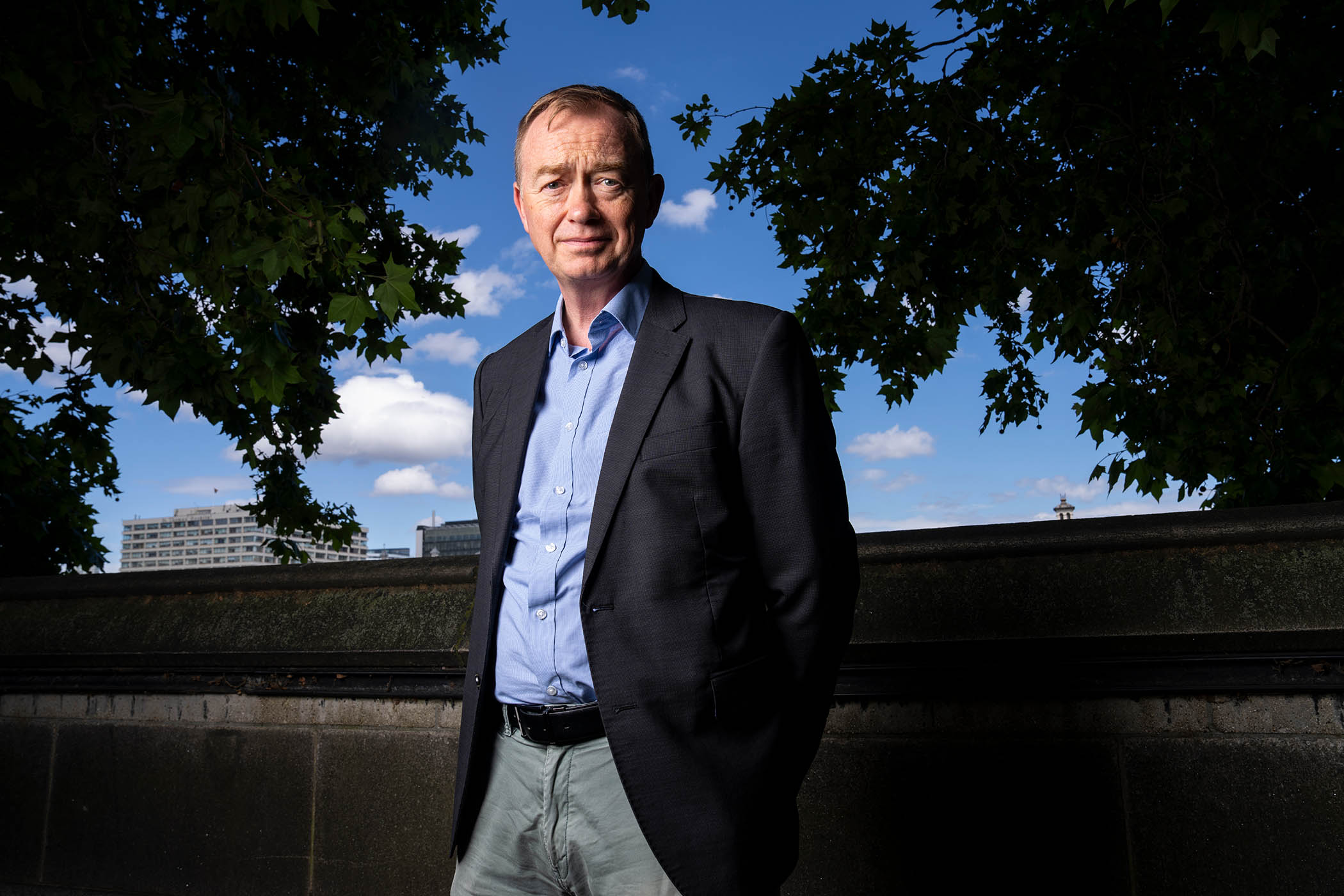
Those allegations have come loudest from the Liberal Democrats. “They’ve become completely taken over by the kind of people who were key to Momentum and [Jeremy] Corbyn,” Tim Farron, the Lib Dems’ spokesperson for the environment, told The Observer. “The environment’s never really bothered those people. Frankly, it’s not a green party any more.”
The Greens may have overtaken them in polls, but the Lib Dems are hoping to become the leading environmental party. Yet with so much concern over the cost of living, the NHS and immigration, do voters still care? According to the Office for National Statistics, the percentage for whom “climate change and environment” was an important issue dropped from 69% in 2023 to 51% in October 2025. Earlier this year, research showed support for net zero dwindling. The Lib Dems point to polling that shows their voters are more concerned about the environment than the general public.
Perhaps that’s why at the recent local elections in England they unseated five Green councillors in Richmond. At the general election they gained 60 seats from the Conservatives, many in rural constituencies where sewage discharge into rivers is a major concern. “We’re the only party with a really sensible solution,” said Farron, who supports mutualisation over renationalisation. The former party leader accuses regulators of being “weak” and allowing water companies to “run rings around” them.
Though not in power nationally, the Lib Dems’ 72 MPs have a significant capacity to effect change. The party’s climate and nature bill, aimed at tackling the climate and biodiversity crises, failed, but it had more success with the sunshine bill, which will force developers to fit new-builds with heat pumps and solar panels. Farron argues that the Lib Dems have pedigree at a local level, running eight of the top 10 councils for recycling.
Net zero is possibly the best-known environmental goal today. Leading Tories are backtracking on their own commitments; Reform want to scrap the legally binding 2050 target. Pippa Heylings, the Lib Dem spokesperson for net zero, has said that Ed Miliband, the energy and net zero secretary, is “doing very well”, highlighting the decision to join European countries in a rollout of North Sea windfarms – this week it was announced that nearly 60% of 1,200 clean energy schemes are now able to connect to the grid. But Farron accuses Labour of being “unambitious, inching in the right direction, but yielding too much to Reform’s narrative”. He gives Labour a “six out of 10”.
The Labour split is best exemplified by Tony Blair’s recent call for more drilling for oil and gas in the North Sea. “Our view is you can’t have a blanket ban on doing anything in the North Sea, but in the long term that’s not the answer,” said Farron. Renewable tidal energy would “eclipse anything you’d ever get out of the North Sea in terms of energy provided. Half a dozen tidal barrages would see us safe and sound for a century.”
The Lib Dems remain committed to reducing harmful carbon emissions to net zero five years earlier than 2050, but Farron agrees with the government’s decision to block a proposal that would have led the Chinese company Ming Yang to pump £1.5bn into a wind turbine factory in Scotland. “We should be wary about foreign investment from countries we do not think are reliable allies,” he said. On nuclear, he describes himself as a “realist”, adding: “It’s hard to say you really are committed to fighting climate change if you will not consider nuclear, but I think tidal, wave, wind, solar, marine, hydro – they’re the answers.”
Having represented a Cumbrian constituency since 2005, Farron thinks the fight against climate change and biodiversity loss depends on a “good relationship with farmers”, which few argue Labour enjoys. Since the Iran war started, the price of red diesel and fertiliser has skyrocketed, leading farmers to question whether to plant crops. Farron would increase funding for Environmental Land Management schemes by 25%, paid for by reversing tax cuts given to banks by Rishi Sunak’s government.
Newsletters
Choose the newsletters you want to receive
View more
For information about how The Observer protects your data, read our Privacy Policy
He backs regenerative farming, reducing the use of fertiliser to become less dependent on foreign conflicts and improve food security. Many farmers are keen to switch to environmentally friendly techniques, but Farron says they shouldn’t be forced. “Officials in [the Department for Environment, Food and Rural Affairs] telling them to do it – they’re not listening. If other farmers who’ve been trailblazers show you how to do it, they’re all ears.” Regenerative farming can improve water quality, soil health, biodiversity and, in the medium to long-term, yields. “We’ve got to help [farmers], rather than dictate,” he said.
Though keen to increase biodiversity, Farron is wary of the reintroduction of certain species. It is a contentious issue in the Lake District, where plans to release white-tailed eagles, which some argue prey on lambs, have met with resistance, particularly from farmers.
Farron argues we all have a role to play in combating climate change. He hasn’t eaten meat “since the Smiths were together”, but stresses he is “not an evangelical vegetarian” and believes Britain has the best animal welfare in the world. He and his family are travelling to Spain by ferry this summer.
“Taking personal responsibility is really important, but so is government doing big ambitious things like tidal power,” he said. “Not least we then all feel like it’s a great, national, almost patriotic endeavour. That’s what I’ve not seen from other parties, and from this government.”