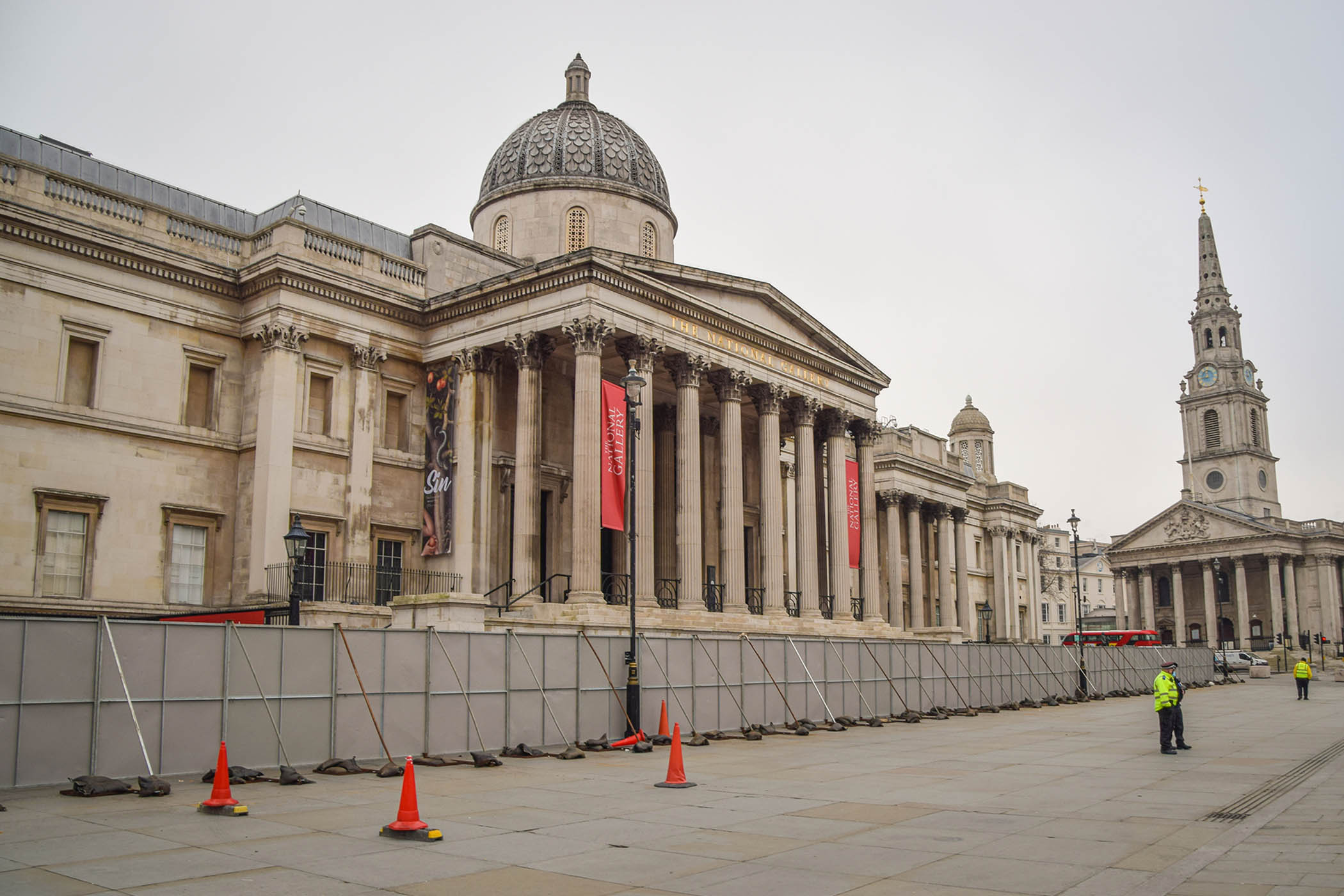

The revelation that National Gallery in London is facing a £8.2m operating deficit has made it the latest pawn in a mounting struggle to retain free entrance to all Britain’s state-subsidised museums and galleries.
Staff at the gallery are already being offered payoffs, and compulsory redundancies are expected to follow if further savings are needed to meet the shortfall.
The uncovering of the deficit, first reported by the Art Newspaper last week, comes just months after the gallery’s director, Gabriele Finaldi, was widely congratulated for bringing in two donations worth £150m each.
But the mystery of the missing money, thought to be due in part to recent building work and ambitious expansion plans, has already been used by those behind a political drive to introduce entrance fees at key sightseeing attractions.
The Treasury argued “very hard” for the end of free entry to museums and galleries for foreign tourists to be included in spending cuts announced in the November budget, according to Whitehall sources.
The department even looked at ending all free entry as a simple way to shore up high-profile institutions in the face of a funding crisis in the cultural sector. Subsidies for the UK’s 15 main cultural venues cost £480m a year.
The decision to stick with a free entrance policy was taken because of the political and social implications of making the change, and followed an intervention from Lisa Nandy, the secretary of state for culture, media and sport.
At the end of last month, Nandy announced a £1.5bn investment in more than 1,000 English arts venues, museums, libraries and heritage buildings, in a move that is designed to help meet urgent capital needs and keep access to culture open to everyone.
Labour peer Chris Smith, who championed the principle of universal free entry in the early 2000s, when he was culture secretary in Tony Blair’s cabinet, last week issued a staunch defence of his policy, arguing that abandoning free entry is “a superficially attractive argument, but actually deeply flawed”.
When the £135m Tate Modern opened on London’s South Bank in 2000, Smith was determined to allow free entry. But his plan was initially blocked by the leaders of several museums that still charged entrance fees, who said that a proposed £30m government compensation deal would not cover their losses at the ticket offices.
Newsletters
Choose the newsletters you want to receive
View more
For information about how The Observer protects your data, read our Privacy Policy
Now the idea of reintroducing fees is once more popular among some leading gallery and museum directors, including Roy Clare, the former head of Royal Museums Greenwich, who suggested this weekend that certain museum-goers could be charged without sacrificing general levels of accessibility.
Photograph by Vuk Valcic/SOPA Images/LightRocket via Getty Images