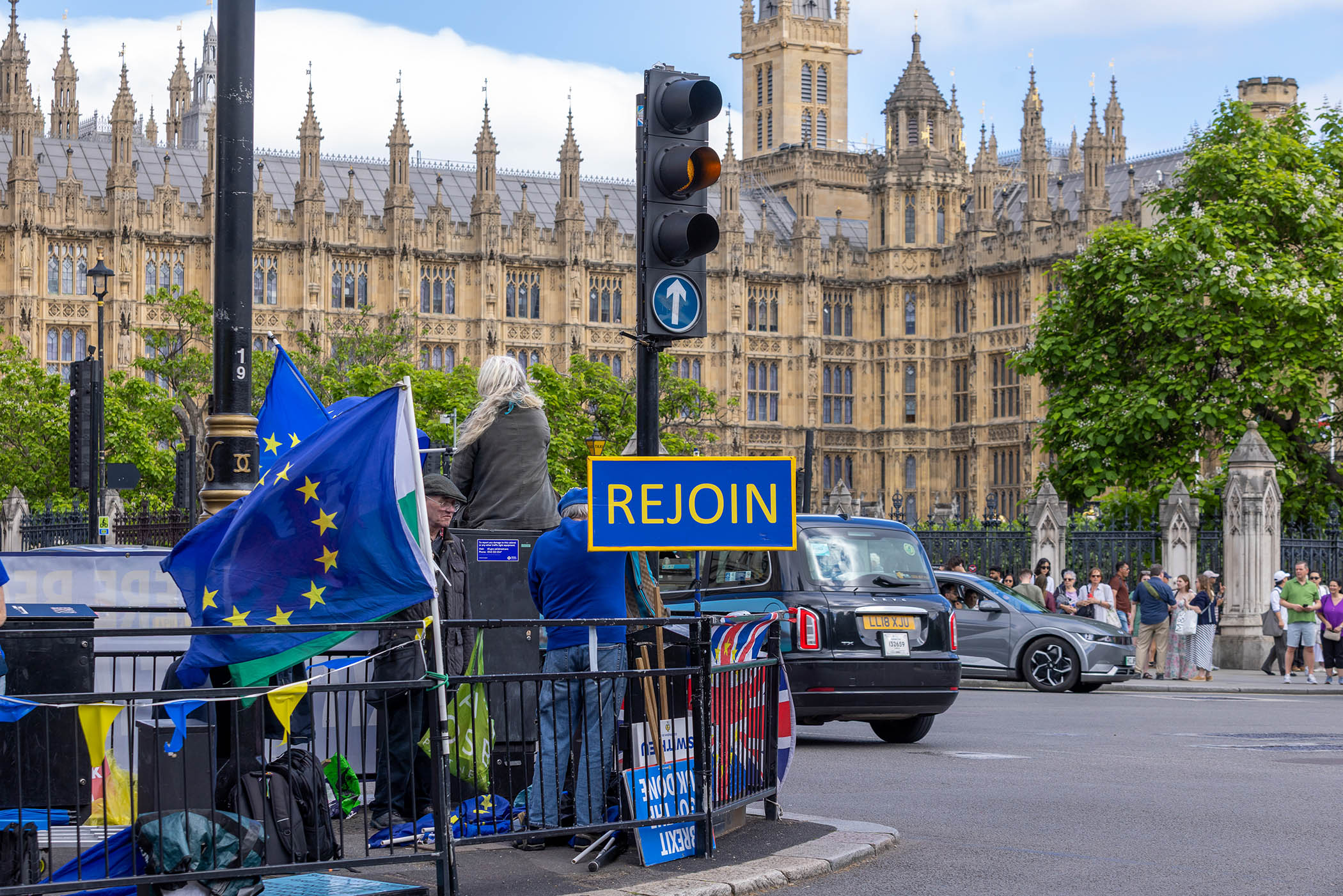

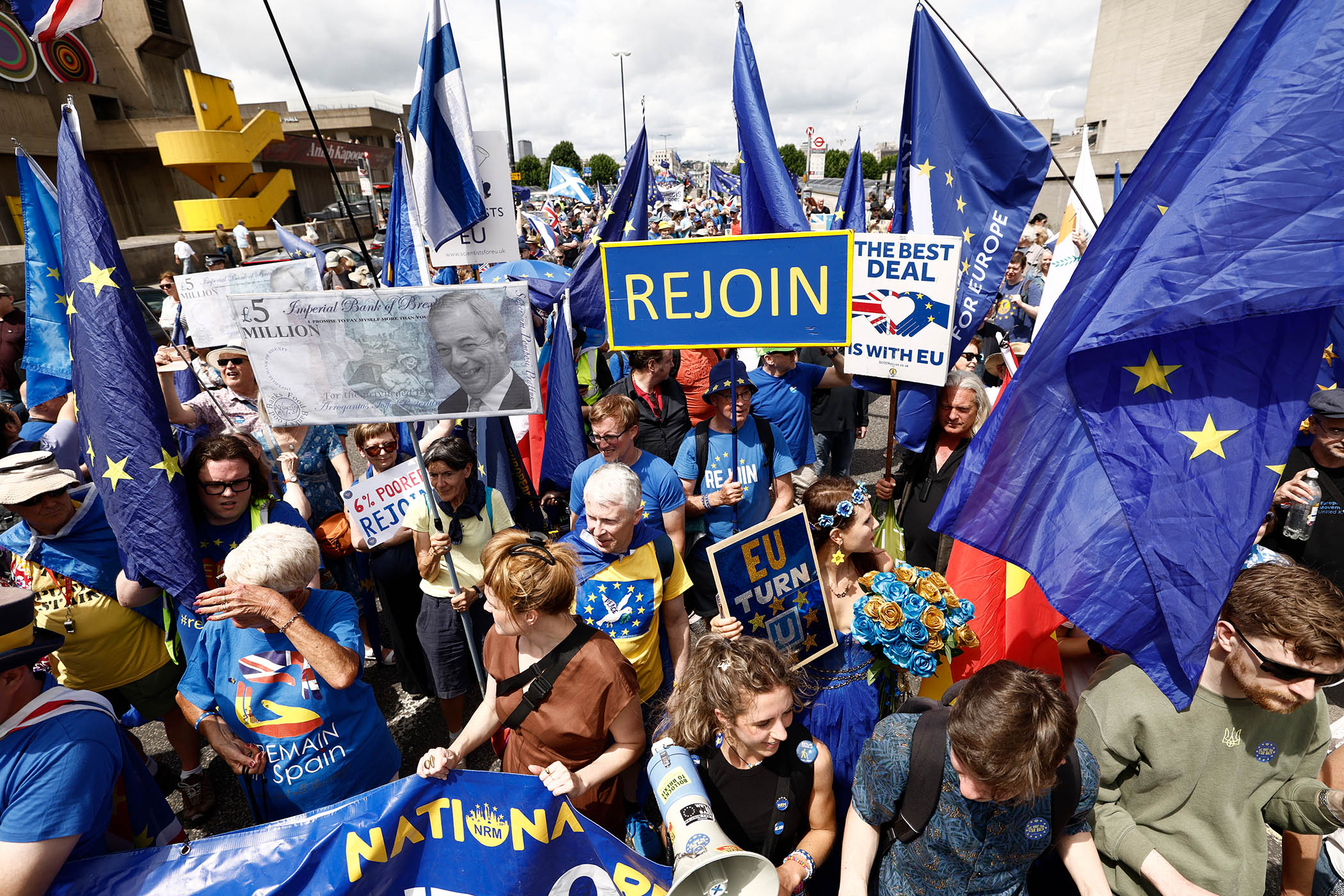
Ten years after the referendum, the majority of British people have come to a common view: Brexit isn’t working.
The majority of people think it has raised the cost of living, damaged Britain’s external image and harmed its relationships with countries around the world. In an age of Russian aggression and American retrenchment, a plurality says it has harmed national security. Even more devastating is that most Brits – including most former leave voters – think it has failed on its single biggest promise: keeping our borders safe.
Whereas 10 years ago the insurgent move was to support leaving the European Union, Brexit is now the status quo that voters want to reject. So, disgruntled voters who crave change are in favour of moving closer to Europe rather than away from it. A major poll conducted by the European Council on Foreign Relations (ECFR) and Mandate, the data and strategy company, has found that three out of four British voters – and two in three former leave voters – now want a closer relationship with the EU.
Donald Trump and Vladimir Putin have turned the European debate on its head. Brits realise the age of peace and free trade is over and that they will need friends to stay safe. But Trump is so toxic and unreliable that most look now to Europe rather than America for security and prosperity.
In the years after 2016 it was received wisdom that if you knew how someone had voted in the referendum, you could make an informed guess about their political preferences, including predicting how they might vote in a general election. But as the Makerfield result makes clear, the division between leavers and remainers is becoming more like that between Roundheads and Cavaliers – a historical curiosity rather than a reliable guide to present or future political behaviour (indeed the poll shows that were a referendum to join the EU were held today, only two-thirds of former leave voters would vote to stay out).
The conventional wisdom after 2016 was that Labour should say as little as possible about Europe because it would drive a wedge between its supporters in Hull and Hampstead. But today the European issue unites rather than divides their electoral coalition. More than eight out of 10 Labour supporters would vote to join the EU. And the same is true even for those who have abandoned the party since 2024 and whom it is trying to win back. Those who switched to the Greens and Lib Dems are just as convinced of Britain’s European future as those who stuck with Labour, if not more so. And interestingly, almost half the former Labour voters who defected to Reform would vote to join the bloc if there were a referendum today.
But while Europe unites progressives, it continues to divide the right. One in three Conservative supporters would vote to join the EU and a similar number of the party’s defectors to the Lib Dems and those who would stay at home share this perspective. And although three quarters of Reform voters would vote to stay out of the EU, 60% of them would like a closer relationship with Europe.
The ECFR analysis shows that rather than a split between leave and remain, Britain is now divided in new ways. Three in 10 voters are enthusiastically pro-European. The “optimists” see themselves as part of a shared community of fate with Europe and believe that Britain would have more in common with the EU than America in a crisis. This group is complemented by a second, “realists”, which comprises 35% of British voters. They also want a closer relationship with the EU – many even want to join it – but seem to be motivated less by an emotional attachment to the continent than by a sense that Europe can contribute towards fixing Britain’s national problems. Only 28% of the population – the “loners” now want to stand aside from the continent – preserving British independence rather than forging shared solutions.
The future of British politics will be defined by the consensus between these three groups rather than a tussle between leavers and remainers. But the momentum is moving in one direction – towards a closer relationship with Europe. The Brexit referendum temporarily split the nation into tribes that no longer understood one other. But 10 years on, the world looks very different. Europe is changing, and above all British politics is fundamentally altered. The country is still split over the EU, but the divide is no longer between leavers and remainers but between a Westminster elite which remains stuck in the battle lines of 2016 and a public which has long moved on.
Mark Leonard is director of the European Council on Foreign Relations, which published the report Brexit isn’t Working: British Voters Are Ready for a European Future, and author of Surviving Chaos: Geopolitics when the Rules Fail.
Newsletters
Choose the newsletters you want to receive
View more
For information about how The Observer protects your data, read our Privacy Policy
Photograph by Betty Laura Zapata/Bloomberg via Getty Images