Photograph by Tom Pilston for The Observer
Michael Heseltine was deputy prime minister, defence secretary, environment secretary and president of the board of trade during a political career that has spanned 60 years, including more than a decade in the cabinet. He served under three prime ministers and was instrumental in the defenestration of Margaret Thatcher when he dramatically resigned from her cabinet after a row over defence procurement.
Nicknamed “Tarzan” because of his combative manner, he once seized the ceremonial mace in the House of Commons and swung it around his head. With his leonine mane and charismatic character, the Conservative peer has always been one of the “big beasts” of politics.
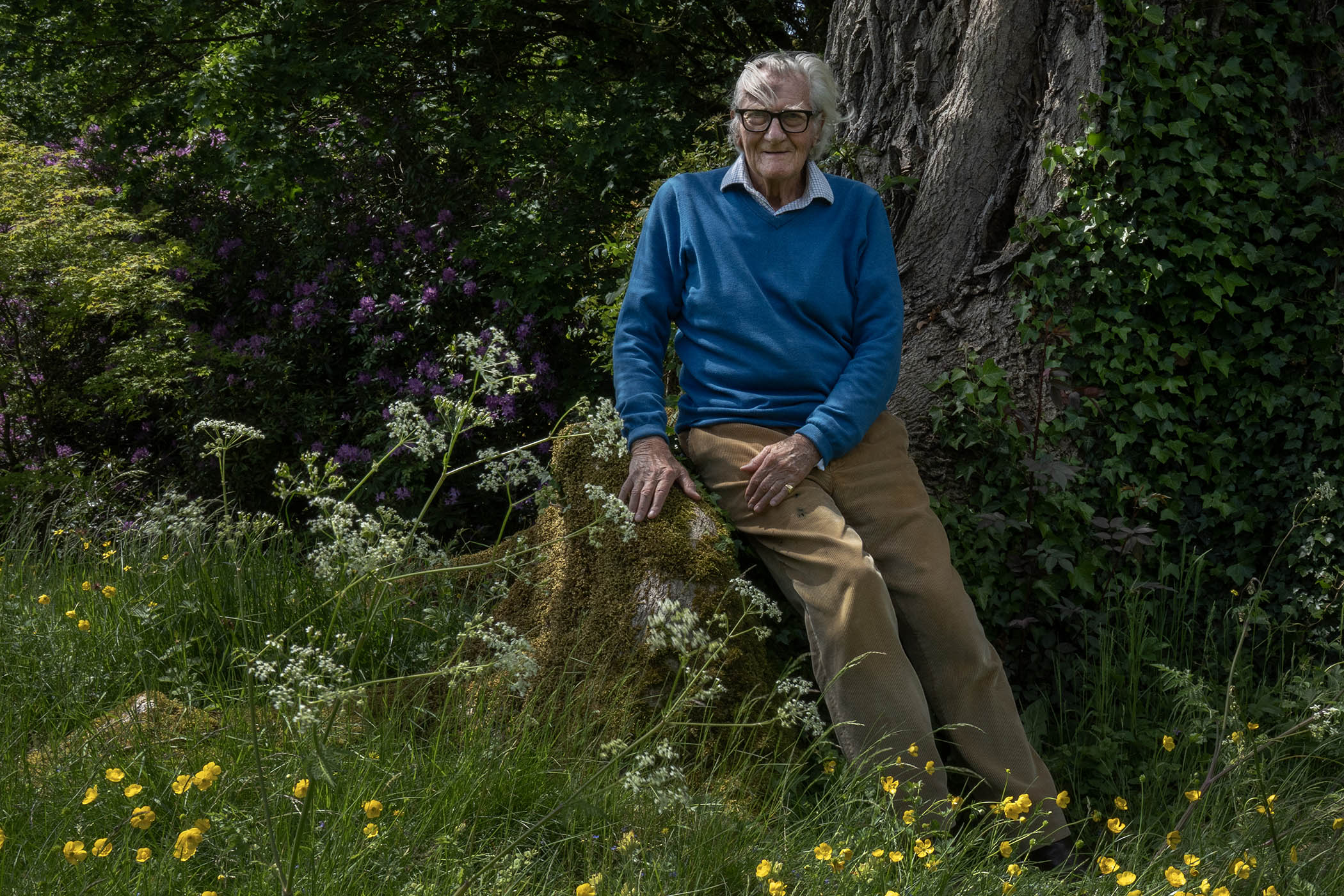
But Lord Heseltine, now 93, believes his legacy will be the arboretum he has created around his Northamptonshire home rather than anything he achieved at Westminster. “People say, ‘What will you be remembered for?’” he tells me, “and I always say ‘my trees’, because who remembers most politicians?”
Our walk – actually a golf cart ride – will take us around the garden and grounds of Thenford House, the 18th-century country pile where Heseltine lives with his wife, Anne. There are 1,200 varieties of snowdrop and over 3,000 types of trees and shrubs, including 300 species of oak planted across 70 acres. “It’s a huge collection,” Heseltine says, as the housekeeper serves us coffee in the study where books are piled high next to a bird cage, porcelain figurines and family photos. “It’s all on a computer program. We have a geostationary mapping system so we can tell to the nearest square metre where things are. This is not a game.”
The Heseltines have “his and hers” golf carts, red and blue, which they use to zip all over the property and keep an eye on the herbaceous borders, fallen branches and saplings. “It’s very important to monitor everything,” he says. “There’s a constant flow of people saying, ‘Have you got? Would you like?’ So now, by and large, we don’t plant more than one of anything because we don’t have that much space. Well, we have quite a lot of space but most of it is full.”
We walk down the steps at the front of the Palladian house towards the circular gravel drive. Two giant brass dogs guard the property. “We bought them in a flea market in Paris,” Heseltine says. “We’ve been married for 62 years and we share a magpie-like curiosity to collect. Even before we were married we were buying in anticipation of a certain sort of house.”
Heseltine founded the publishing company Haymarket before becoming an MP, so they had the money to seek out their ideal home. “We advertised, we had a helicopter and toured round looking. We drove all over the countryside and if we saw an imposing set of gates we would drive up. We were never the least bit worried about being stopped, because we always said, ‘Is Mr Wilkenstein here?’ And of course there never was a Mr Wilkensten, so we said, ‘Awfully sorry to disturb you,’ and left. Then someone one day said, ‘Yes, he is.’ And we fled.”
‘There’s nothing new in politics. You can’t be depressed by life. It’s what we are, it’s what we’ve got’
‘There’s nothing new in politics. You can’t be depressed by life. It’s what we are, it’s what we’ve got’
We climb into one of the golf carts. “Now we’ve got to get the boys,” Heseltine says. The boys are not some of his nine grandchildren but Fred, a black labrador, and Fritz, a long-haired dachshund. “We’re very sad we just lost Fergus [a west highland terrier]. He’s much missed.” The dogs trot obediently behind us as we set off, weaving through the spring garden where cow parsley waves in the breeze.
There are, Heseltine suggests, similarities between gardening and politics. “You certainly have to be ruthless or it’ll take you over. Pruning is an important part of achieving results and maintaining the appearance. I was a gardener long before I knew anything about politics.” He planted his first seeds when he was sent away to boarding school at the age of 10. “The headmaster gave every new boy a square yard of mud and a packet of Virginia stock seeds. So I methodically covered my square yard of mud and six weeks later I had a garden.”
Newsletters
Choose the newsletters you want to receive
View more
For information about how The Observer protects your data, read our Privacy Policy
It was the great horticulturalist Harold Hillier who inspired the arboretum at Thenford when he visited in 1978, two years after the Heseltines bought the house. “I said, ‘I think I’ll probably be in the cabinet in the fairly near future so I’d like your advice as to what will grow here,” he says. “He produced an incredible list of things that his nursery could provide. I said, ‘I’ll buy the lot.’ What I didn’t realise was that he had sold me a collection of oaks.” Heseltine was hooked. “A friend used to organise expeditions to South America. We would all chip in and he would go and get acorns, then distribute them.” I ask whether he has a favourite tree. “Oh no, how can you?” he replies. “If you forced me I’d say Magnolia wilsonii, but I don’t really like to choose.”
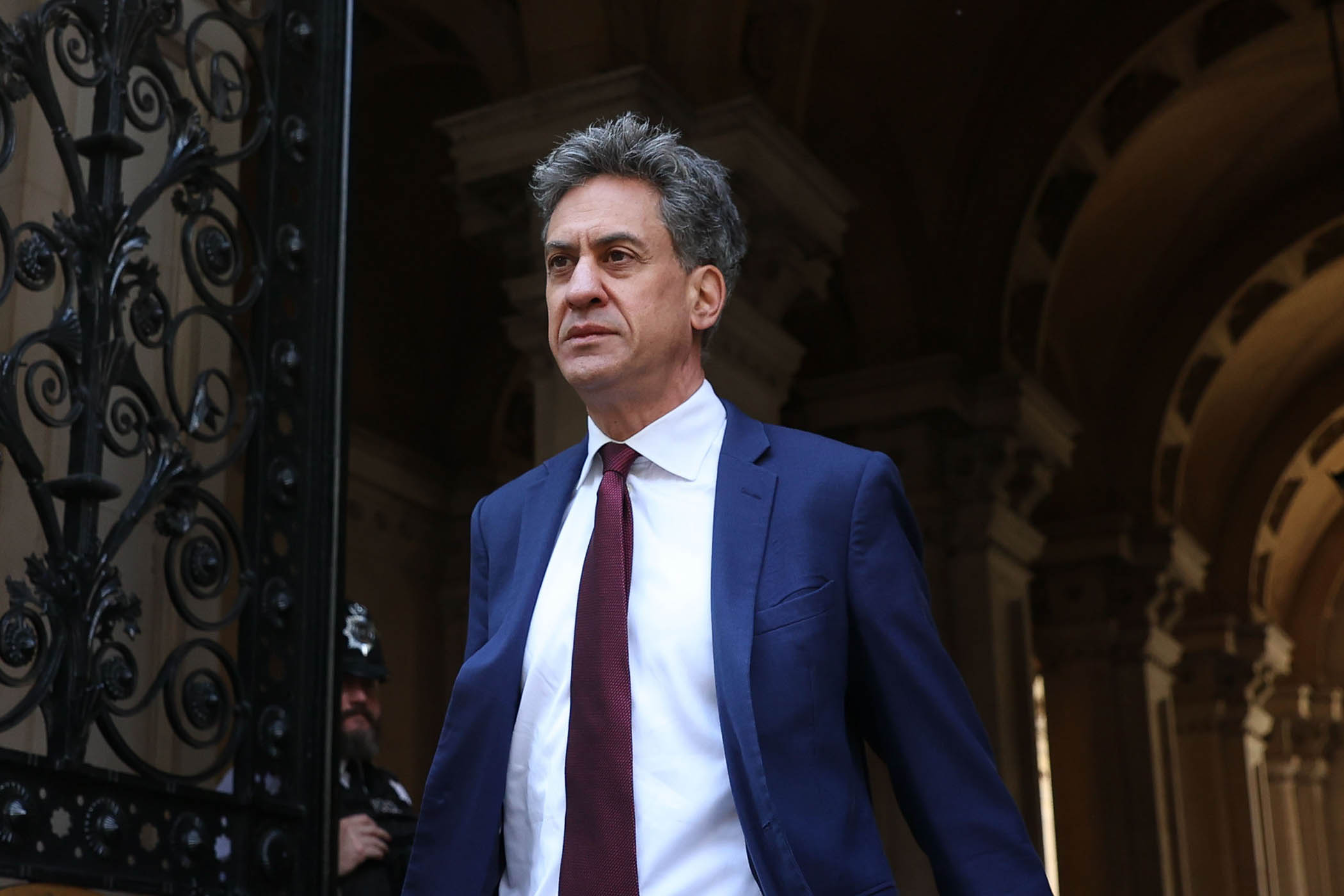
He is less sentimental about politics. With Andy Burnham back in the House of Commons and Wes Streeting threatening to trigger a leadership contest if the prime minister does not stand down, Heseltine says: “Self-evidently Keir Starmer is in difficulties.” But he warns: “Andy Burnham’s problem is whether he can run Britain the way he ran Manchester without being dragged to the left in order to secure the premiership.” Heseltine’s contemporary Roy Hattersley, who died earlier this month, “believed many of the right things at a time when his party were tearing themselves apart in the other direction”.
Having failed to become leader himself after Thatcher’s resignation, Heseltine declared, “he who wields the knife never wears the crown”. It has become a golden rule of politics, but the man who coined the phrase now says: “I don’t think it’s true. I didn’t actually bring down Margaret. It was Geoffrey Howe’s resignation [as deputy prime minister] which forced Margaret to consult her cabinet, and they all said she had to go and that was the end of her. The cabinet wielded the knife.” He is quite proud of his much-repeated phrase but admits: “I thought I was quoting Shakespeare.”
Starmer’s position was further weakened when John Healey resigned last week as defence secretary over the lack of funding for the military. Heseltine believes the problem is more fundamental. “The defence policies of this government are impossible to defend,” he says. “They are about a percentage of gross domestic product, whereas what they should be about is our capability in whatever circumstances to defend ourselves. The technological changes on the battlefield are profound.”
We drive alongside flower beds packed with magnificent multicoloured irises. Heseltine thinks any prime minister would be struggling. “Keir Starmer has got Ukraine, he’s got the Middle East, he’s got the problems with President Trump and Brexit. If he goes to meetings abroad, people say he doesn’t care, he’s always out of the country; if he doesn’t go, they say he doesn’t give a hoot about British interests. I feel sorry for him.”
We could be about to get our seventh prime minister in 10 years, but Heseltine thinks it is wrong to suggest Britain is ungovernable. “If ministers know what they want, they get it. Our civil service is a Rolls-Royce, but a Rolls-Royce needs fuel and a driver.”
As a minister he transformed London’s Docklands, regenerated Liverpool and helped to rebuild Manchester when Burnham was still a parliamentary researcher. At Thenford he has created a lake, a sculpture garden, an alpine trough garden and a water feature with 36 fountains and nine pools. “It’s like a series of rooms,” he says. “We built a canal in order to feed the lake.”
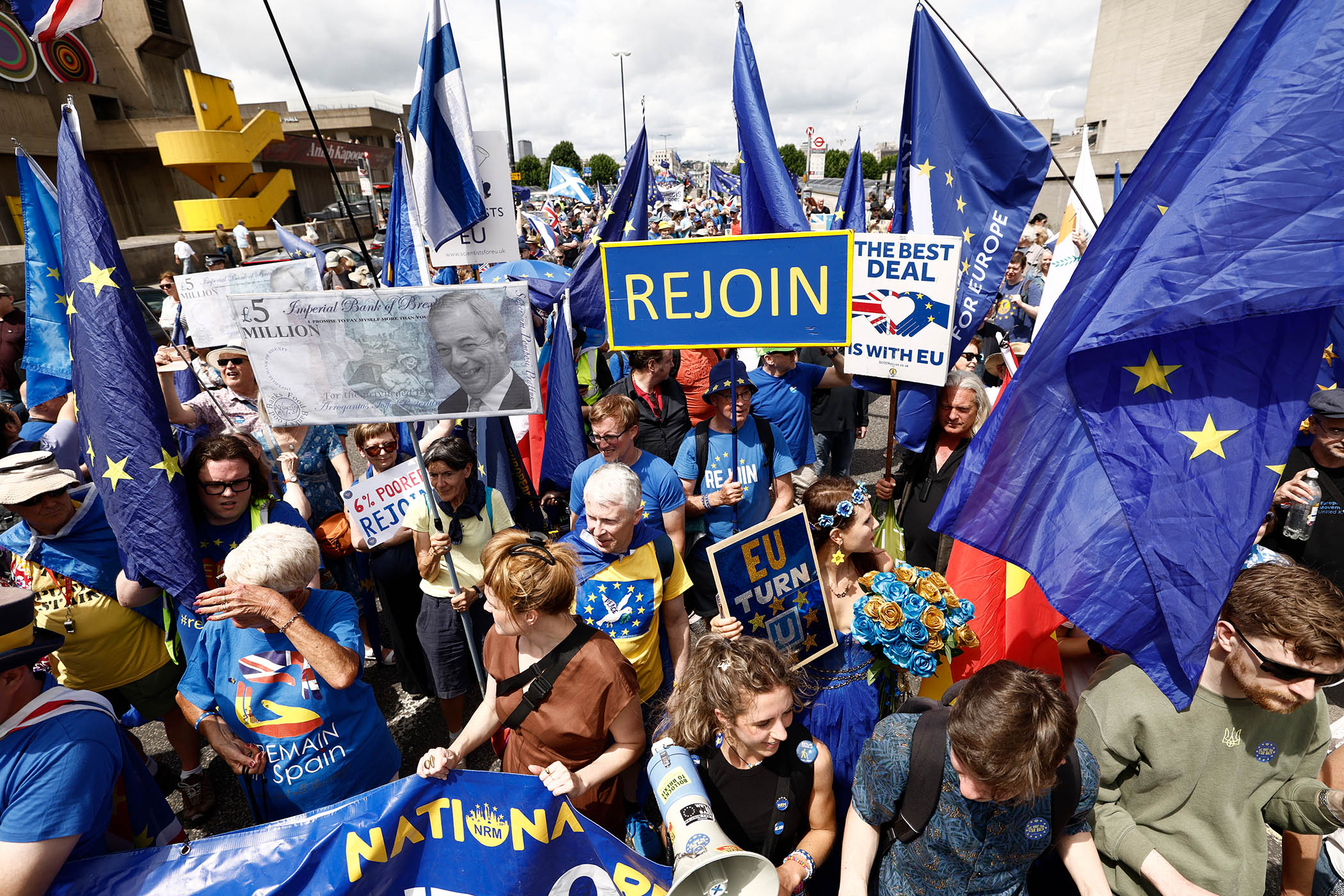
He is astonished by the lack of ambition at Westminster and frustrated by the failure to repair the damage done by leaving the European Union. “From Britain’s point of view the worst thing that could have happened is Brexit, because it has cut us loose from the mainstream of politics,” he says. “Until the politicians wake up to that and return us to our historic role at the centre of Europe we will always find ourselves with an uncertainty about how to cope with our problems. How ludicrous is it that you cut yourself off from your principal trading market?”
Ten years on from the EU referendum, he would rejoin in a heartbeat. “Keir Starmer has begun to move it in that direction and quite rightly so. But you’ve got this terrible phenomenon of antisemitism and anti-immigrant feeling which Reform has turned into an art form.”
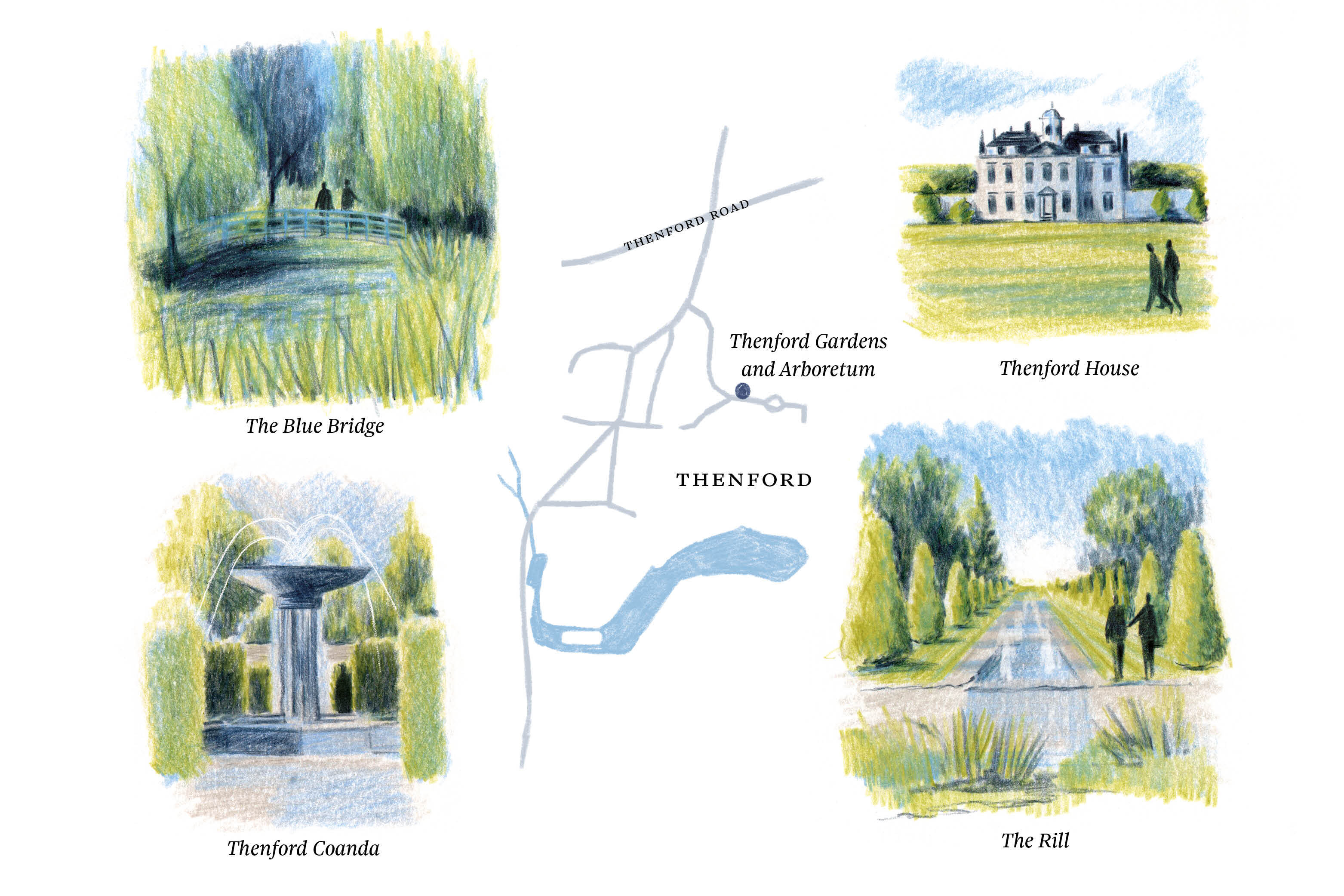
We weave alongside the medieval fish ponds. Day lilies are just coming into flower on the banks next to ancient yews. Heseltine has created a haven, but politics seems nastier than ever. He is not on social media but he collects political cartoons and points out that Westminster was vicious long before Elon Musk was born. “Just remember in 1926, they were beginning to round up the Jews. A hundred years ago you had Mussolini, Chiang Kai-shek, Mosley,” he says. “You need to expose Farage for what he is: a shyster.”
Populism is driven by “economic frustration”, he says. “It’s always the same. People have got used to a 2-3% increase in living standards, and quite rightly they enjoy it. And when it fails to deliver they turn on the person in charge.” He sees parallels between the current political situation and the 1930s. “There’s nothing new in politics. You can’t be depressed by life. It’s what we are, it’s what we’ve got.”
The golf cart is struggling with a hill. Its battery seems to be running out so Heseltine jumps off and pushes the pedal down with a special stick stored in the machine. We pause while the photographer takes some pictures. Fred is slobbering over my dress and notebook; then, while I am looking the other way, he grabs the special stick and eats it. We are stranded, so the former deputy prime minister rings the deputy head gardener and asks her to send someone along with the second golf cart. “It’s the cavalry!” says Hezza when it arrives, and we whizz off again past lilacs, dog roses and cherry trees.
‘I was there when Chamberlain announced the declaration of war. I was in Piccadilly Circus on VE Day. I was in Berlin the night East Germany closed the wall’
‘I was there when Chamberlain announced the declaration of war. I was in Piccadilly Circus on VE Day. I was in Berlin the night East Germany closed the wall’
We turn down the path next to the lake. A black swan with cygnets glides across the water next to a family of greylags. I ask Heseltine whether he still regrets never becoming prime minister. “Of course,” he replies. “I don’t sit here saying ‘what a terrible tragedy’, because my life has been so full of other things. But if you say to me, ‘Would I like to have done the job?’ Yes, I would, and I think I would have made a contribution.” Harold Macmillan is the leader he most admires, “because he told the British people what they needed to hear and what they didn’t want to hear.” But, he says, politics is a perilous career: “Even the ones who get to the top end in failure.”
Kemi Badenoch has impressed him. “She has a tough job. I think she’s beginning to make an impact,” Heseltine says. He was pleased to see the back of Robert Jenrick and his fellow defectors and insists the Tories must never do a deal with Farage. “That would be a political disaster, because what Reform stands for is anathema to the sort of conservatism I believe in, which is middle-of-the-road tolerance, respect for people’s views.”
We wheel down between a double border, crammed with peonies, roses and lupins, to the formal walled garden. A pair of enormous marble elephants stand by the entrance, shipped back from Delhi by Anne. Every statue and tree has a story attached. “We planted that Sequoiadendron 50 years ago … my mother gave us that blue cedar in 1982.” The sculpture garden is dominated by a huge bust of Lenin, imported from Latvia at the end of the cold war and brought in with a crane. “That’s 10 tonnes of bronze; it came over those trees. It’s a great work of art and a great piece of history,” Heseltine says. In gardening, as in politics, he refuses to take no for an answer: “We don’t give up.”
We return to the house, where the table has been laid for lunch in the dining room. As the veal escalopes and poached pears are served, Heseltine looks back on his remarkable life. “I was there when Chamberlain announced the declaration of war in September 1939. I was in Piccadilly Circus on VE Day. I was in Berlin the night East Germany closed the wall.” He was one of the first ministers to meet Nelson Mandela after his release from prison. “I lost him when I was leading him into dinner and he was in the kitchen talking to the staff.”
There are many amazing memories, but Heseltine is not stuck in the past. “I look at four newspapers a day so I know what’s going on. I couldn’t be detached – too many of my friends talk to me about politics. I haven’t retired.” The housekeeper brings coffee and a small plate of jelly babies. Heseltine may be in his nineties and rely on his glasses and hearing aids, but he has not lost his boyish enthusiasm for life.
Thank you for reading. Tell us what you think by writing to letters@observer.co.uk
Illustration by Ellie Wintour for The Observer