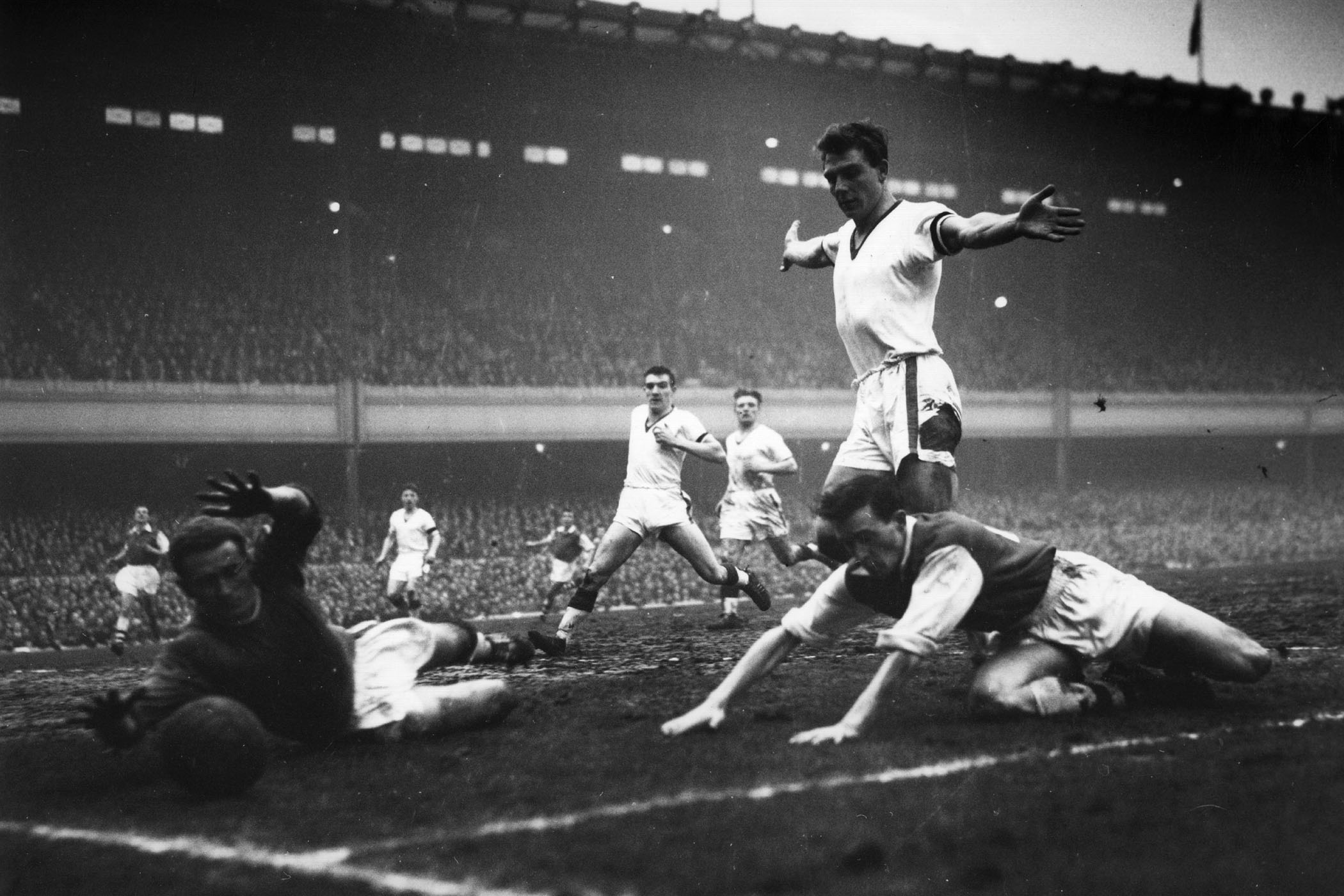

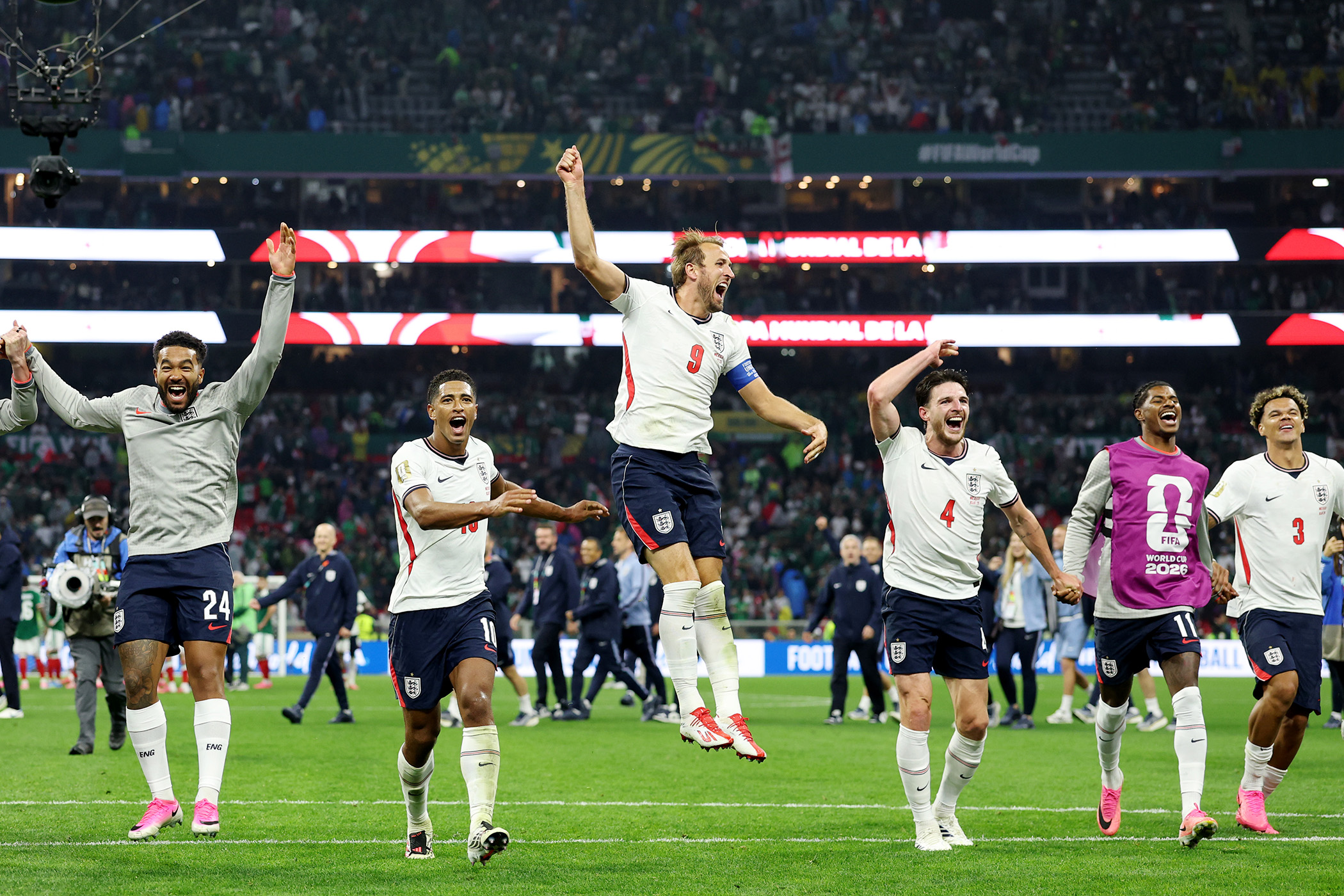
We’ll always have 1966. Though in the many reprintings of the famous tableau of England World Cup winners in the past two months, I’ve been struck more than ever that the victory moment was haunted by the ghost of the player who should have been at its centre. Duncan Edwards, who died in the Munich air crash aged just 21 in 1958, would without doubt have been the beating heart of that victorious team. At the time the youngest player to be capped by his country, Edwards had already won 18 caps by the time his life was cut short. This World Cup has brought home the scale of that tragedy for someone who did not live through it, because no player since 1958 has, it feels, come closer to the charismatic power and promise that Edwards possessed than Jude Bellingham.
And of course it’s not quite true to say that Edwards was not present in that indelible picture in which Bobby Moore, hoisted on team-mates’ shoulders, holds the Jules Rimet trophy aloft. Because you can see him in the eyes of Bobby Charlton, on the edge of the photo. Charlton, who was among those who lived through the plane crash in which his Manchester United team-mate and room-mate died along with 22 others, played his storied career thereafter with a mixture of PTSD and survivor’s guilt. Legendary victories for club or country were always shadowed for him by the memory of that night, the golden lads who should have been there with him.
Charlton was not a histrionic man, but he never missed an opportunity to pay tribute to “Big Dunc”. When a life-size bronze statue to Edwards was unveiled in his hometown Dudley in the West Midlands in 1999, Charlton, accompanying his late pal’s mother, gave the address: “I find that I think about Duncan a lot,” he said, voice breaking. “I have seen all the players who in their time have been labelled the best in the world – Puskás, Di Stefano, Gento, Didi, John Charles and the rest – and not one of them has been as good as Big Duncan… I am not a person to dramatise things or dispense fulsome praise. A man is a good player or he is not. But Duncan Edwards was the greatest. I see him in my mind’s eye and I wonder that anyone should have so much talent. He was simply the greatest footballer of them all.”
Charlton was far from alone in that assessment. Matt Busby, the man who brought Edwards to Manchester United, described him as follows: “He was a colossus. Whatever was needed, he had it. He was immensely powerful. He was prodigiously gifted in the arts and crafts of the game. If there was ever a player who could be called a one-man team, that was Duncan Edwards. His death, as far as football is concerned, was the single biggest tragedy that has happened to England. He was and has always remained to me incomparable.”
I grew up hearing some of those stories. My mum was born a mile or two from Edwards in the Black Country in the same year as him, 1936, and in my football-mad household, there was only ever one properly sainted player, the one who could have achieved anything, the one who died in a year that both he and my mother had come of age.
I don’t know if Bellingham was also raised on any of those legends, but no doubt he would have walked past that dramatic statue of Edwards in Dudley town centre as a boy – he lived in neighbouring Stourbridge – and looked and wondered. It is impossible to compare players of different eras, but the parallels between the player who emerged so dramatically in this tournament as England’s new and future champion and the one that was cruelly lost feel a little uncanny; aside from the proximity of their formative years, Bellingham too played for England at an exceptionally young age and he too has always possessed that kind of preternatural strength of character and purpose and talent that has had team-mates and fans grasping for superlatives, knowing that – even in defeat – they are in the presence of a different kind of athlete.
Other England players have been compared to Edwards over the years – Bryan Robson and Steven Gerrard in particular – but the resonance feels closer to Jude. There are only a handful of clips of Edwards in his brief prime on YouTube. I watched a couple of them after the heady triumph over Mexico. With hope still intact, I also re-read Gordon Burn’s elegiac book Best and Edwards about the two great lost souls of Manchester United’s post-war era. Even now, after England’s sorry departure, it is hard not to feel that Bellingham has, for much of the past six weeks, been channelling something of that spirit of 68 years ago. In the grainy clips, Edwards does everything, is everywhere – just as Bellingham has been, even in the thin air of Mexico City. Edwards too was as good with either foot, could both glide past any opponent and outmuscle them; was always both his team’s best defender and their best attacker. He also never suffered fools, speaking his mind with those same warm, confrontational Black Country vowels that Bellingham has memorably rolled out in post-match interviews. (His wonderfully blunt “Whatever” to the suggestion of ITV’s Gabriel Clarke that Thomas Tuchel had questioned the team’s quality after the Mexico match was pure Dudley.)
Jude, as far as I know, has never spoken of Dunc, though while a player at Borussia Dortmund, he did donate a signed shirt to the Duncan Edwards Peace Field charity in Dudley, which takes inspiration from the 1914 Christmas Day match at Flanders in raising money for football pitches in conflict zones. The Dudley Museum, prior to the semi-final, paid tribute to Bellingham in a social-media post that linked him with the borough’s most famous footballing son. In the heady days before Wednesday’s defeat, Dudley Borough Council named Bellingham (and his great Black Country-born England team-mate and friend Morgan Rogers) among those in line to receive the freedom of the borough, its highest honour.
There is a wonderful story in Burn’s book of Charlton being billeted with Edwards when they did their national service together at barracks in Shrewsbury (close enough to Old Trafford to make it to matchdays). A year older than Charlton, Edwards was already an old hand when his young friend arrived. Seeing that Charlton had been given a mattress with a spring coming through it, Charlton recalled how Edwards simply picked up the iron-framed bed and its mattress – “you’re not having that” – put the lot on his shoulder, and replaced it with another.
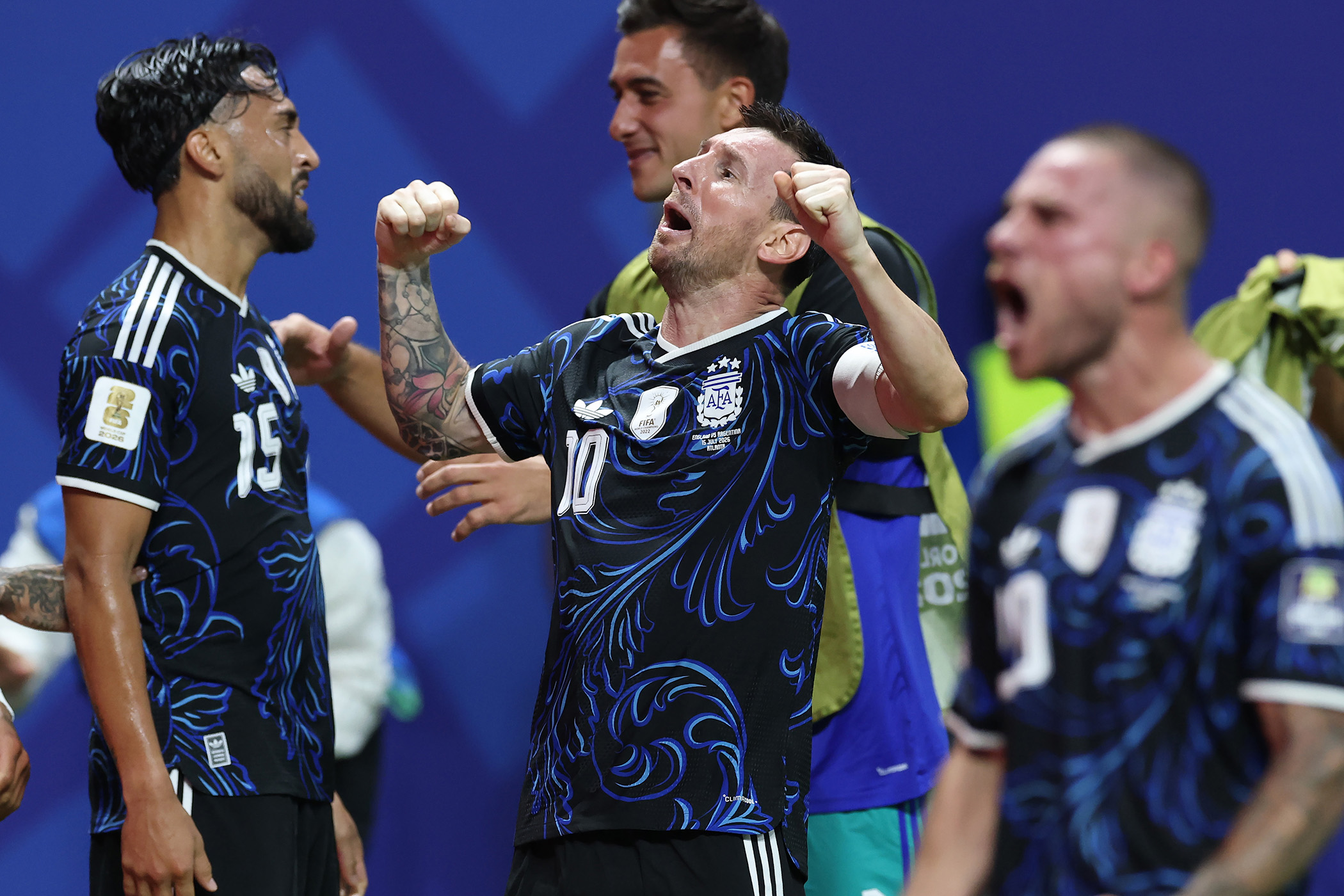
The life of a footballer in the 1950s – living in digs, apprenticed to local tradesmen, paid a few pounds – could hardly have been further removed from Bellingham’s millionaire life as one of Madrid’s galácticos. But if the World Cup is ever eventually to come home – from Morocco, Portugal and Spain in 2030, or Saudi Arabia in 2034 – you guess it will be because Bellingham has found a way to pick up this England team and bear them on his broad shoulders, shared the courage that will finally get them over the line. There was a moment after Argentina scored their equaliser on Wednesday when Bellingham lay on the turf having failed by inches to block Enzo Fernández’s shot. You could see in his eyes that he guessed what was coming, but there remained, too, that sense of never sitting back and accepting fate, of not taking no for an answer.
Newsletters
Choose the newsletters you want to receive
View more
For information about how The Observer protects your data, read our Privacy Policy
This is an updated version of a story published online earlier this week
Photograph by Reg Burkett/Getty Images