

A day late and a dollar short would be a polite view of the UK’s defence investment plan (DIP) finally published on Tuesday. A year, arguably two, late, and £15bn – or more likely £20bn – short might be a more accurate summary.
The British government faces two significant problems with its armed forces, and the DIP addresses neither of them properly. First, the existing forces have been run down over three decades of cheese-paring since the end of the Cold War. As with many aspects of UK public infrastructure, savings have been made by not fully funding the maintenance and upgrade works needed to keep the equipment in the forces up to scratch. When ships have gone for periodic refits, for example, only two thirds to three quarters of the full work programmes could be afforded within the refit budget. As a result, lower priority tasks get left, with a tail end of niggling faults gradually accumulating.
Just as with unfilled potholes in the roads, these smaller problems gradually get worse and merge, making the equipment harder and harder to operate. Eventually the ship becomes unsafe to sail, and the result is what we saw in the spring when the MoD tried to send a single ship to defend Cyprus from Iranian missile strikes. It took a month to get HMS Dragon moving, and by the time she left, the war had passed us by.
It’s the same story in many areas of UK defence: of the five nuclear attack submarines the UK has in service, not one is at sea. They are all in port being repaired for a variety of reasons – two have been tied up for three years or more. Their traditional jobs of defending the nuclear deterrent, or protecting a carrier battle group, or tracking Russian submarines are all being covered by other means, or are not done at all.
This accumulating backlog of work becomes ever more expensive to sort out. Yet instead of rapidly increasing spending to make the armed forces fit for purpose, spending in this area will remain broadly flat. Indeed, some things that John Healey, the previous defence secretary, was applauded for making a priority, such as improving the grim state of military personnel housing, have been delayed to pay for more maintenance of equipment and training. The boost to service morale and retention that Healey expected to come from improving dilapidated service housing will now go by the board. Peter, it seems, has been robbed to keep Paul at sea a little longer.
As a result, we cannot expect the state of existing equipment, or the crews who operate it, to improve significantly as a result of this DIP. Indeed, the slide in the readiness of our force will continue. Our ability to fight anywhere, any time soon, is slowly being leeched away.
The second problem is that the substantial funds needed to transform the UK’s military to meet the needs of the radical new types of warfare now being waged are not being spent either. Much is made of drone warfare and the potential of AI and autonomy to fight in novel ways, and there is a revolution going on. But to develop these technologies and then work out how best to integrate them into fighting complex wars alongside existing systems takes time, money and lots of smart people.
Even beginning to field these systems five to 10 years from now requires substantial investment now, yet what is offered are paper tigers. We have an outline of the Common Combat Vessel (CCV), half a dozen of which will act as crewed command hubs for uncrewed platforms. To illustrate how vague this idea is, the MoD is not saying whether it thinks these ships will be armed or not, though the assumption is that they probably will be, at least for self-defence. These are in the nature of concept cars, exhibited at motor shows, designed to excite the imagination, but many years away from a production line. In many cases they never see the light of day as real products.
Then there are at least three classes of ship more in the nature of artists’ impressions than concept vehicles. First, a Type 91 missile barge, presumably a large floating arsenal of anti-air, anti-ship and land attack missiles. Or will they be a large number of small missile barges to spread the risk and concentration of assets all in one place? It’s not clear. Then a Type 92 sloop designed to attack submarines, and a Type 94 picket, acting as an outer edge warning platform to scan for incoming threats. The only thing we do know is that these are intended to be uncrewed, networked together and under the control of the CCVs.
It will have taken approximately 20 years to get the first of the next generation of conventional Type 26 anti-submarine warfare frigates from the drawing board into the fleet, and that was a fairly straightforward replacement for the previous Type 23 ship. What price the idea that any of these new networked autonomous systems will make it into service in less time?
Newsletters
Choose the newsletters you want to receive
View more
For information about how The Observer protects your data, read our Privacy Policy
Fixing the existing armed forces or creating a wholly new military are two enormous jobs, neither of which is funded in the current plan. It’s obvious in the numbers issued by the government, which says it will spend £298bn on defence over the next four years, including the £15bn extra in the DIP. At its best, this plan increases total spending by about 5%. Hardly transformational, especially given the scale of the challenge – and only some £11bn of the £15bn is genuinely new money.
Having laboured mightily to produce this mouse, what chance is there that in the next spending review in 2027 the government will boost defence spending from the 2.7% of GDP it will reach in 2029 to 3.5% by 2035? It surely strains credulity.
But there is a more insidious problem. The government has stoked up expectations and hopes in the military and the defence industry about future investment through successive actions: the strategic defence review of last year, which was fully endorsed by the prime minister and which he said would be fully funded; the commitment to the Nato target of 3.5% of GDP spent on core defence by 2035; a contested leadership of a Ukraine stabilisation force; and plenty of other rhetoric.
Military planners and industry executives will have been beavering away creating novel systems that they have been busking around the MoD for the past year, many finding willing ears. Demand has been stoked in the hearts and minds of those who would naturally want to buy more and varied weapons systems. Discipline has not been enforced – it has been cast aside in favour of optimistic hopes.
The MoD will find itself with more nascent programmes all vying to get a place in the funded programme, at the same time as there is no more money. Some will inevitably find their way through, predicated on optimistic assumptions about how cheaply and quickly they can be produced. This will result in an even more overcrowded programme than exists today, with the inevitable result that all programmes get slowed down to fit inside each individual year’s spending limits. Progress on all projects will be slowed down through insufficient cash, and the cost of each project will rise, because the same amount of work is spread over more years with more overheads applied to each project.
Far from creating a reformed MoD where the bad old habits are tackled, and projects are delivered on time and to cost, this defence investment plan will make the old problem worse. The only conclusion can be that the architects of this DIP either do not understand this problem, or do not care.
It may be that the departing prime minister does not care, but the incoming PM definitely should. It is not unreasonable that the former mayor of Manchester is not deeply versed in defence, or that he does not yet have a team around him who understand the issues. He will, however, shortly be treated to a rapid education.
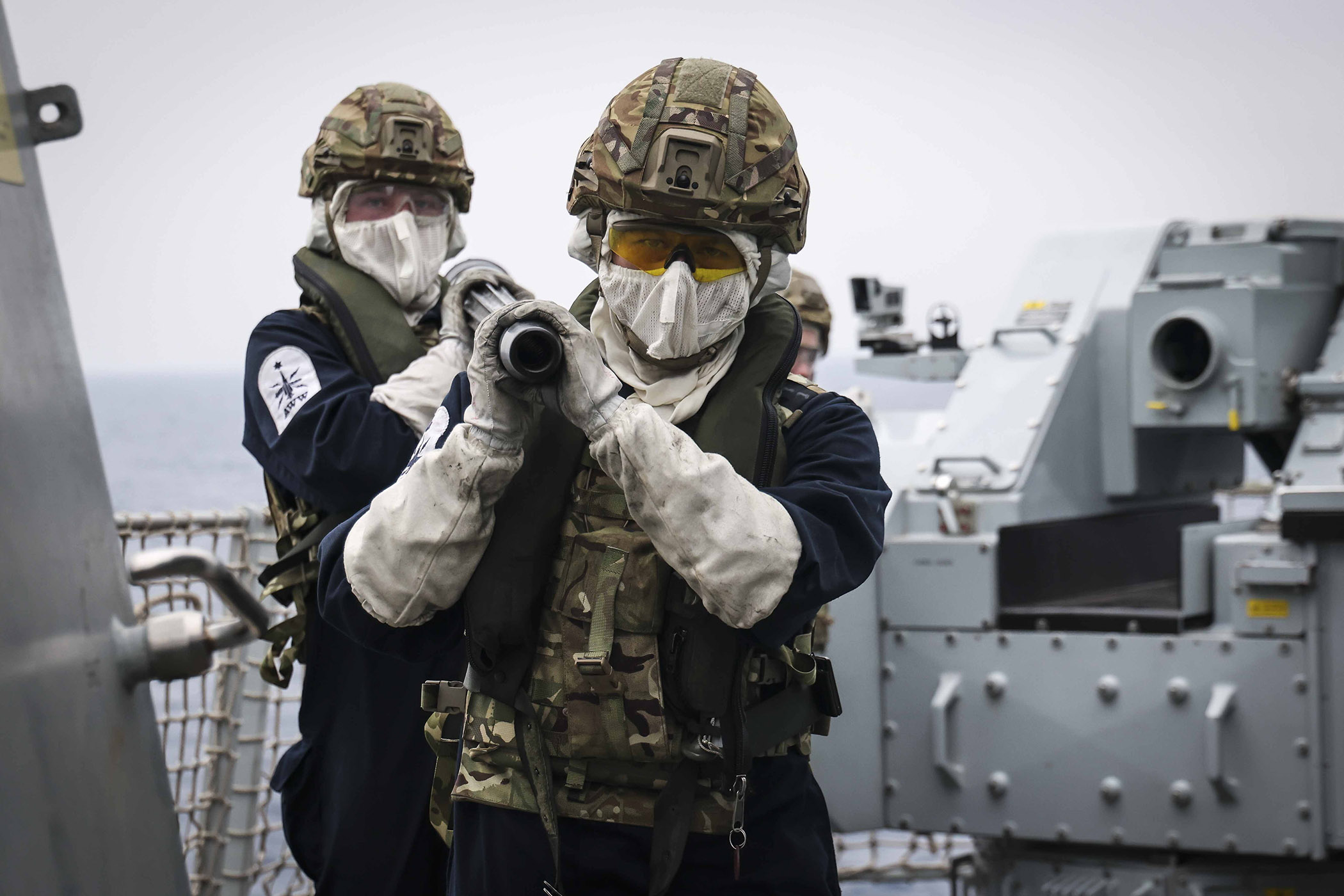
Photograph by Helayna Birkett/ UK Ministry of Defence