


In all the hue and cry in the House of Commons this week over whether Britain should have declared for President Donald Trump’s action against Iran or firmly opposed it, MPs missed one thing. From a military point of view, the UK’s position will make not the slightest difference to the outcome in the Middle East.
The UK’s impotence in the conflict is neatly exemplified by the drone strike on RAF Akrotiri in Cyprus on Sunday. The base was the hub for British attacks on Islamic State in Syria a decade ago and has been home to spy planes eavesdropping on the Middle East for decades. Its runway has been resurfaced but the base area as a whole is in a parlous state, and this last remaining toe-hold of British influence in the region is wholly unprepared to defend itself from attack.
A little history: during the cold war, RAF bases were protected by the RAF Regiment operating ground-based air defences (GBAD). For most of that time this was the Rapier air-defence system. Yet while Rapier was officially retired in 2022, it had been moribund and ineffective for many years. The replacement Sky Sabre system is used to protect the Mount Pleasant airfield in the Falklands. It is also meant to protect deployed British forces, RAF airfields and, potentially, critical national infrastructure in the UK, such as Heathrow or nuclear power stations.
But the UK only has enough equipment for two full Sky Sabre batteries and a training unit. And while the Ministry of Defence placed a £116m order for more equipment in August, that’s only enough for one more battery. Crucially, the order does not seem to include more missiles for the system, the component that takes the longest time to manufacture. That is nowhere near enough to cope with all its potential tasks, let alone protect other allies, such as the Gulf states.
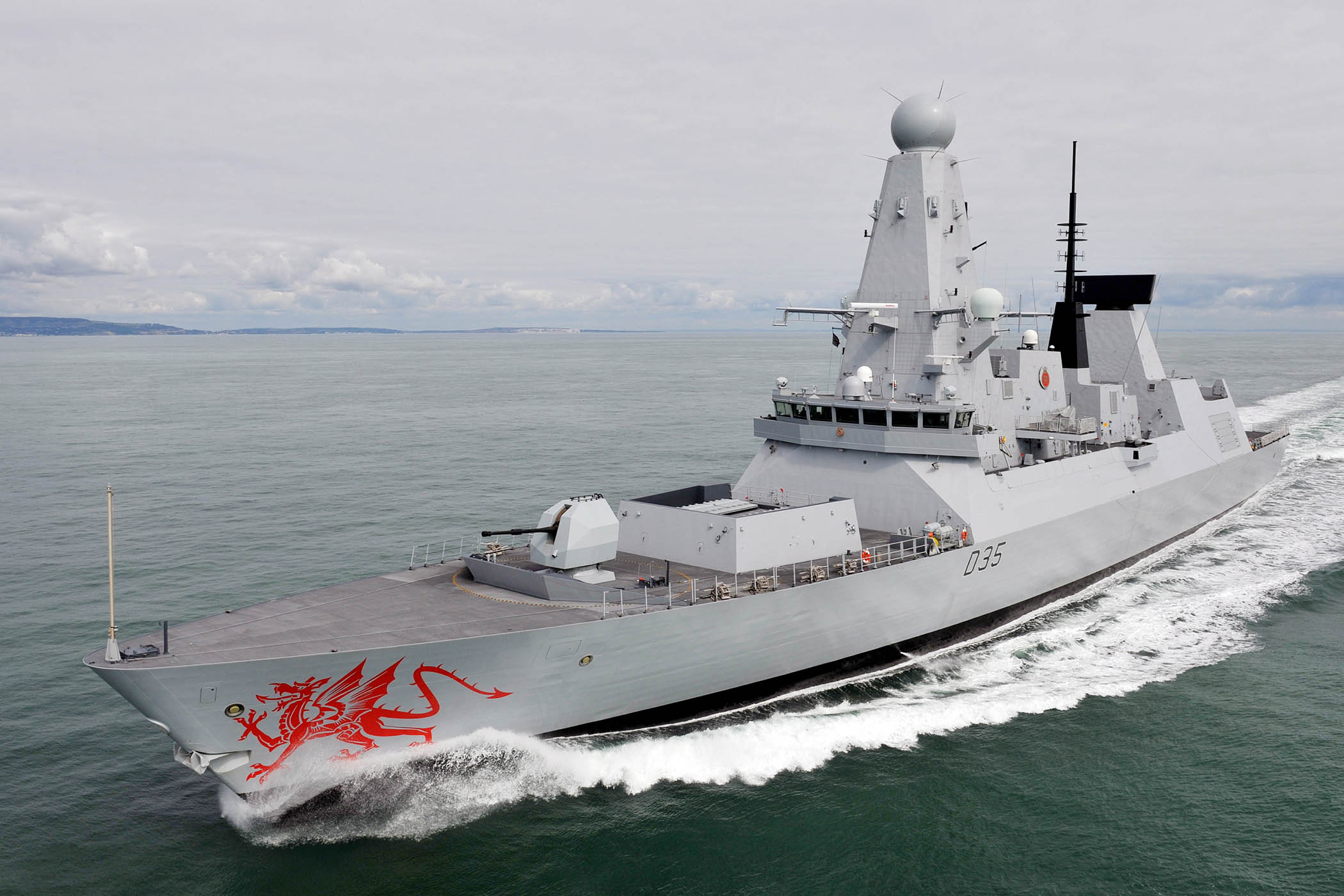
As a result, RAF Akrotiri was unprotected by GBAD this week when Iran came calling. The natural response might be to send batteries to defend both Akrotiri and Dhekelia, the other British base on Cyprus. But the UK does not have them to send, so instead the prime minister is sending HMS Dragon, one of only two operational Type 45 air-defence destroyers, to act as an umbrella over Akrotiri and potentially also Dhekelia.
The good news is that the £1bn warship hosts the most effective air-defence system owned by the MoD – the Sea Viper, which is based on advanced radar and the French-designed Aster 30 missile. The bad news is that each Aster round costs about $2m, and the Royal Navy has a very limited supply of them. It wouldn’t take long for the magazines to burn dry. Also worth noting: it will take at least eight days for the Dragon to reach Cyprus and it won’t set off until next week. If a spare Sky Sabre system had been available it could have been flown there in six hours.
Force protection, looking after armed forces in the field, is one of the core requirements of an effective military. Yet because of cheese-paring over relatively cost-effective areas of defence, the UK lacks the necessary defences for its own troops and is forced to deploy scarce and expensive ships to compensate.
The UK is in no position to provide a meaningful contribution to attacking Iran, or to defend against Iranian attacks, even if it wanted to. It cannot even really defend its own forces in the region.
As a result, the rhetoric exchanged in parliament this week over what posture the UK should strike over the war in Iran is just hot air. President Trump criticised British indecision over Iran this week. Perhaps he should add incapacity to the charge sheet as well.
Photograph by LA(Phot) Nicky Wilson/MOD
Newsletters
Choose the newsletters you want to receive
View more
For information about how The Observer protects your data, read our Privacy Policy