It was cheering to read about the Manchester initiative to address the long-term distortion in our education system (“The ‘Burnham bacc’: can Manchester’s school experiment stop teenagers dropping out?”). Academic learning and university are right for some but are not the key to developing all school leavers.
As someone who has spent over 50 years in education as a teacher, teacher trainer, university lecturer, government adviser and leader of voluntary organisations piloting and advocating curriculum change for social, political and economic learning, I urge the Department of Education not only to consider expanding the MBacc to other areas but also to ensure that, as well as vocationally linked learning, there is a core curriculum that enables all young people to leave school with real citizenship skills and understanding.
Where do students learn to discriminate between truth and lies in politics? To question and appraise sources of information and ideas? Where do they learn about the respective responsibilities and accountabilities of local, regional, central and transnational government? How do they learn to understand different economic ideologies and systems? How can there be informed voting without such learning?
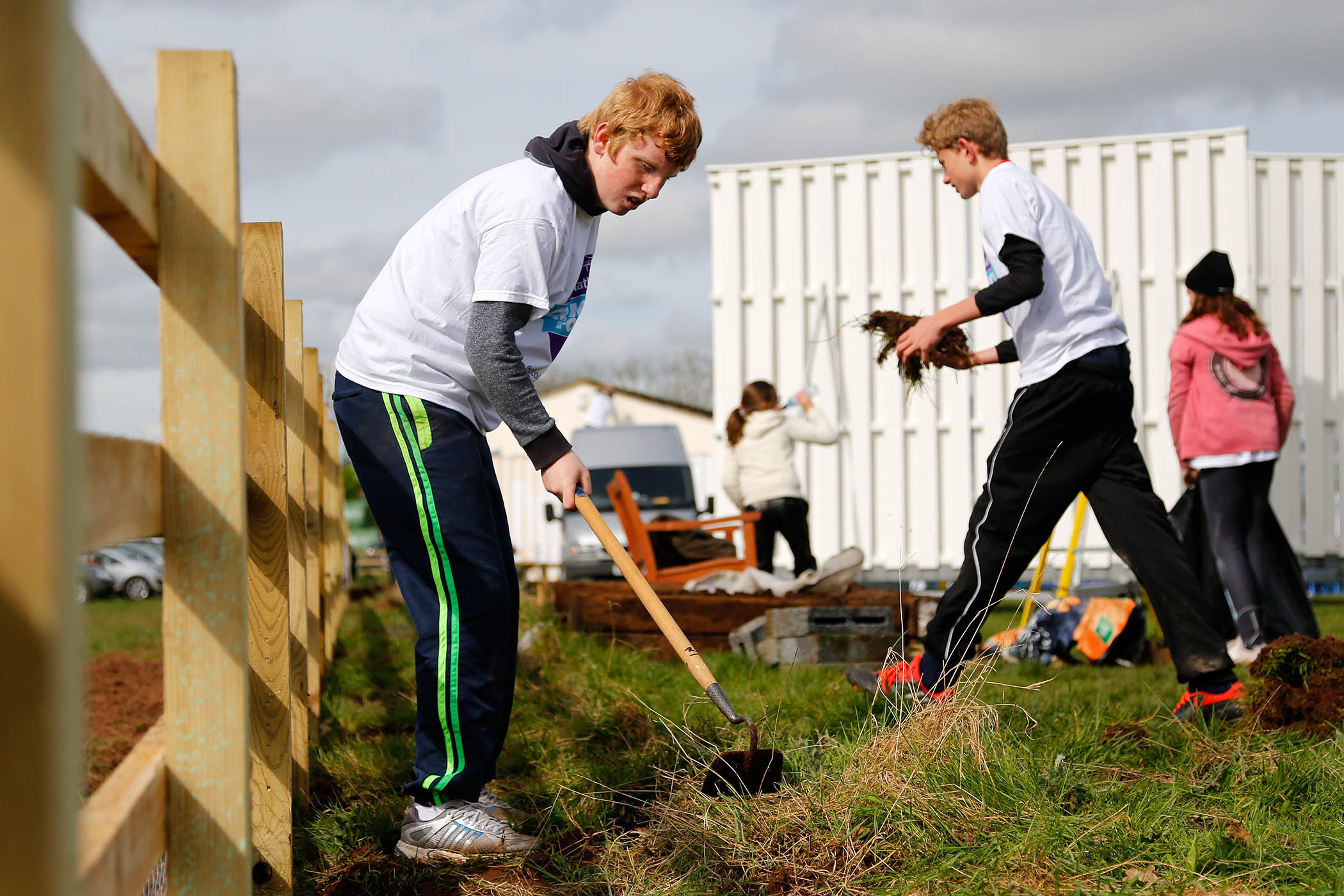
Such learning can be acquired through active citizenship in schools, achieved by work experience with local government, sports and cultural bodies, the voluntary and community sectors, and many more.
Jane Buckley Sander Bidborough, Kent
The arts of engagement
During The Observer Walk past the Tate Modern, Nicholas Serota stresses the importance of the arts: “the humanities, the understanding of music, drama, art are things that stay with you… it’s about experience and understanding and feeling”.
For the future, he is concerned, as I am, about the emphasis upon the Stem subjects and the “ridiculous number of exams”, the need to memorise and reproduce, rather than the ability to think critically and express yourself.
Since the focus on Stem subjects, there has been a major decline in arts teachers and arts subjects being taught in secondary schools. The article also mentions dropouts from school and students with neurodiversity. Including the arts in the curriculum alongside more vocational courses will better match the activities that motivate students and the varied ways in which they learn.
We need to radically change the curriculum to make it more inclusive.
Carolynn Cooke Edinburgh
Not for sale
The government is right to tighten the rules on overseas political donations (“Crypto billionaires face 12-month block on political donations over £100,000”). But if wealthy donors can simply wait a year or acquire a UK address before giving millions to political parties, the public will rightly question whether the reforms go far enough.
The bigger issue is not where a donor lives, but whether any individual should be able to make multimillion-pound donations at all. Polling consistently shows that the public are concerned that the wealthy can buy influence, regardless of whether that wealth comes from Bangkok or Basingstoke.
On 14 July, MPs have the opportunity to close that loophole by backing Stella Creasy’s amendment to the representation of the people bill to introduce a £100,000 annual cap on political donations. It is a good starting point that will help to end the VIP culture in Westminster. MPs who don’t back this amendment are basically saying politics should remain for sale to the highest bidder.
Olly Buston, director of Clean Up Westminster London
Inside and out
Rowan Moore is right (“In Cambridge, it’s town v gown over rival plans for a college library”) that architectural judgment requires more than counting votes. A library must work as a library. Serious questions of structure and cost cannot be settled by an opinion poll. But nor should public opinion about the outward face of a public-facing building be treated as irrelevant. More people will walk past the outside of the new library than will ever use the inside. Architecture is a public art, shaping our common home. What people feel about it matters.
Unless we build in existing towns and cities in forms people are willing to welcome, younger generations will struggle to afford homes, while growth is pushed into less sustainable sprawl. Good design should welcome scrutiny, including from non-specialists. Cambridge deserves buildings that meet their brief and enrich the city. These should not be opposing aims. The present design has not achieved either.
Nicholas Boys Smith, chairman, Create Streets; David Milner managing director, Create Streets
Rowan Moore reviewed the architecture and buried the law. He tells readers our group, the Christ’s Lane Action Group, “has won the first round” of a judicial review: the College’s own account of a case it has in fact agreed should be quashed. On 28 April 2026 Cambridge City Council and Christ’s College signed a consent order agreeing the planning permission be quashed on all four grounds we argued, with residents’ costs paid.
The College has not acknowledged that consent in its public statements about the application. Writing to all 42 city councillors, and in its resubmission statement, it calls the judicial review merely pending. Its stated aim: get the same building, with the same massing, re-approved “more quickly,” rather than “wait for the application to be referred back to the Council by the High Court”.
Christ’s Lane Action Group Cambridge
Birth needs trust
Women are approaching their births in fear (“From Letby to labour, fear was the mood music of my pregnancy”).
This is a cultural crisis. Since the 2015 Morecambe Bay investigation and subsequent reports, the “ideology of natural birth” appears to bear the brunt of the blame.
Midwives are leaving the profession in dangerous numbers. Their title as guardians of natural birth was removed, courtesy of the Care Quality Commission, leaving women, their partners and the midwives who should be supporting them in fear. What ideology?
Jean Davies Hon Fellow RCM, Newcastle
Power of silence
Your editorial (“Muzzled by Meta”) highlights the unfettered power of the big social media companies. The constraints placed upon Sarah Wynn-Williams are further evidence of the threat that Meta poses to democracy. It is beyond ironic that an organisation that champions free speech is so against it when it involves criticism of itself. I was heartened that sales of her memoir Careless People: A Cautionary Tale of Power, Greed, and Lost Idealism increased by over 300% after her “non-speaking” role at the Hay Festival.
David Felton Crewe, Cheshire
Not last orders
Beside me as I write is one of Humphrey Smith’s “let’s just talk” beermats (Obituary) with its list of banned devices such as mobile phones, tablets and laptops, ending with “etc etc” in case any were forgotten. Of his business idiosyncrasies, you mention the quirkily modest prices only fleetingly. Despite Covid, in the outskirts of Harrogate, we still have a sylvan, fully functioning Sam Smith’s. We also have many “normal” pubs with “normal” din – and “normal” prices! RIP Humphrey.
Malcolm Wright Harrogate
Photograph by Paul Thomas/Getty Images
Newsletters
Choose the newsletters you want to receive
View more
For information about how The Observer protects your data, read our Privacy Policy