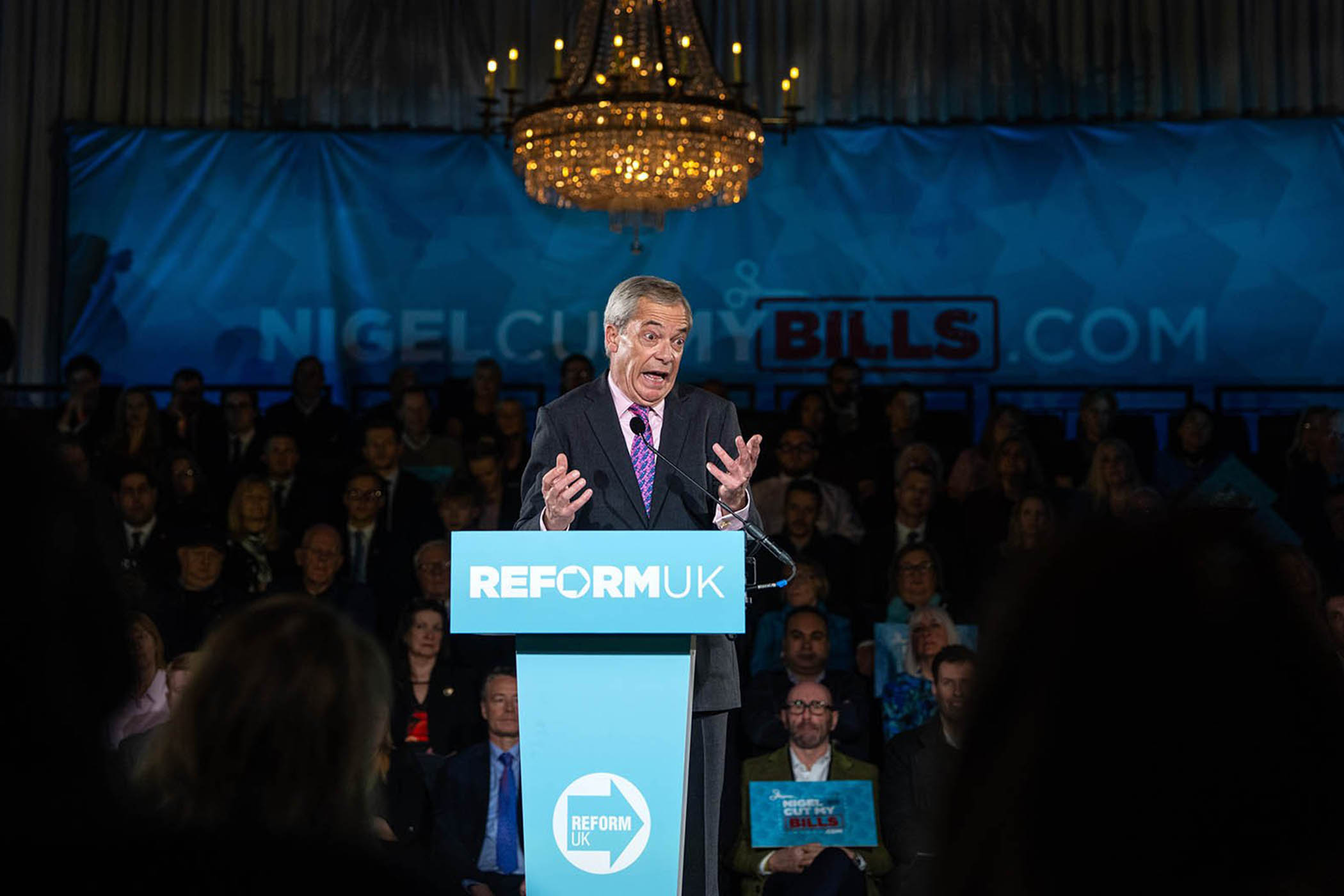

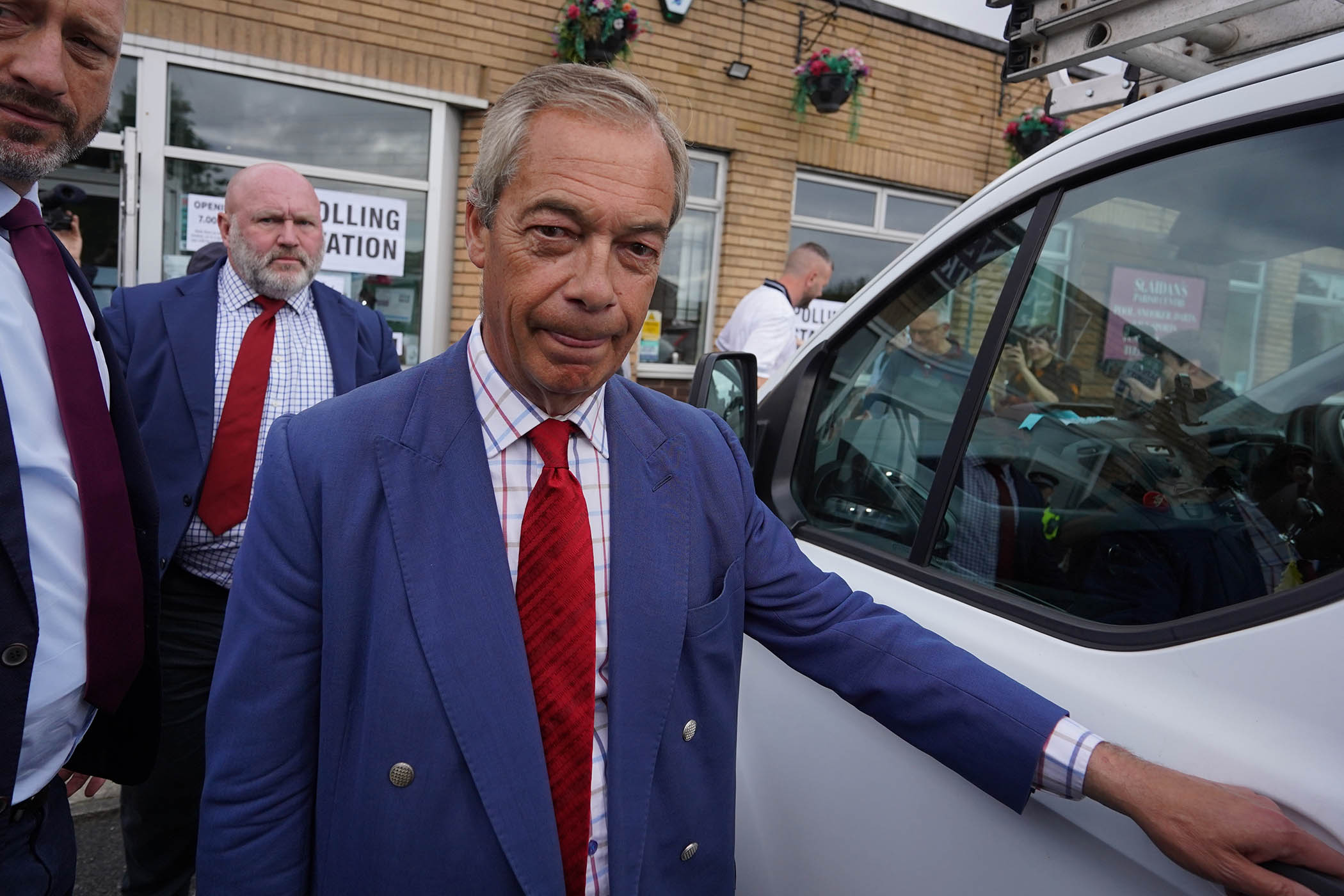
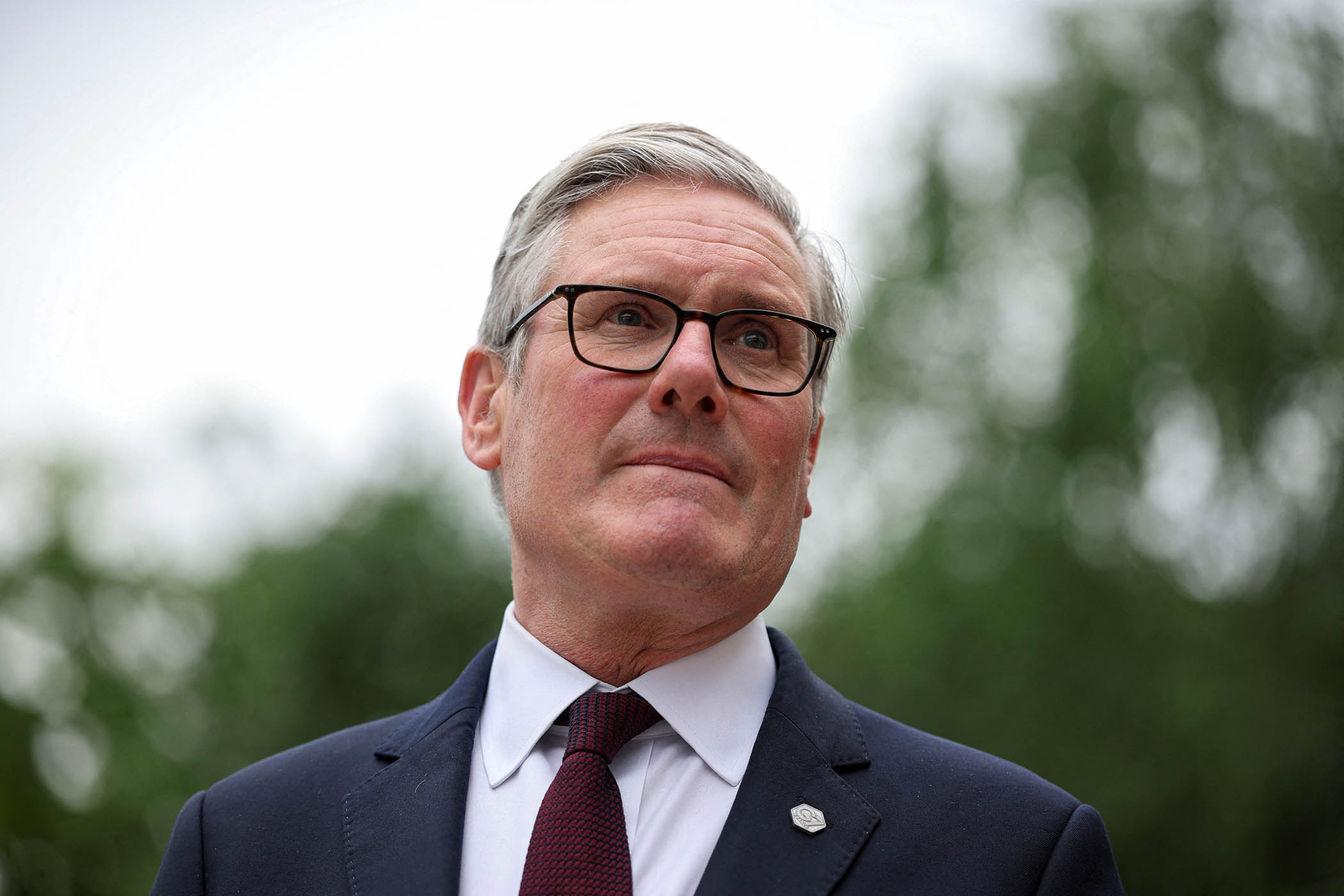
If Nigel Farage had scripted the past six months of British politics they could not have been set up better for Reform. The Labour government is incredibly unpopular, struggling for leadership and beset by scandals and crises. The Tories are barely registering in the public consciousness, polling in single figures among the under-50s. Immigration remains the No 1 issue for voters, as small boat crossings continue. Public anger, and belief that the country is broken, is only growing.
Yet Reform has seen its polling average fall, from 31% in August to 26% today. Farage’s approval rating has also dropped (from -29 in August, according to YouGov, to -37 in February). In the most recent Ipsos political monitor, the much reviled Keir Starmer was marginally ahead of Farage as best choice for prime minister.
This drop-off in Reform’s support hasn’t got much attention. After all, the party remains in the lead when it comes to voting intentions at the next general election, and will do well in May’s local elections. Everyone else, bar Zack Polanski’s resurgent Greens, is also struggling. But something has shifted in public attitudes towards Reform that should give hope to anyone who shudders at the thought of Farage walking into No 10. Not least because one reason the party is struggling to maintain momentum is growing tensions within its ranks that are unlikely to go away.
To understand what’s going on we need to look at Reform’s potential voter pool, and the two quite distinct bloc of voters within it that each represent about half the party’s support.
In the first are the true believers, who have likely been fans of Farage for a while. They enjoy GB News and think Donald Trump is much maligned. They’re the online commentators who think London is a crime-ridden hellscape and Ed Miliband is about to introduce sharia law.
But the other bloc is much less sure that Reform is the answer. These voters are just desperately fed-up with all the other options. Sit in any focus group of floating voters, particularly those struggling financially, and you’ll meet people considering voting for Farage even though they have little faith he would do a better job than Starmer. To take two examples from groups of Reform voters run around the recent byelection in Gorton and Denton: “I don’t necessarily like [Farage] as a person... I think he’s a bit of a really bullshitter... I wouldn’t reckon he’d be a good prime minister.” And: “I’m scared to death of Reform getting in and me being like, ‘Shit, I was one of them that voted for it’.”
Having successfully destroyed the cordon sanitaire around British politics, Reform is finding it hard to erect a new one
Having successfully destroyed the cordon sanitaire around British politics, Reform is finding it hard to erect a new one
It’s these voters who have started to shy away from Reform since its polling peak in August, and they’re the ones who will determine if Farage becomes prime minister or merely splits the vote on the right. They’re unhappy enough to consider “rolling the dice” on an untested alternative, but not if the prize looks booby-trapped.
Reform’s problem is that its policy agenda is increasingly tailored to the true believers rather than the voters it really needs. On immigration it has shifted from a majority position – stopping the boats by ignoring international law if necessary – to one that’s more marginal. The party is now promising to deport people with indefinite leave to remain, who may have lived and worked here for decades, if they don’t earn £60,000 a year. There are plenty who worry about our borders being insecure, but they do not want to boot the nice nurse who lives next door out of the country.
On any number of issues, from opposing regulation on online pornography to backing Trump’s attacks on Iran, Farage is taking unpopular positions. Greater personal scrutiny is also taking its toll – whether that’s Farage’s schoolboy extremism or Richard Tice’s creative attempts to minimise his tax bill. Each of these may be noticed by only a few potential voters, but collectively they start to erode support.
But to keep hold of the true believers, they dare not moderate too much. There is, of course, great value to the party in having GB News pump out propaganda all day, and in its ability to dominate the narrative on Elon Musk’s X platform. But there is also a cost to becoming overly preoccupied by the concerns of the most fervent. The arrival of an even more extreme alternative, in Rupert Lowe’s openly racist Restore Britain party, is also dragging Reform further rightwards as it tries to avoid accusations of milquetoast acquiescence to the concerns of woke liberals. Having successfully destroyed the cordon sanitaire around British politics, it is finding it hard to erect a new one.
These tensions are now causing fissures. Many of the recent arrivals from the Tories, such as Robert Jenrick and Nadhim Zahawi, want to pursue what one might call a “Giorgia Meloni strategy”. The Italian prime minister used “values” issues, from same-sex adoption to immigration, to win support for what has turned out to be a fairly conventional rightwing government. While still being happy to engage in culture wars and push legislation to give herself more power, Meloni has carefully avoided taking positions that would seem overly extreme, such as supporting Vladimir Putin over Ukraine, or Trump’s military adventures.
But many others in Reform want a full-fat “Trump strategy”, promising to create a UK version of ICE, bomb Iran and torch Britain’s institutions. These differences have been apparent in Jenrick’s initial interventions as the party’s Treasury spokesperson. In his first big speech he tore up the party’s economic policy, reversing promises to cut taxes and focusing on spending cuts. He also promised to keep the Office for Budget Responsibility, which Farage had previously identified as a hotbed of liberal wrongthink.
It was, essentially, identical to a speech Jenrick might have given as Tory shadow chancellor, and there was much grumbling online. Jenrick also took a different line from his leader on Iran, being much more cautious about the benefits of joining the Americans. Farage himself then rather meekly backtracked.
This is new territory for Reform. Farage has always been completely dominant in the party, as he was in Ukip before it. He remains by far its most important figure: none of the alternative leaders has anything like his name-recognition or fanbase. But as the party gets bigger, running numerous councils and adopting dozens of ambitious ex-Tories, it’s getting harder for him to maintain control. Several council leaders have gone against party policy by, for instance, introducing a tax on second homes. Numerous councillors have resigned or been kicked out by their colleagues. Discipline is fraying.
Perhaps most importantly, Farage himself seems torn over strategy. He has allowed Jenrick to rip up his economic policy and has got into a pickle over Iran. He goes back and forth on how radical he wants to be on changing the funding model of the NHS. He continues to criticise Lowe and Tommy Robinson for their extremism while adopting policies Robinson might have blanched at a few years ago. He has appointed two evangelical Christians, James Orr and Danny Kruger, to develop party policy and then seems to have been surprised that they disagree with him about online porn. It’s all got quite messy.
While the party is raising more money than others, it is dependent on a handful of donors who have to be kept happy, most notably Christopher Harborne, a Thailand-based crypto billionaire who has given it £12m and represents another reputational risk.
Of course, Reform remains in a strong position. The government’s weaknesses are enough to keep the party favourite to be the biggest after the next election. Farage could still make it to No 10. But the closer he gets, the more its internal contradictions become apparent and the more nervous voters get. Farage might well be blowing his big chance.
Photograph by Carl Court/Getty Images
Newsletters
Choose the newsletters you want to receive
View more
For information about how The Observer protects your data, read our Privacy Policy