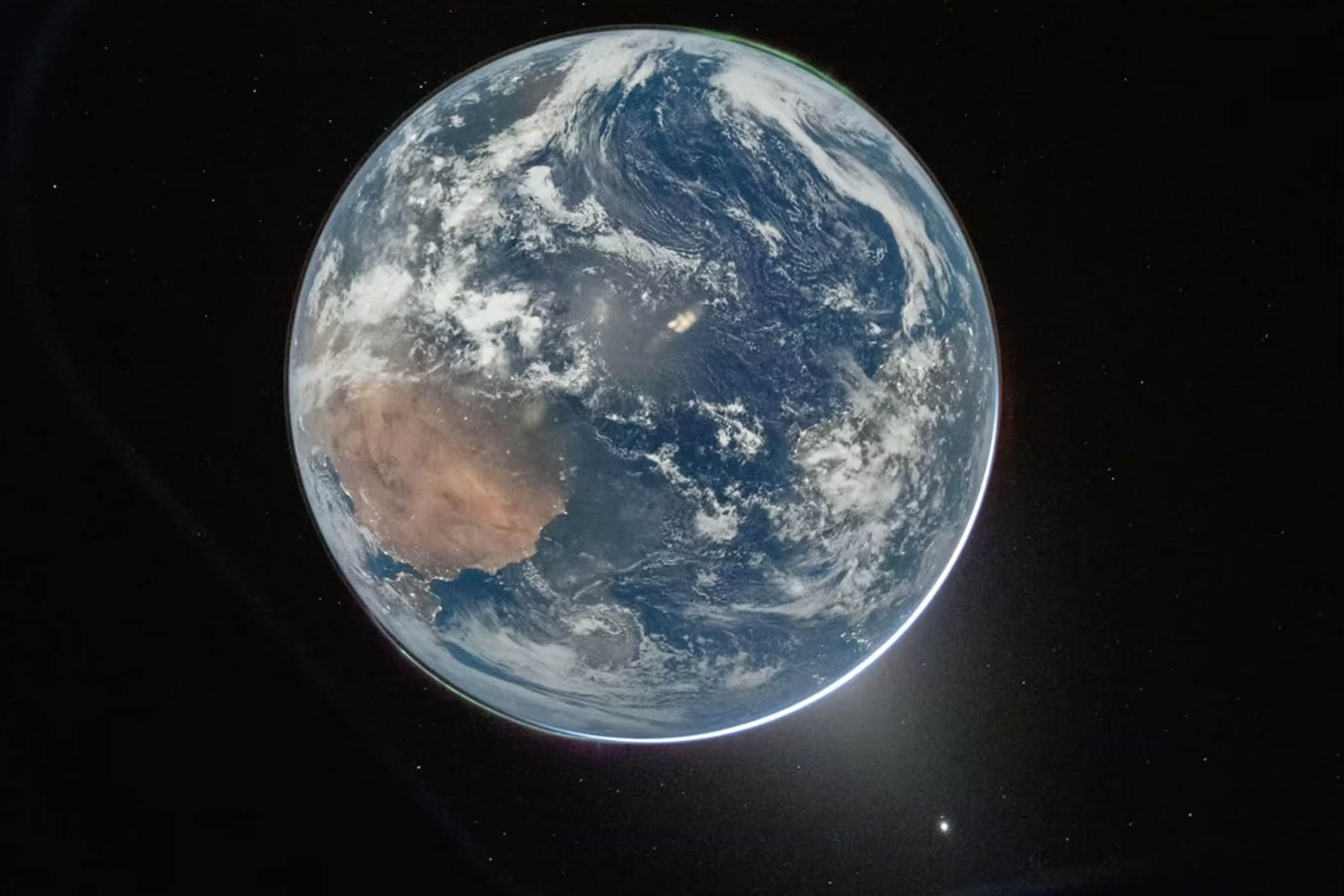
It will be the third act in the drama of Artemis II. After the flawless launch from Cape Canaveral and the translunar injection burnout of Earth’s orbit, the Orion space capsule will disappear behind the moon tomorrow evening.
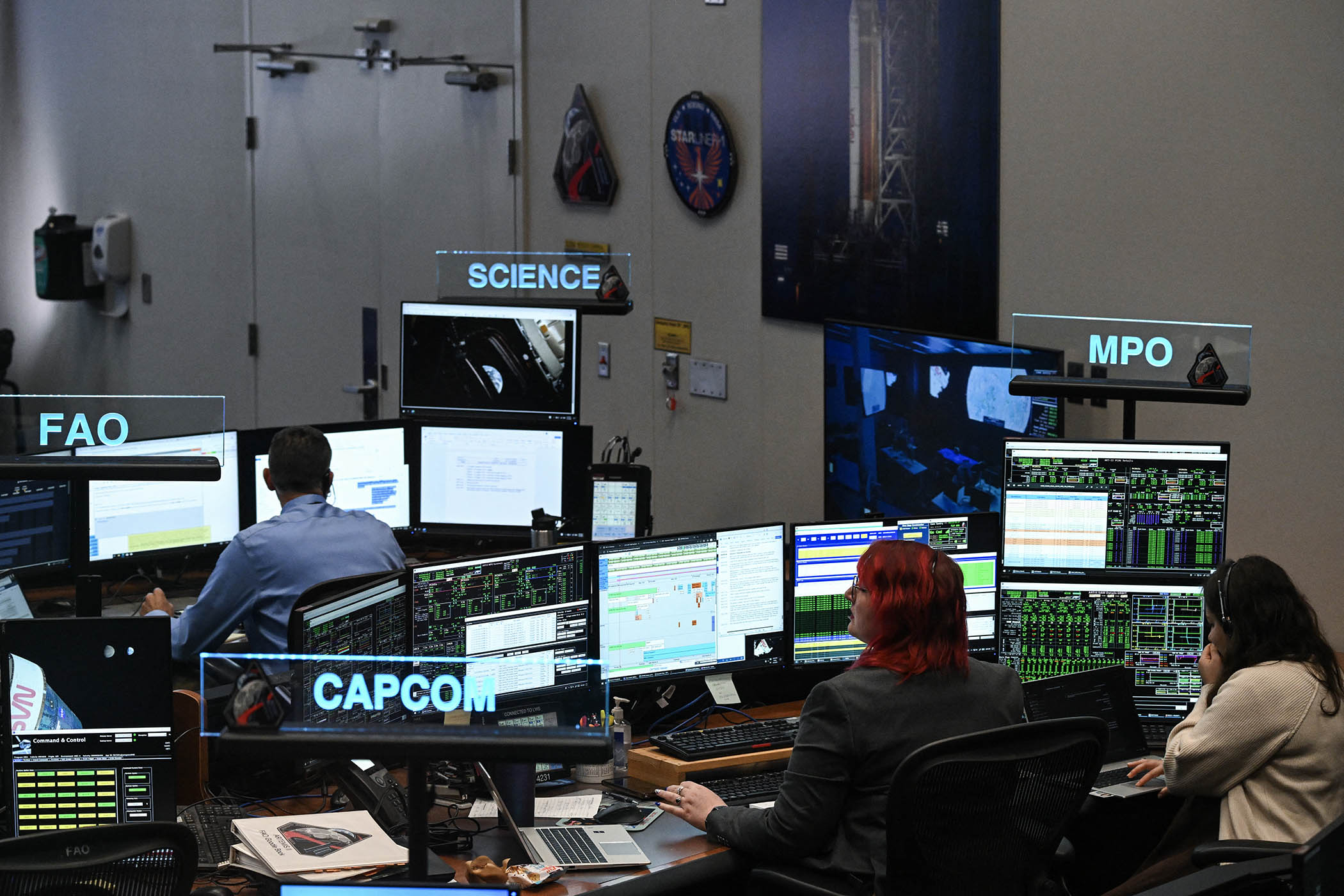
For about 41 minutes, the four astronauts will be out of contact and on their own, with only stars and the dark side of the moon for company. At ground control in Houston, Texas, nerves will be on edge at Nasa’s Johnson space centre until the spacecraft reappears, homeward bound.
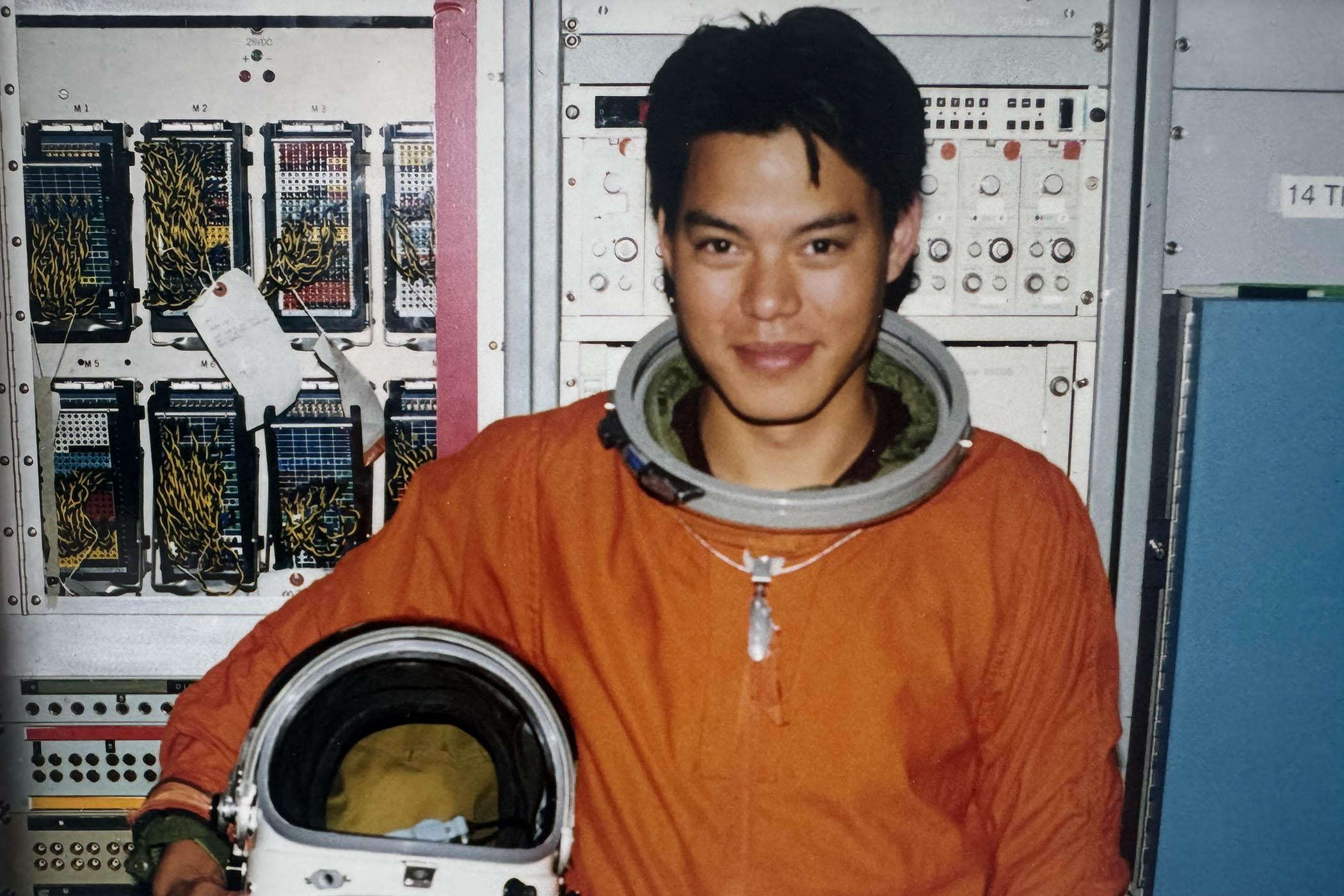
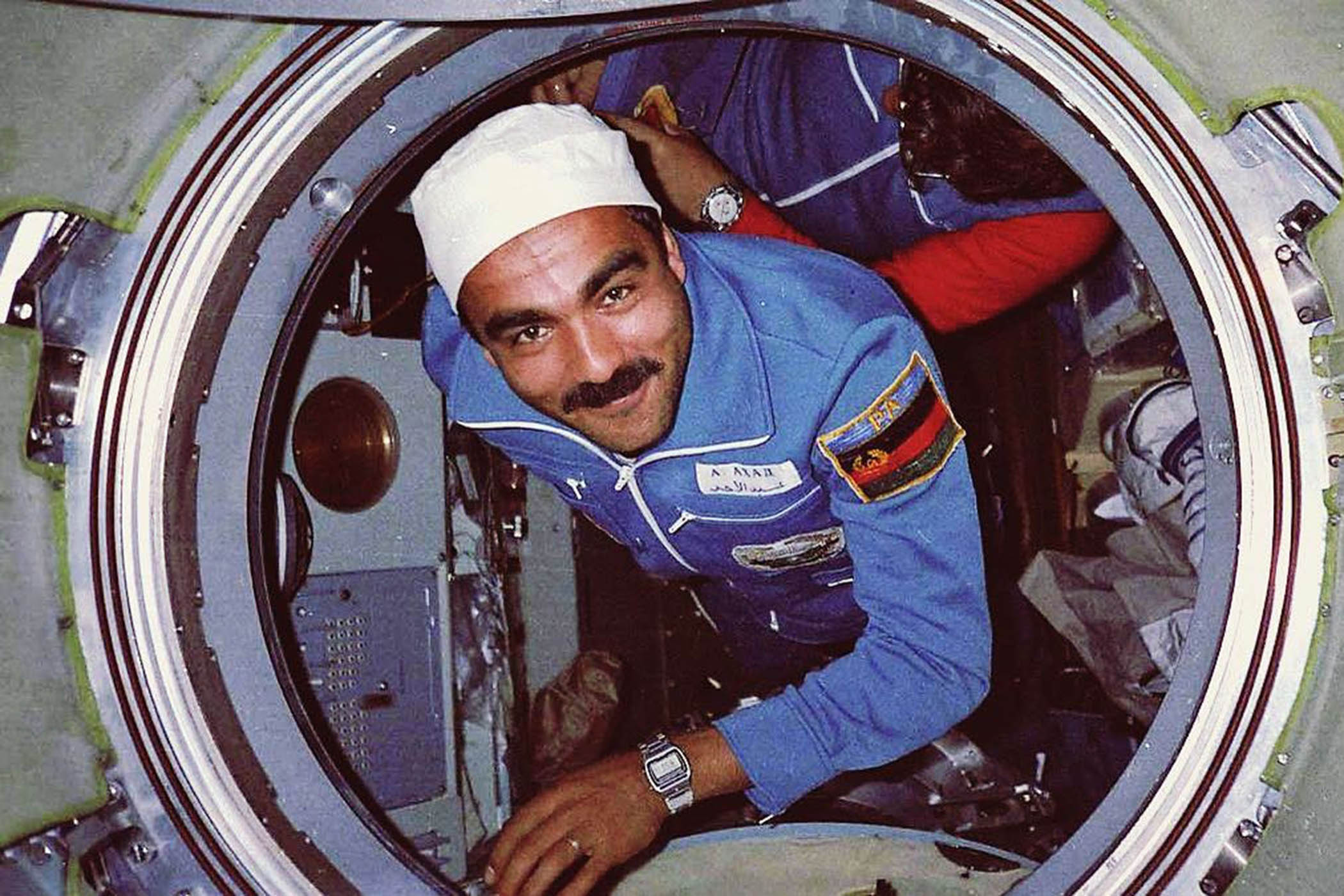
“There will be nerves for people on Earth, less so for the astronauts,” Helen Sharman, Britain’s first astronaut, told The Observer. Sharman’s British-Soviet mission 35 years ago also lost contact with Earth when flying a Soyuz capsule to the Mir space station.
“The crew will be fine,” said Sharman, who is UK Outreach Ambassador for Imperial College London. “It’s mission control and everybody else on Earth breathing that sigh of relief as they come around the other side.”
For now, Orion continues to speed towards its rendezvous with the moon at more than 30,000km/hour.
On Saturday, mission control’s main concern for day four was whether the capsule needed to correct course. Nasa had planned three “outbound trajectory corrections” with a light burst of thrust, but cancelled the first because everything had gone to plan.
The inherent drama of a space flight has been balanced by the mundane. Capcom, the single “capsule communicator” made up of active astronauts delivering information to the crew aboard the Orion, has fielded queries about strange burning smells from the toilet and whether the astronauts will see the moon upside down as they speed past (in space, everywhere is up).
They also need to monitor other much more serious concerns. The Artemis II crew has left the magnetosphere, the Earth’s magnetic field which protects us from solar wind – high-energy particles emitted by the sun that can cause cancer, radiation sickness and damage the astronauts’ DNA. It may have even affected their sleep, as these cosmic rays can penetrate the eyelids. “While I was in low Earth orbit, I saw bright flashes every few seconds, a streak of brightness across your eye,” Sharman said. “And I was still within the magnetosphere.”
If there is a solar storm, Reid Wiseman, Victor Glover, Christina Koch and Jeremy Hansen can shelter inside a central stowage area. A better solution might be if future spaceships could be protected by their own magnetic bubbles – something Nasa scientists have been working on with a project called Crew Hat.
A first step towards that would be understanding large-scale magnetic fields, according to Colin Forsyth, professor of space plasma physics at University College London. He is part of a team attempting to map the magnetosphere using a new satellite, Smile, which will launch on Thursday.
Newsletters
Choose the newsletters you want to receive
View more
For information about how The Observer protects your data, read our Privacy Policy
“Earth’s magnetosphere is the best plasma laboratory we have,” he said. The Smile satellite will help us understand how magnetic fields work, which could be vital in designing a protective magnetic bubble for future missions, such as to Mars.
After the 41-minute blackout, Orion will conclude its slingshot around the moon and head back to Earth. The final acts in the drama will be re-entry and splashdown in the Pacific Ocean.
“That’s where I’m most nervous for them,” Sharman said. The first Artemis mission in 2022 tried to overcome the intense heat generated by the friction of entering the Earth’s atmosphere by making the capsule skip across the outer atmosphere. This damaged the spacecraft’s heat shield much more than expected.
Because heat shields take so long to produce, it wasn’t possible to build a new one for Artemis II. Instead, Nasa has changed the trajectory of the spacecraft’s re-entry to a steeper, hotter angle. “That's not really been tested in a real-life situation,” Sharman said. “So those are my nerves. But all in all, things look really promising.”
Photograph by RONALDO SCHEMIDT / AFP via Getty Images