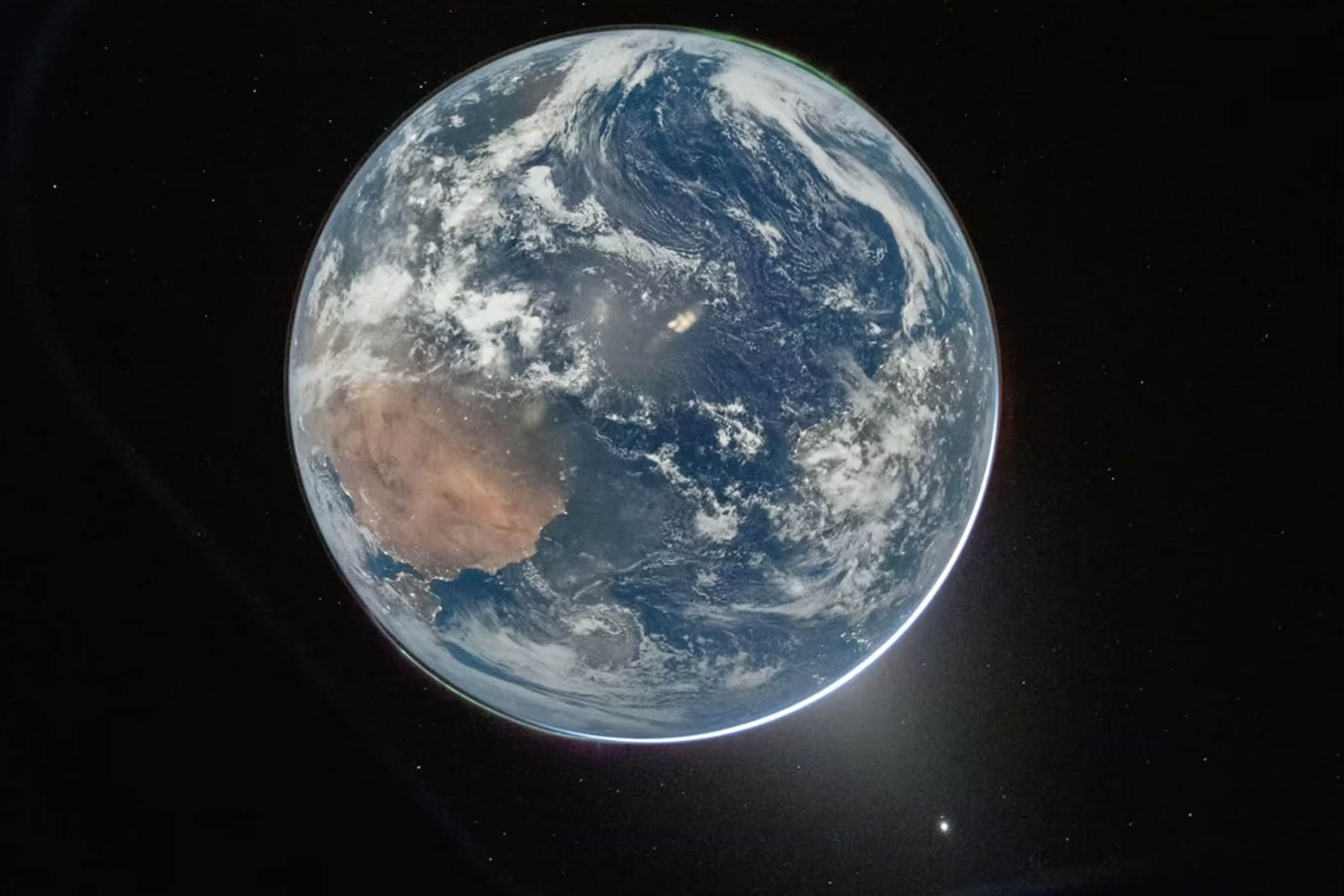



The most expensive photograph in history zipped back to Earth across more than 100,000 miles of space on Friday morning, to Nasa’s mission control in Houston and thence to the Associated Press: a view last seen in 1972 and first in 1968.
The original image from the same perspective was named “Earthrise” and was captured by the astronaut Bill Anders with a Hasselblad as he rounded the dark side of the moon in the command module of Apollo 8. From there, he said, humanity’s home planet glowed with “the only colour in the universe”.
Since then, Earth’s atmosphere has thickened by 100 parts per million of CO2. Wars have ended and begun. The polar caps have shrunk. The world’s glaciers have lost more than 9,000 gigatonnes (9tn tonnes) of ice and its population has more than doubled. But the Artemis II astronaut Victor Glover still said of it on Thursday night: “You look amazing, you look beautiful.”
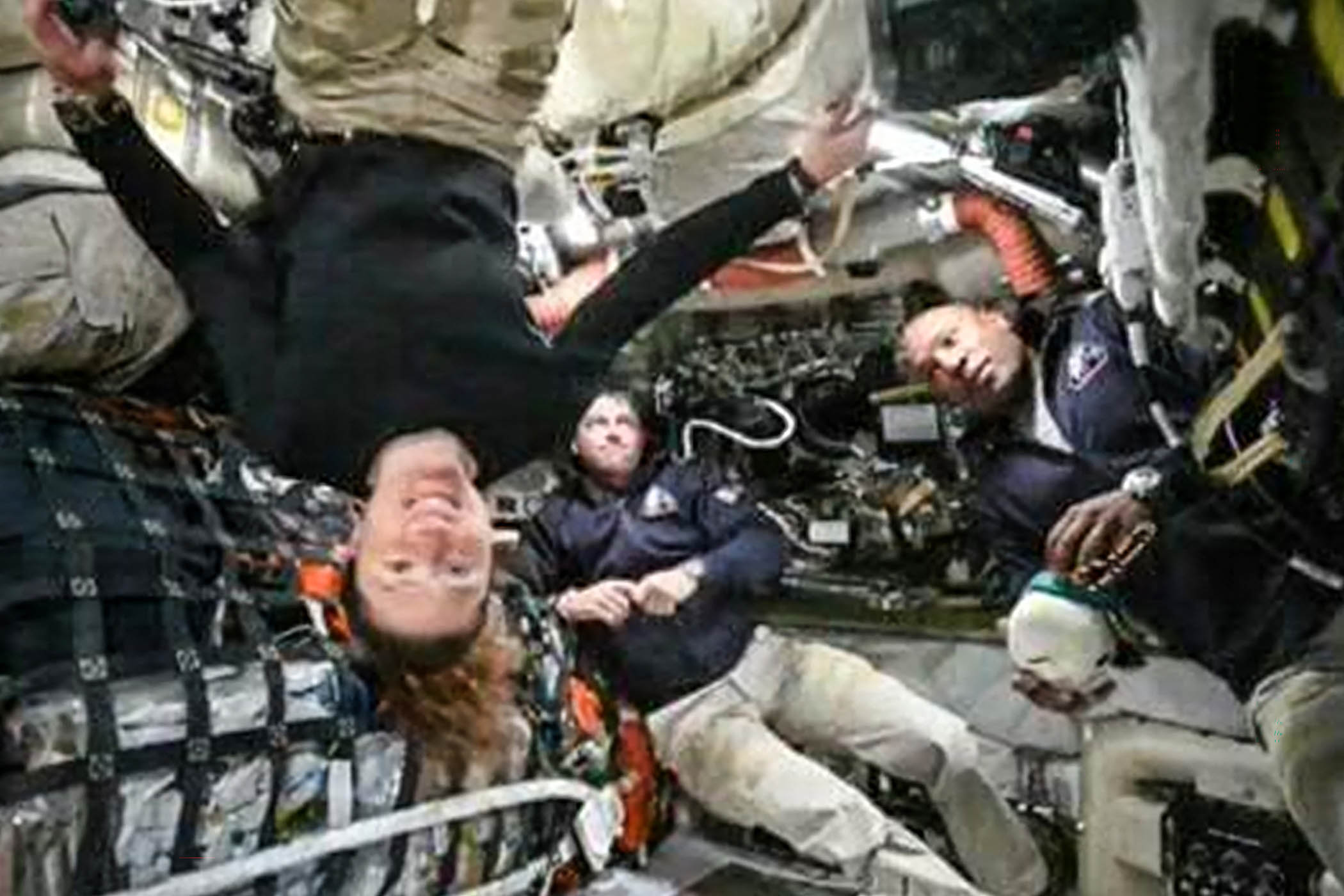
Artemis II crew members on 3 April
In the new Earthrise, an upside-down western Sahara nudges the Iberian peninsula. Clouds dance like salt spray over the Atlantic and a line of green aurora australis over the south pole is paired with a bright crescent of sunlight cradling the western hemisphere; they give an idea of the frightening thinness of the atmosphere, rendered like the two-tone skin of an apple.
The picture cost between $4bn (£3bn) and $93bn, depending on whether you price the first crewed mission to the moon since the Apollo years as a single launch or on the basis of the whole swelling budget of the Artemis programme.
Either way, the Trump administration has decided it is too much. With extraordinary timing, as Artemis II’s moon-bound crew hurtled past the point of no return last week, Nasa’s new administrator told staff Donald Trump wants $6bn in cuts, to be achieved by scrapping more than 40 science programmes but also phasing out the Space Launch System (SLS) and the Orion spacecraft – precisely the rocket and crew capsule that have got the Artemis crew this far.
The object is to free up money for a permanent moon base, outsourcing the business of getting there and back to commercial providers. In practice, that means Elon Musk’s SpaceX or Jeff Bezos’s Blue Origin, picking up a gauntlet almost as daunting as the one thrown down by John Kennedy in 1961.
Then the US president’s challenge was to land on the moon and return safely to Earth within nine years. Now it is to get there and back in less than four – and before China.
As a goal, it is “optimistic and aggressive”, said Prof Elliott Bryner, who teaches rocket scientists at Embry-Riddle Aeronautical University in Arizona.
Newsletters
Choose the newsletters you want to receive
View more
For information about how The Observer protects your data, read our Privacy Policy
Dr Roger Launius, former chief historian of Nasa, said going back to the moon “makes perfect sense”, but only because his frame of reference is different. The space community divides itself these days into “Martians” and “lunatics”, he said, “and I’m on the lunatic side... I believe we’ll create a research station there looking a lot like [one in] Antarctica, and we’ll learn a whole lot about how to survive with less and less resources brought from Earth.”
It is a tempting vision – and has been for a while. In 1865, as the American civil war ended, Jules Verne imagined a rocket fired from a vast cannon named Columbiad rising above Florida on a “pyramid of fire”, hastened on its way by Yankee Doodle, “sung by five million hearty throats”.
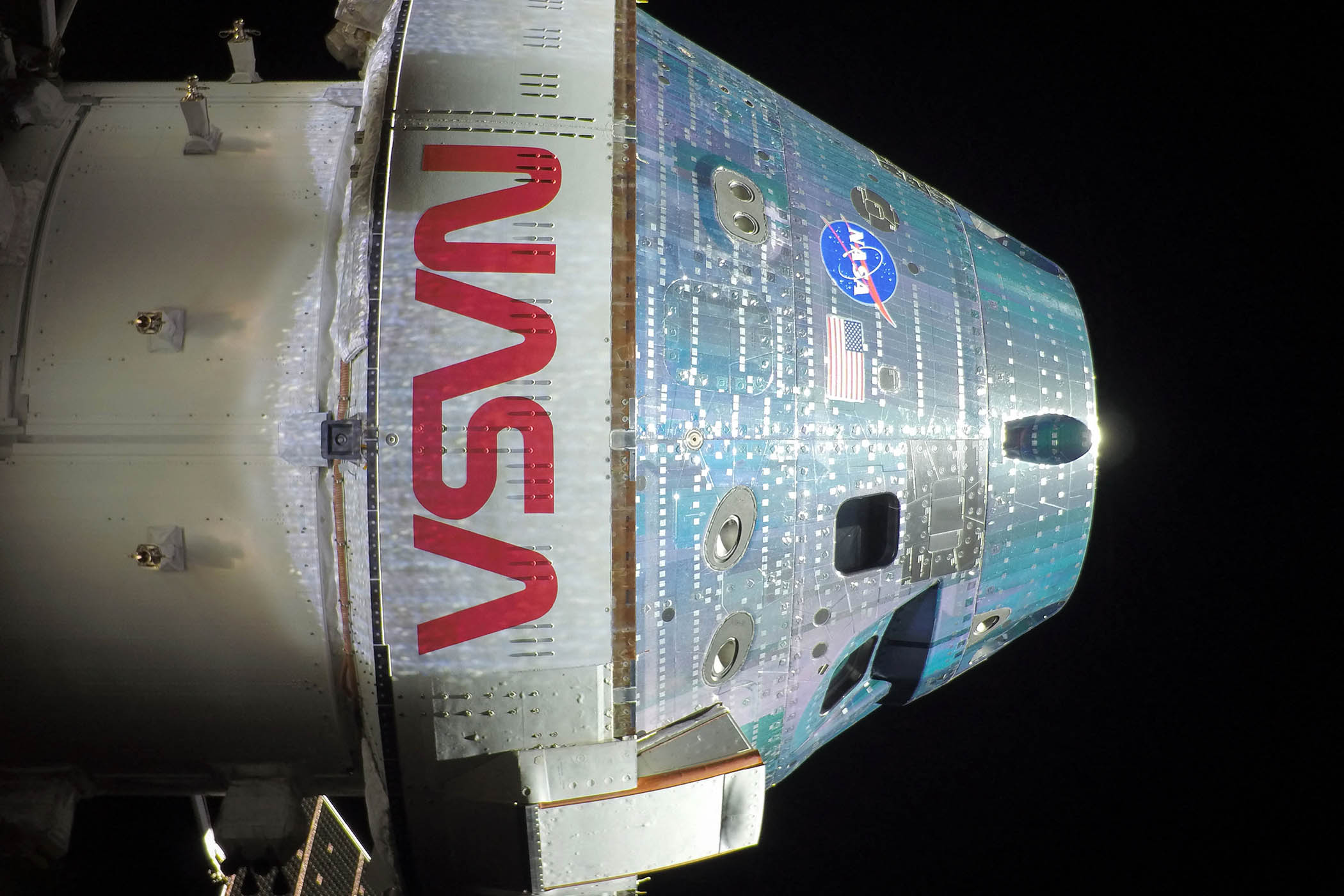
Nearly a century later, in 1959, Nasa produced a five-step strategic plan to take astronauts to orbit, the moon and Mars – a plan that, Launius said, it is simply readopting now after a long hiatus.
But there is a catch. Despite everything it learned on the Apollo programme, Nasa has a problem getting people back on to the surface of the moon. Unlike Apollo, Artemis II has no lunar lander. Neil Armstrong and Buzz Aldrin brought theirs with them in the body of their Saturn V rocket. This time, the plan is to meet one pre-positioned in orbit round the moon by either Musk or Bezos, but neither of them is even close to delivering it.
Blue Origin’s Blue Moon lander arrived in Houston on a barge in February for testing but has not yet left the ground. SpaceX’s Starship has blown up on five of its 11 test flights and is undergoing a redesign. It has never reached a stable Earth orbit or demonstrated the in-orbit refuelling on which its onward journey depends, and therefore has not yet been to the moon or proven its human lunar landing system.
Experts are wary of prejudging future Artemis missions while this one is still in progress. Even so, Bryner worries about relying too heavily on a Musk rocket that is even bigger than the SLS but has never delivered a payload to orbit, let alone the moon. The biggest fan of a design is the designer, he said. “Are there people doing it suffering from confirmation bias? I don’t know, but it is a danger. It really is.”
Nasa’s new administrator, Jared Isaacman, is a self-made billionaire ally of Musk’s who has twice been to space on privately funded missions using SpaceX hardware. As a nominee for the job, he promised action, not delay, “in a great competition with a rival that has the will and means to challenge American exceptionalism… including in the high ground of space”.
Last month he announced a radical shake-up of Nasa’s human space flight efforts, including more Artemis launches to compete with China, a seven-year, $20bn sprint to build a permanent moon base and the crash development of an outlandish nuclear-electric rocket for deep space exploration.
China’s moon plans are straightforward by comparison. Its goal is to place taikonauts on the lunar surface by 2030. Money is no object since its space budgets do not need congressional approval. Its lander and heavy-lift rocket have been chosen, if not yet fully tested. “It looks like it’s almost ready to go,” said Quentin Parker, director of the Laboratory for Space Research at Hong Kong University, in Nature last week. “There is a possibility that China will get to the moon first.”
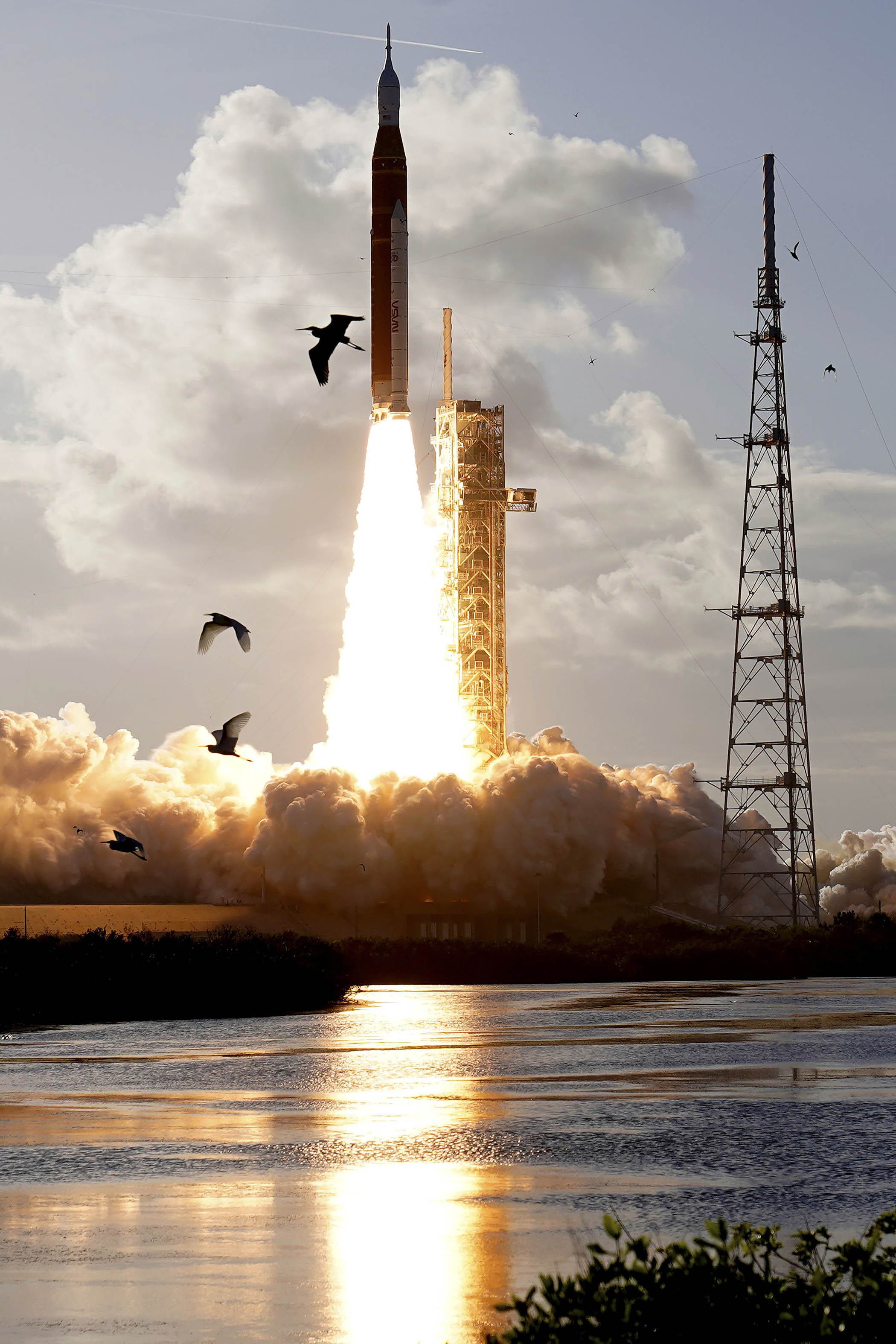
Artemis II lifts off from Kennedy Space Center on 1 April
Yet this space race is unlike the first. Back then, the Soviet Union posed an existential threat to the west that China does not. The Soviets could conduct space launches in total secrecy in Baikonur in Kazakhstan and the Siberian Arctic; China cannot. “We’ll see it coming,” said Launius. “Unless there’s something super secret, and a rocket launch [nowadays] is hard to keep a secret.”
Isaacman admitted last month that China “may be early”, and recent history, he said, suggests Nasa schedules may slip. The lesson of Artemis may just be that there is room in space –and even on the moon – for everyone, and no mad rush to get there.
For viewers of a certain age, last week’s launch has revived memories of the moon landings as global, unifying events. In 1969, Norman Mailer was even moved to wonder if humanity had found a way to speak to God. Since then, audiences have atomised, and scepticism has curdled into a mania for conspiracies, few more enduring than the idea that the Apollo crews never set foot on the moon.
Shortly before his death in 2012, Armstrong was due to make a trip to Britain. A notable item on his itinerary was a visit to a groundbreaking engineering project in the west of England staffed mainly by highly qualified technicians from the UK’s armed forces. The visit had to be scrapped because, when told they would be meeting Armstrong, most of the technicians said they did not believe his story.
On Monday, the Artemis II crew will loop around the far side of the moon, before starting the journey home. By 2030, it is likely China will have put humans on the moon, even if Nasa has not. If they have time for a side trip to the Sea of Tranquillity, they will at the very least be able to put the conspiracies to rest. Aldrin’s first boot print should be there exactly as he left it in 1969, untouched by a single molecule of air in more than 60 years.
Photograph by Nasa via AP, Nasa TV/AFP via Getty Images, Chris O’Meara/AP