

It is just after 4:40 on a Thursday afternoon and hundreds of men are huddled together staring at a television screen above them. Five numbers are listed across the pictures with the ability to make or break the day of those watching. The numbers represent the horses at the front of the pack that are racing just outside this tent, but why stand in the drizzle to watch when you can barely see them out on the course anyway?
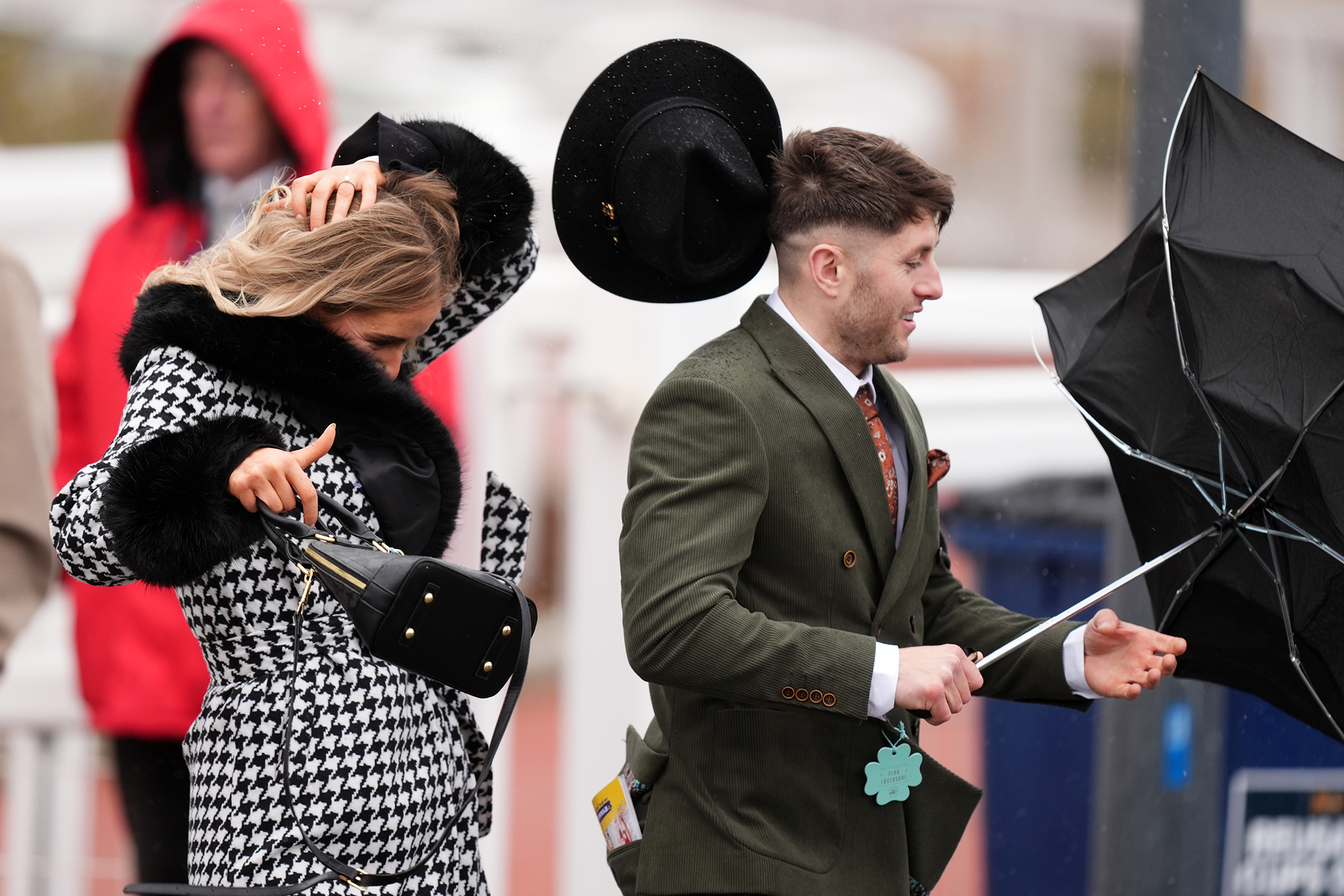
Welcome to day three of Cheltenham festival 2026. As we work our way through the afternoon’s races, we are reaching the peak of the debauched day out for the masses. Steps are becoming a little more wobbly, pints of Guinness slopping. In the ladies’ toilet, a bathroom attendant has had to give a woman her brown paper lunch bag to be sick in. The wind is causing havoc: hats break free from the heads that they once perched on. A man is playing a cover of Chappell Roan’s “Pink Pony Club”, an offensively egregious repurposing of a song that is not about horses but about finding community at a gay bar in West Hollywood.
Once the pinnacle of British racing, as a day out and a sporting event, in recent years the week has become more enthusiastically observed from sunnier climes – namely as part of a package holiday in Benidorm or Fuerteventura. Spend a day at the festival and it is not hard to see why. Entry and a return train ticket from London will set you back the best part of £200. When you add drinks – a reduction in prices mean it is only £7.50 for a pint of Guinness or Madri now – and food – £15 and a long queue for your choice of food cart fare – and betting – when the fun stops, don’t stop – it is easy to see how £400 for a week's all-inclusive provides better value for money. Especially if it means you don’t have to stand in the drizzle.
But for the people who are here, spending money is part of the point. If you wanted to show an alien what aspiration in Britain looks like, you could do worse than bring it to a day at Cheltenham. They might wonder why it involves everyone wearing a specific kind of beige suit, but that is simply the uniform of those who look longingly at the field where helicopters ferry the fortunate to the races. The festival boasts the “busiest temporary airfield in the UK” for the week, with a return from London likely to set you back £10,000.
Even the celebrity appearances speak to the very best of ‘pull-yourself-up-by-your-bootstraps’ Britain. Harry Redknapp is a fixture with his horse Jukebox Man running in the Gold Cup, and a history of landlordism that includes turning a homeless shelter in Bournemouth into flats which would make any ambitious property speculator drool.
If you wanted to show an alien what aspiration in Britain looks like, you could do worse than bring it to a day at Cheltenham
If you wanted to show an alien what aspiration in Britain looks like, you could do worse than bring it to a day at Cheltenham
Meanwhile, Gemma Collins was doing her best to convince the women of the world that they could use Cheltenham as a way of closing the gender pay gap.
“It’s not just for the men,” she told ITV after winning £5,000 on Meetmebythesea. “Ladies, the money to be won is unbelievable.” The presence of the GC only added to my conviction that I might actually be in an episode of The Only Way is Essex populated by people who believe they would star in an episode of Peaky Blinders.
The gambling encapsulates all of this. As spending power declines, the dream of winning big, of having your life changed by a day out at the horses, increases. The reverie is its own piece of enjoyment. The minutes where every door is open to you until the race ends and you are staring down mournfully at the betting slip.
It gives a strange edge to the actual sport. The atmosphere is frenzied when the races reach their peak, these three to four minute slivers of time that punctuate the day. Most popular sports events involve everything except the sport itself. But the difference from, say, the darts – hardly a roomful of people paying judicious attention – is the sense of camaraderie.
With anywhere from seven to 23 horses in an individual race, it is a dog-eat-dog world with the spectator’s allegiances going in any direction. Financial investment makes sporting events fun when, particularly ones where you have scant understanding of what is going on, and gambling is notoriously addictive. Yet at an event premised first and foremost on the winning and losing of money, the crowd does not feel united by what they are watching. Even beyond the slightly jarring feeling of watching people whip horses – Animal Aid found that 214 horses were killed on British racecourses in 2024 with rules on whipping broken 557 times by jockeys – there is no sense of the collective on the terraces, a fragmented image of the society it reflects.
Generally, Cheltenham feels like a desperate cry for some past version of England. A pre-Covid, even pre-recession, England that may not have ever existed but is conjured up by the Union Jacks and St Georges’ Crosses tied to the lampposts at the entrance to the Racecourse. An England devoid of multiculturalism – almost everyone yesterday was white – except the ‘good kind’ like the South Indian restaurant in town doing an all-you-can-eat breakfast buffet for £15.
Cheltenham is a space to rage against the wokeness that killed Ladies Day until it was brought back this year, against the small boats, against feeling like you deserve more than what you have got, against having to buy a bottle of prosecco when you wish you could afford champagne.
As the day draws to a close, the excesses of a day’s drinking and everything else that might take place in the festival’s toilets are beginning to be felt. Tensions fray on the shuttle bus back into town as a mother and a daughter engage in a tearful argument. A man asks some women their opinion on if it's fair that his girlfriend is pissed off with him for pretending to kiss an older woman in the Guinness Village. One man asks another: “Do you think it’s funny? Because I don’t think it’s fucking funny because I’m £200 down.”
Everyone spills out onto the streets of the town or the trains back to London and Swindon and Cardiff. Ready to do it all again tomorrow or next year in the hope that the day is an auspicious start to a new era of their life.
Photography by Mike Egerton/PA Wire
More from The Observer
Newsletters
Choose the newsletters you want to receive
View more
For information about how The Observer protects your data, read our Privacy Policy