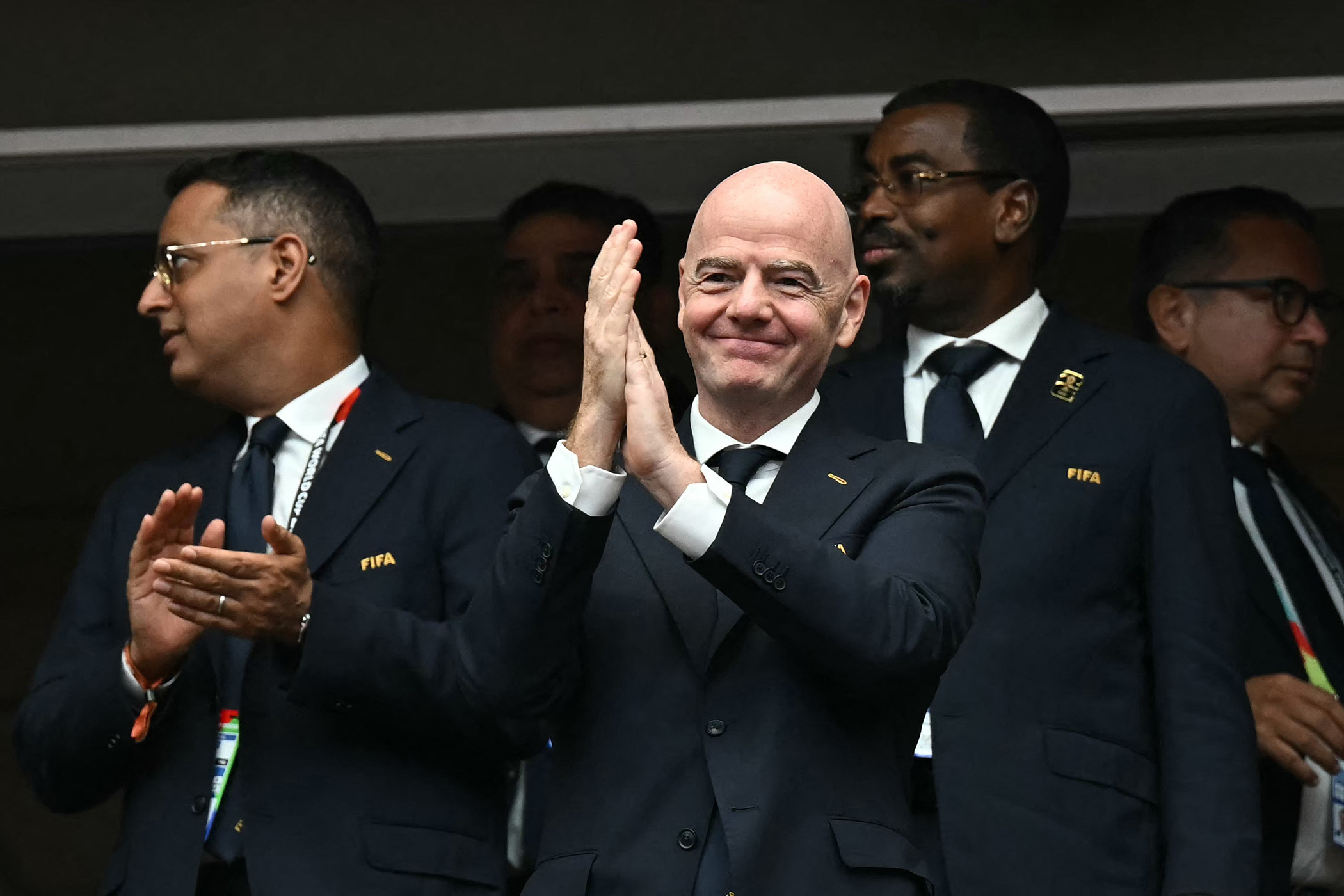

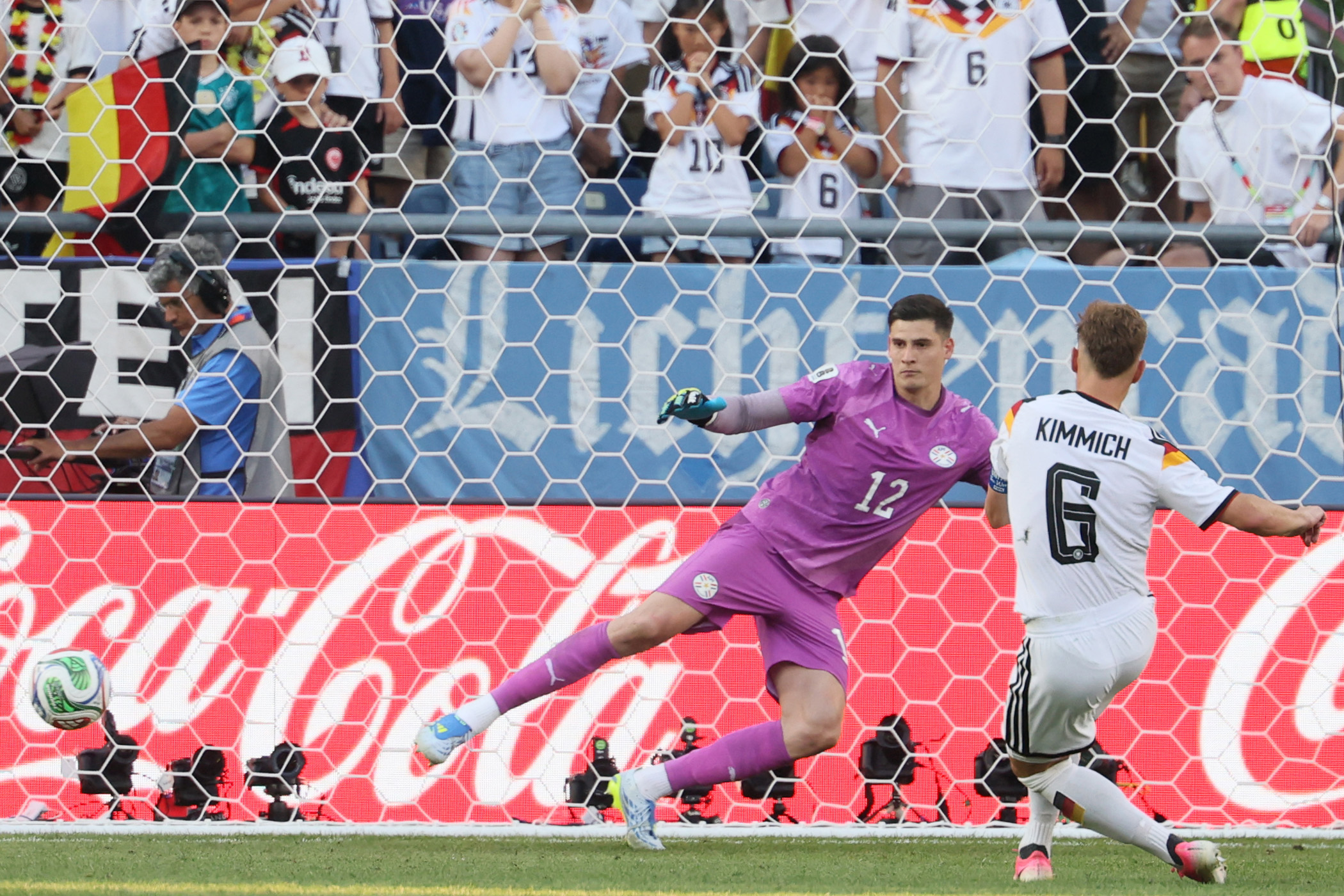
The first mistake that Gianni Infantino made was assuming that Donald Trump wouldn’t tell anyone about the phone call. That he wouldn’t get up in front of a group of reporters and – in between discussing Belgium’s squad depth and Harry Kane’s golfing ability – brazenly gloat that he had given the president of Fifa a call about Folarin Balogun’s red card.
The first mistake that we all could make is assuming that Gianni Infantino sees this as a mistake. That would require there to be consequences for what happened. The USA team were dumped out by Belgium despite having Balogun available – his red card for serious foul play was suspended by a year. This is set to simply become one more tab in the “List of 2026 Fifa World Cup controversies” Wikipedia page.
Football takes a fairly light view of the financially dubious side of things. Everything that takes place away from the field – off-book payments to agents, asset-stripping of clubs, luxury watches for votes – is seen as part of the fabric of the sport. There is a tacit acceptance that this is simply how football is. Stick a fistful of zeros onto an industry’s turnover and suddenly concerns about propriety melt away.
Fifa is set to record a turnover of £9.6bn over the four-year cycle which ends with this World Cup. In the same way that it was impossible to regulate the bankers after the 2008 financial crash, it is impossible to rein in football. We have a built-in instinct that if people make a lot of money, it must be because they are very clever, rather than because they are breaking the rules. The risk of pushing them out by seeing those rules enforced is too great to the industry – we would lose too much. Namely, the good fortune of being further ripped off year on year.
Part of the justification for this is the convenient lie that any off-field shenanigans, legitimate or not, do not truly interfere with the patch of grass where the game is actually played. But the events of this World Cup have quite clearly shown otherwise. As Andrew Giuliani, executive director of the White House Task Force on the Fifa World Cup 2026, said following the suspension of Balogun’s card: “We want to make sure that America, especially when you consider all the federal dollars that we laid out for this… can ensure at least it was going to be fairly administered on the pitch.
“We did that. You had that red card, which never should have been administered, reversed. And we stand by the actions that we took.”
It was all supposed to be different after 2015.
When police officers turned up at the five-star Baur au Lac hotel in Zurich ahead of Fifa’s annual congress and arrested a number of officials on corruption charges, it looked as if Fifa’s supranational attempts to stay above the law were coming to an end. They were investigated by the United States under the Rico act, most commonly associated with prosecution of organised crime. The then Fifa president Sepp Blatter was forced to step down, only days after he had been re-elected.
Yet almost a decade down the line, it is hard to say with a straight face that much has changed. Gianni Infantino will be re-elected next year, after changing the Fifa statutes to allow him to stand for an additional term. The logic – in case you were wondering – is that when Infantino took charge after Blatter’s resignation, it did not count as a full term. If re-elected, Infantino’s time at head of the organisation will extend to 15 years. Since 1974, there have been only three presidents of Fifa, which is hardly a failsafe way of ensuring transparency and legitimacy.
Infantino’s almost guaranteed re-election stems from the way Fifa’s voting system is set up: each member state’s vote carries as much weight as the next. This means that while European member states may want to dispense with Infantino, a sentiment that can be found between the lines of Uefa’s strongly worded statement about the Balogun decision, they will have little impact as long as Infantino holds onto his voting blocks in Central America. Since 2016, The Fifa Forward Development Programme has distributed almost $700m to member states and confederations in North America, Central America and the Caribbean and over $1bn to those in Africa. Along with the development of football in these nations, Fifa’s millions bring significant financial and political benefit to their leaders.
Newsletters
Choose the newsletters you want to receive
View more
For information about how The Observer protects your data, read our Privacy Policy
The World Cup’s recent expansion from 32 to 48 teams has only increased the opportunity for smaller nations – and their executives – to make money. The backscratching will continue until morale improves.
One of the biggest challenges to reforming Fifa away from this system of patronage is that society is moving towards it. Trump disclosed that he had made $2.2bn since returning to office in 2024. When asked in January why he had chosen to loosen restrictions on his family’s business activities in his second term, he said it was because he “got no credit” in his first term.
When political integrity is increasingly optional, even within a democratically elected government, trying to introduce it to an institution where unaccountability is entrenched feels like a pipe dream.
Photograph by Paul Ellis/AFP via Getty Images