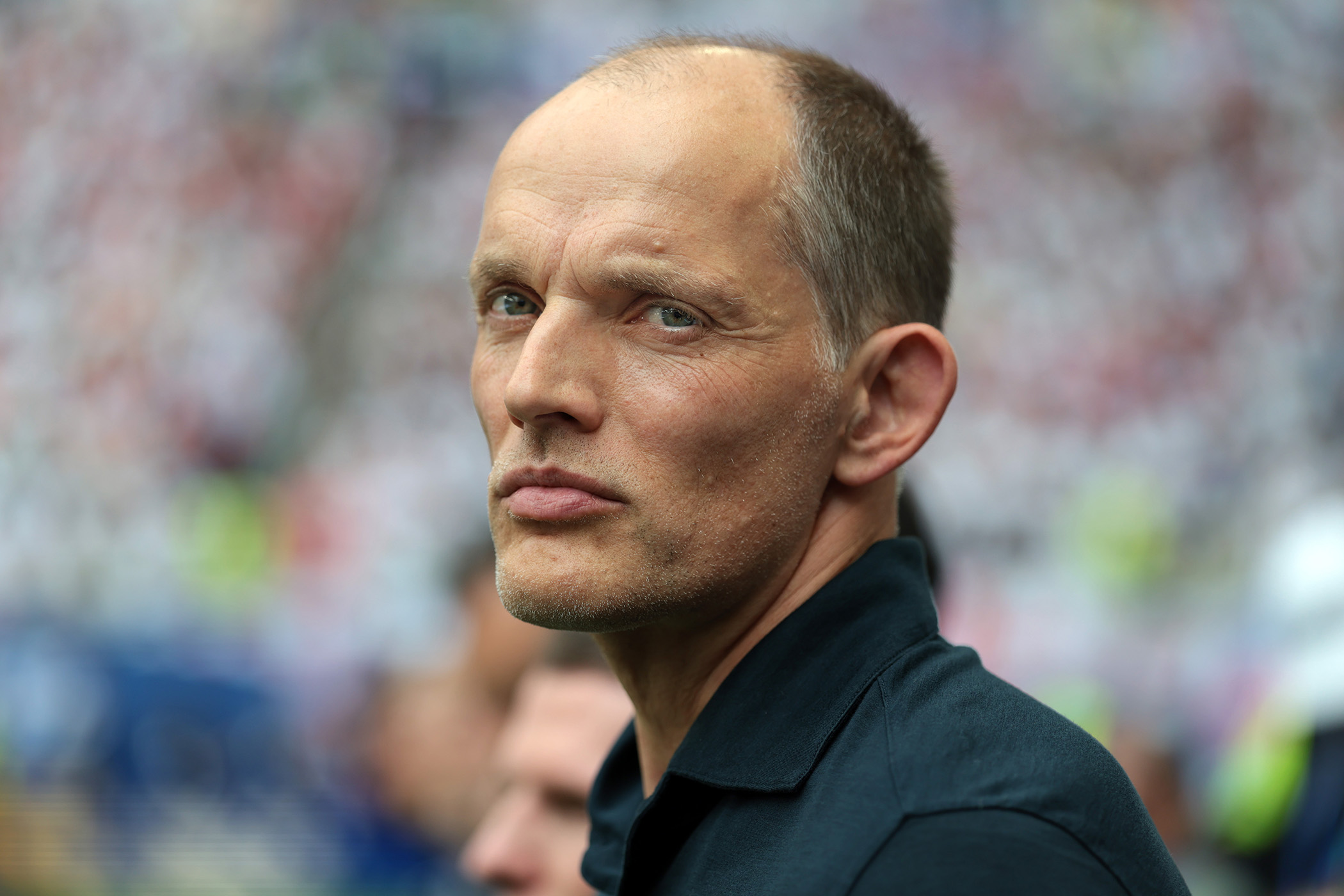
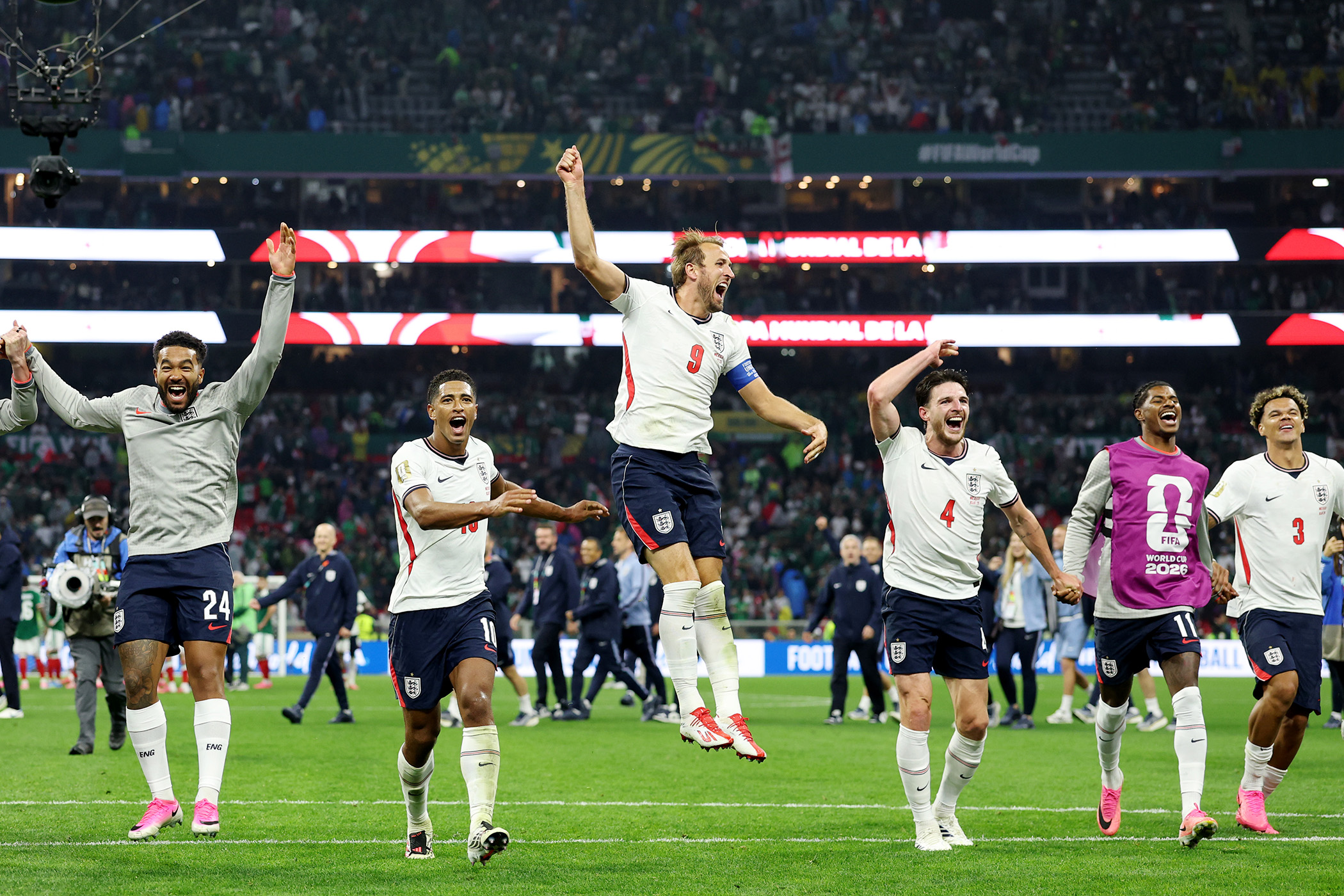
For a moment there we lived, didn’t we? Judemania, cheekbone fever, Djed Spence as Bobby Moore, Thomas Tuchel as slim sex symbol. The Azteca was perhaps English football’s greatest World Cup night since 1966, vivid and overwhelming and exhilarating, part of the country’s most entertaining major tournament run in 30 years. This shouldn’t be lost in everything that follows, in the reviews and inquests, the public flogging and private desolation.
“It is easier if someone takes the blame. I take the blame,” Tuchel said on Friday, with a teenage petulance. There are reasonable arguments that Argentina-gate wasn’t his fault, which are largely tactical and technical and dull, citing field tilt and sprinting zones. From the wider squad to his substitutions, he got it right until he got it wrong. Plus ça change.
But ultimately, for all Tommy Tactics was supposedly hired to do something entirely different to Gareth Southgate, to do away with the inflatable unicorns and joy, international management will always be a culture job. Tuchel has understood this. He’s talked a lot about “brotherhood” and almost flawlessly executed the high-wire act of regulating Jude Bellingham’s ego. After the pervading weirdness of Euro 2024, this group seem to like each other again. Even if they are currently united against him, at least they’re united.
At its heart, much of the debate around Atlanta really centres on how much power Tuchel actually holds, the extent of his influence over these players, especially mid-match. If he was supposedly telling them to push up, why didn’t they? Is there anything he can do to reverse a collective mind-melt once it has already begun, or do you just park the Burn and hope? Considering the entire England discourse for 18 months, and realistically far longer, has been defined by the managers, how much impact do they actually have?
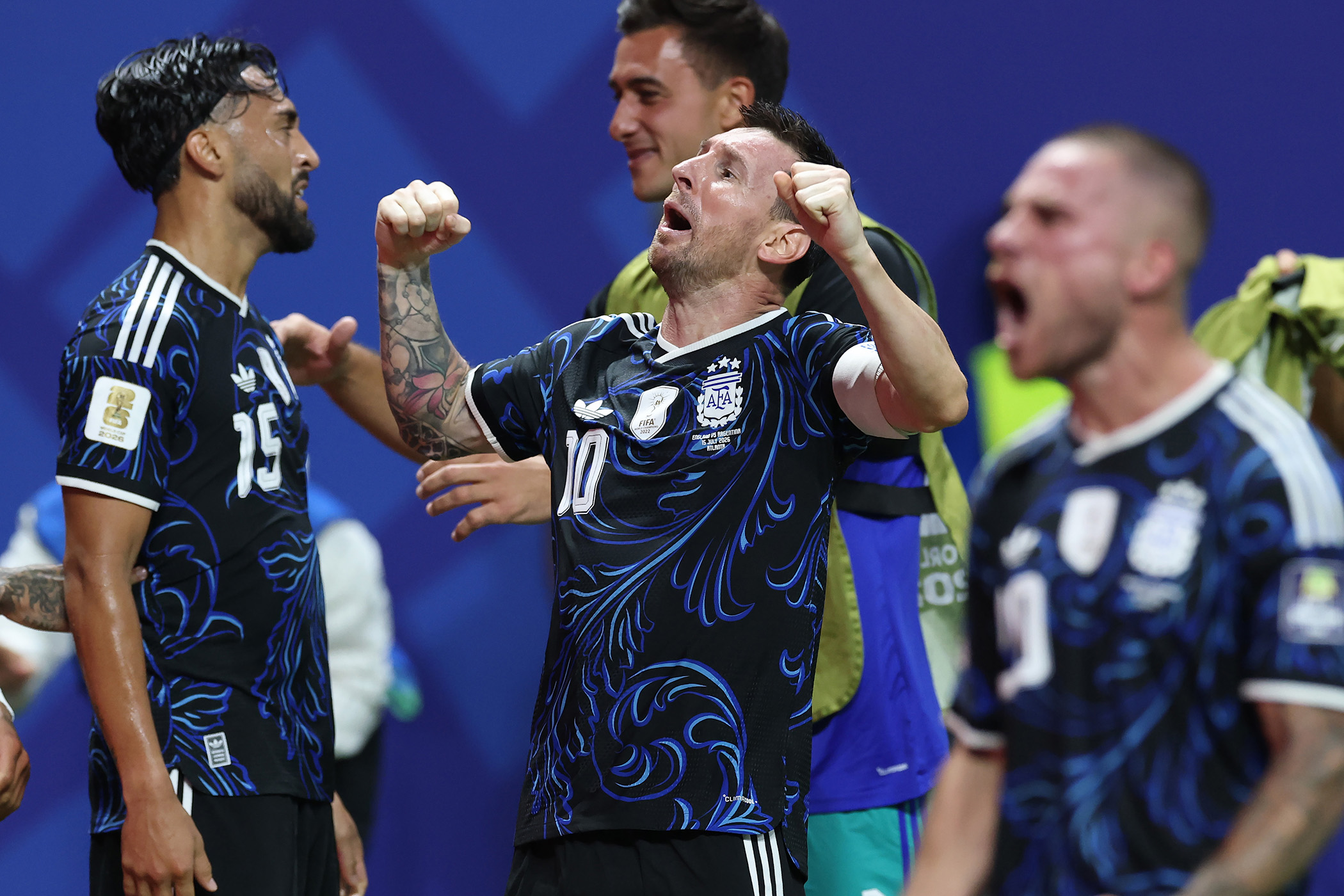
Take the last four World Cup-winning coaches. When Vicente del Bosque accepted the Spain job in 2008, he hadn’t managed for three years, having been sacked after less than a year at Beşiktaş. Joachim Löw and Didier Deschamps spent 15 and 14 years with Germany and France respectively, and both won one major tournament final and lost another. Löw took that role having been assistant after an itinerant postscript to a middling playing career. Deschamps had previously won Ligue 1 with Marseille and taken Monaco to the Champions League final. The Argentina job was Lionel Scaloni’s first senior role after a seven-cap international career. It is increasingly presumed that because Scaloni and Spain’s Luis de la Fuente are company men with limited prestige, that this is what an international head coach should be, judging the outcome not the process. Really they just both coach nations extremely well suited to the format: Spain’s tactical unity and coherence and Argentina’s Messi spiritual-industrial complex. You only have to look at Carlo Ancelotti’s success in transforming Brazil from perennial quarter-finalists to a last-16 team to better appreciate this.
Coaches help us understand football, provide a facade of control and comprehensibility. We want neat lessons and learnings. But what if there isn’t a thread here? What if international coaches are somewhere between neutered and powerless, perpetual fall guys in polo shirts? There seems as much of an argument to sack Tuchel tomorrow just to save money and hire someone English as there is to give him a 10-year contract and hope the stars align at one of the five tournaments in that period.
Given the FA have made it abundantly clear that they will not sack Tuchel, he would have to walk, which seems unlikely given he’s about to earn £10m across two years for managing fewer than 30 matches. But in that eventuality, the two most commonly proposed replacements are Pep Guardiola and Lee Carsley, the English De la Fuente in that he’s bald and has coached the under-21s. We’ve already tried Carsley. It was fine. He lost to Greece, then beat Greece. It also probably matters that he tells anyone who will listen that he doesn’t want the job. Guardiola is a nice idea but also suggests that maybe the problem with Tuchel is that our elite head coach actually wasn’t elite enough. If Tuchel and Ancelotti have not seemingly solved international football, why believe Guardiola or Jürgen Klopp would? Italy’s Arrigo Sacchi might have been a penalty or two from winning in 1994, but he was beaten by a career coach whose previous role included five years managing the UAE and four in charge of Kuwait.
The Premier League’s place in this matters too, increasingly appearing to damage the best English players by design. Declan Rice, Bukayo Saka and Reece James – England’s third to fifth best players when fit – spent this World Cup in varying states of disrepair. You suspect that Cole Palmer would have been selected had he not spent the season attempting to endure a chronic groin injury after playing for three years straight. For all that Spanish clubs have different identities, their academies produce players using similar principles in a way that Premier League clubs don’t. What more can be done to make this relationship symbiotic rather than parasitic?
But the idea that nothing has changed in English football because this result looked and felt like Italy in 2014 and Italy in 2021 and Croatia in 2018 and Spain in 2024 is simply untrue. This was England’s fourth major tournament semi-final in eight years. They were 15 minutes from a third final in five years. Only France and Argentina have enjoyed periods of similarly sustained dominance this century, with little to indicate that England’s will abate soon. Only three of the starting XI against Argentina were older than 30. This is all good. In 2028 they will likely begin a home European Championship as one of three favourites, with clear air between them and Netherlands, Portugal and Germany. Chances will come again.
But when they do, how can Tuchel ensure this team, that English players more generally, are equipped to function in the eye of hell? Doesn’t it make you feel vaguely patriotic that the FA can appoint a German manager, that the Premier League can become a nation-less megaproduct, and English footballers can remain so unflinchingly English, so enduringly arrogant yet frail? Following his comments that possession is not in England’s DNA, on Friday Tuchel talked about a gap in ambition and belief, that France, Spain and Argentina expect to win the World Cup in a way that England don’t.
Newsletters
Choose the newsletters you want to receive
View more
For information about how The Observer protects your data, read our Privacy Policy
And so he will spend two years trying to convince his players that they are special little soldiers who deserve trophies and soapy massages. He might work with the FA to breed a new generation of Rodri-lites in Bradford. He will obsess over recreating those last 20 minutes, attempt to heal the scars. But perhaps the only thing we can be sure of is that it will make no difference.
Photograph by Ian MacNicol/Getty Images