

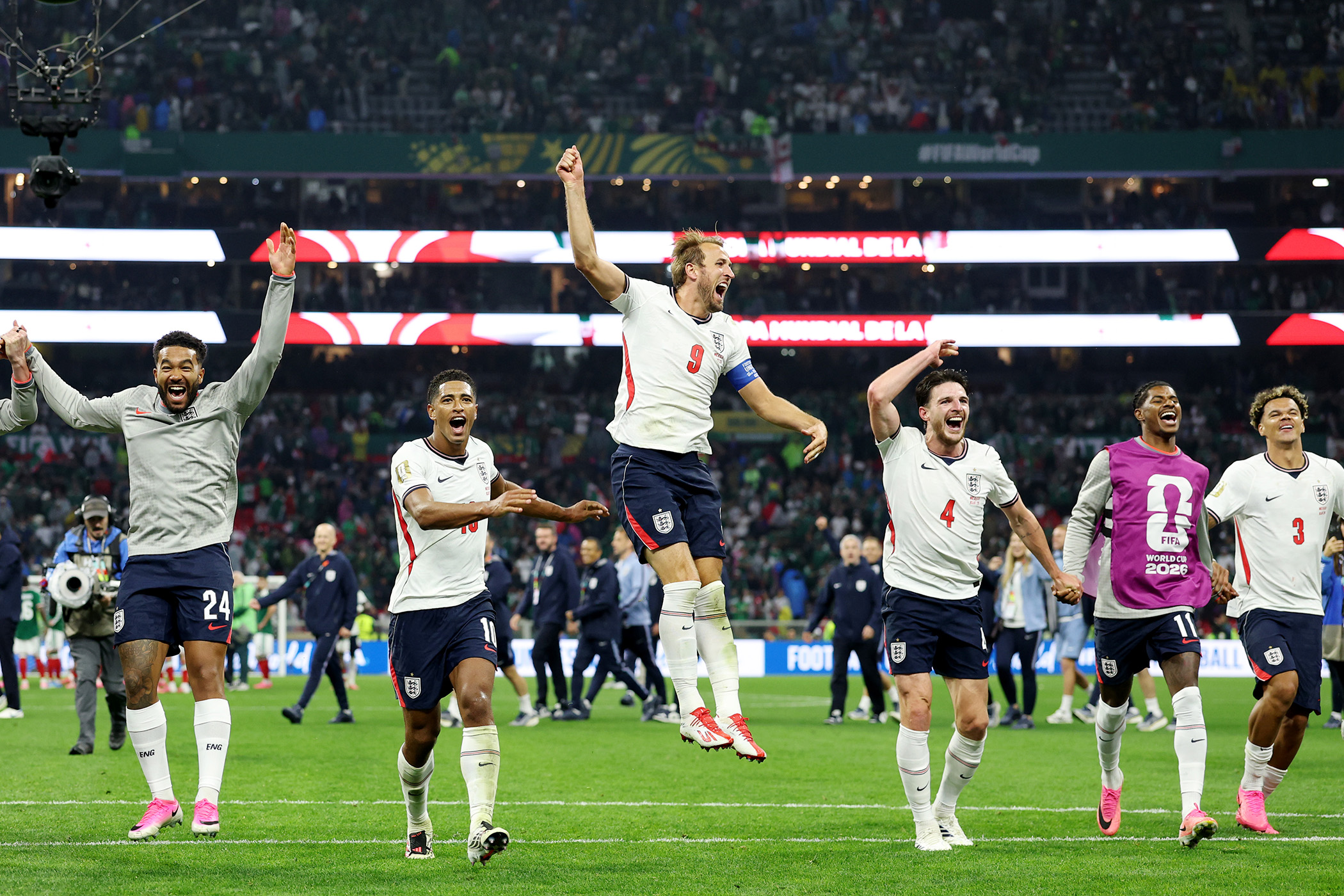
In a World Cup that featured three host nations for the first time, along with the controversies of three-minute hydration breaks and a system that saw most third-placed teams advancing from the group stage, the Three Lions navigated three group games and then three knockout ties, but in the semi-finals lost by the odd goal in three to Argentina, leaving them to finish the campaign three days later with the third-place play-off. As for Scotland, three points from three games left them in third place in the tournament’s third group (Group C), with a -3 goal difference ensuring their elimination.
Two countries, two apparently impossible dreams. For England, progress beyond the group stage at a major tournament and, for the first time since 1966, win a trophy. For the Scots, qualify for a major tournament and finally get beyond the group phase.
Scotland have now failed in their first 13 attempts to advance beyond the first round of the European Championship (four) or World Cup (nine). Belgium recorded the next-longest wait for a European nation to make a first such breakthrough, proving unable to progress in their first six tournaments before breaking their duck at Euro 1980.
While we’re at it, we might as well update the figures that show how unlikely Scotland’s 13 failures have been. The odds on a random nation doing this are 62,207-1: in eight of those tournaments, there would have been a one-in-two chance of a random team not advancing; in the other five (including the current one, when only 16 of the 48 nations fell at the first hurdle) the probability would have been one in three.
England’s problems tend to occur later on in tournaments. This was the 14th time they have at least reached the quarter-finals since 1966 – eight in the World Cup and six in the European Championship – but there has been no ultimate success to show for such consistently strong performances. England might glance enviously at Italy and Germany and feel it would be worth sacrificing this consistency for a trophy.
Over the past seven major tournaments, England have played 18 knockout ties to only 11 by Germany (excluding third-place play-offs), yet the Germans are the only trophy winners in that period, having lifted the World Cup in 2014. Furthermore, over the past six World Cups, England have contested 12 knockout ties to Italy’s four, but only the latter have silverware to show for their efforts, having triumphed in 2006.
So to the 2030 World Cup, and a possible expansion from the new, already-bloated quota of 48 nations to 64. The standard of teams isn’t an issue: after all, the 64th-best side now would doubtless beat the 16th-strongest team in 1970. But if all 211 Fifa nations rose to the required level, you wouldn’t argue for a 211-team World Cup, surely. The problem is that the tournament is moving beyond an event that can be digested easily. Great games and goals become lost in the mass of action. Were Denmark any good – hang on, remind me again which Scandinavian teams took part? And was it Uzbekistan or Kazakhstan who were playing? A return to 32 teams would help fix that, while also removing the unsatisfactory element of some third-placed teams in the group stage progressing, but Fifa will not turn off this new revenue tap.
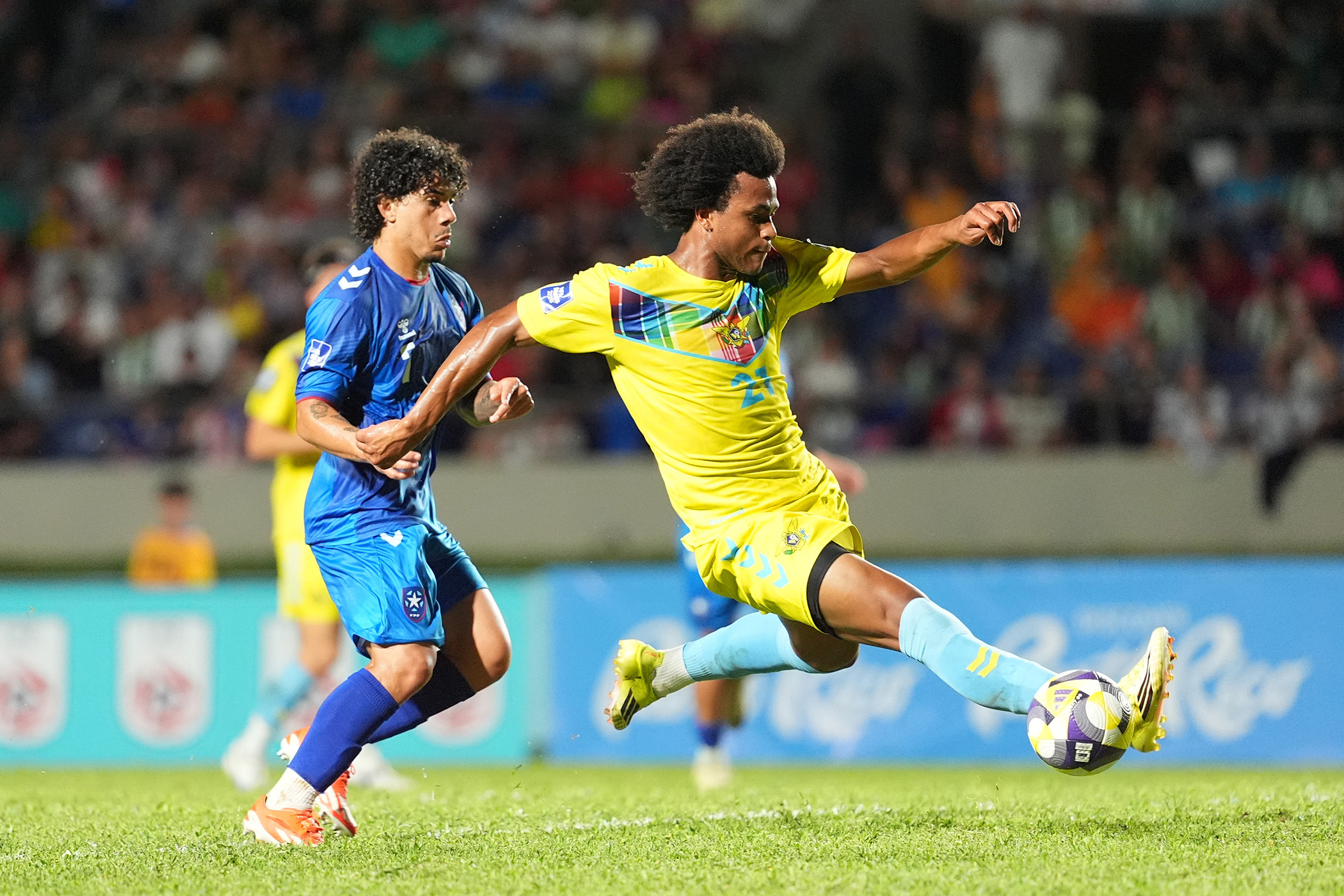
At least the equation is simple now: Spain versus Argentina to become world champions. Spain are unbeaten both in qualifying and at the tournament, whereas Argentina lost four times in the South American preliminaries. So if Spain lose this game, would that mean that no teams remained undefeated in matches across the whole 2026 World Cup campaign? Not quite. Firstly, Netherlands were unbeaten in qualifying and the tournament group phase and only exited to Morocco on penalties after a 1-1 draw. But also the Concacaf qualifying phase should not be overlooked, specifically the two teams who each lost a shootout after drawing both legs of a first-round tie. Step forward proudly the unconquered Turks and Caicos Islands and US Virgin Islands.
STATS
ONE
Newsletters
Choose the newsletters you want to receive
View more
For information about how The Observer protects your data, read our Privacy Policy
Spain vs Argentina will be the first World Cup final where the two teams share a national language since Uruguay faced Argentina in the first final in 1930 (Spanish in both cases). Argentina also met another Spanish-speaking nation when becoming South American champions two years ago, beating Colombia in the final.
TWO
Spain can set a record for a men’s European national team of 38 games unbeaten (they are level with Italy on 37). Their squad includes David Raya, Mikel Merino and Martín Zubimendi, who have just helped Arsenal win their first league title since the club went unbeaten in all 38 league games of the 2003-04 season.
THREE
Argentina’s 12 goals scored from the 76th minute onwards at this World Cup are more than 42 of the other 47 teams have managed at any time of their games at the tournament. After 75 minutes in their four knockout matches, Argentina were drawing with Cape Verde and Switzerland, trailing by one goal to England and behind by two goals against Egypt.
FOUR
Messi has been involved in 14 goals at this tournament (scored eight, assisted four times, and delivered corners for two other goals), which is more than 44 other teams have scored at this World Cup, including Spain, who have hit 13 goals. Messi was arguably the game’s best player in the semi-final win over England even at the age of 39 – every England outfielder since 1957 has been 37 or younger.
FIVE
Argentina can become the first team to win four World Cup/continental titles in a row: they triumphed at the Copa América in 2021 and 2024 and the World Cup in 2022. Argentina have played almost twice as many matches as Spain to reach the final: 25 games (18 in qualifying, seven at the tournament) to Spain’s 13 (six in qualifying and seven at the tournament).
Photograph by Raul Sifuentes/FIFA via Getty Images