
The suggestion in the run-up to Super Saturday was that this 2026 vintage of the Six Nations was the best ever, a theory certainly helped by the antics of France and England in the final game, taking the uncertainty about where the title would end up right down until the very last act.
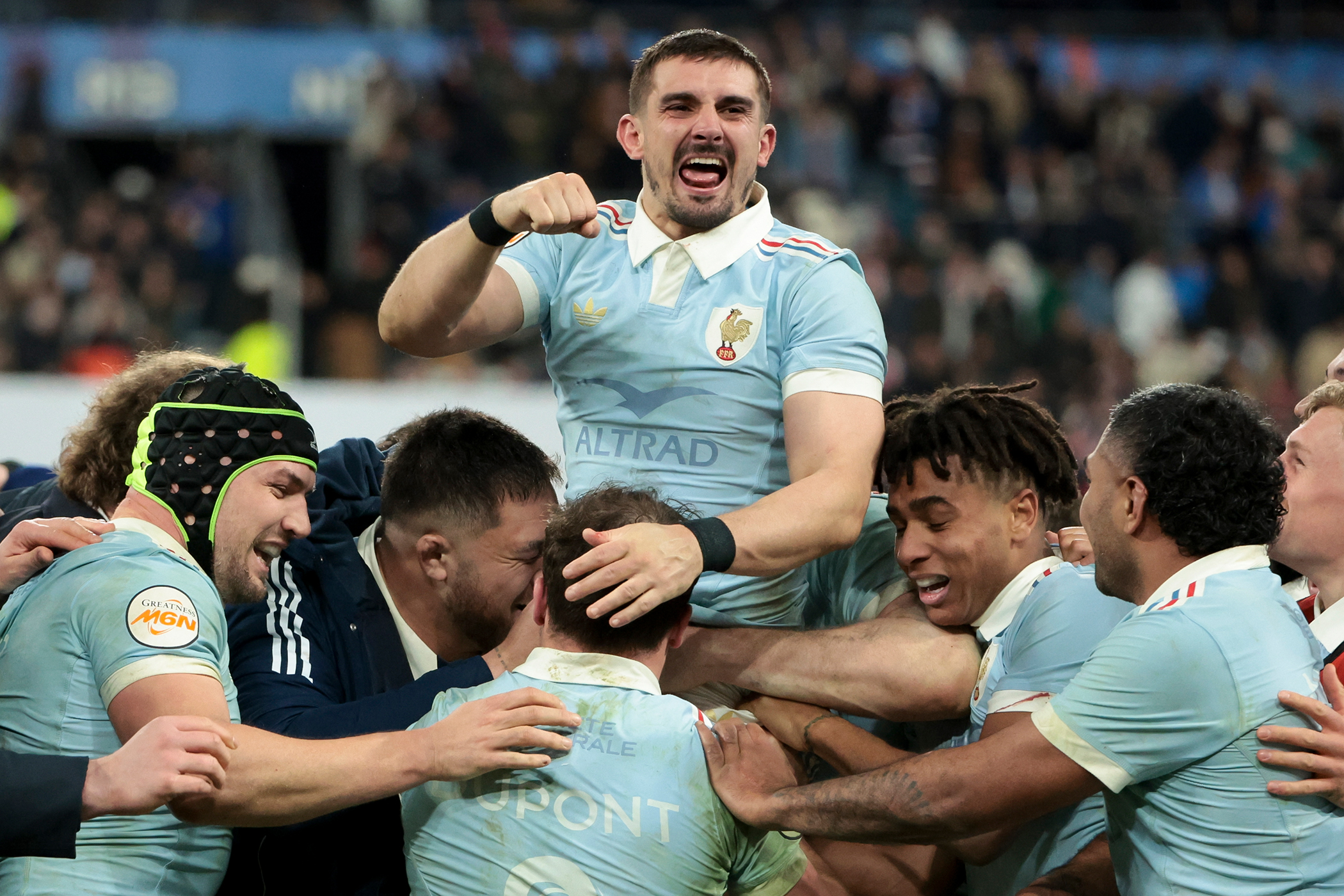
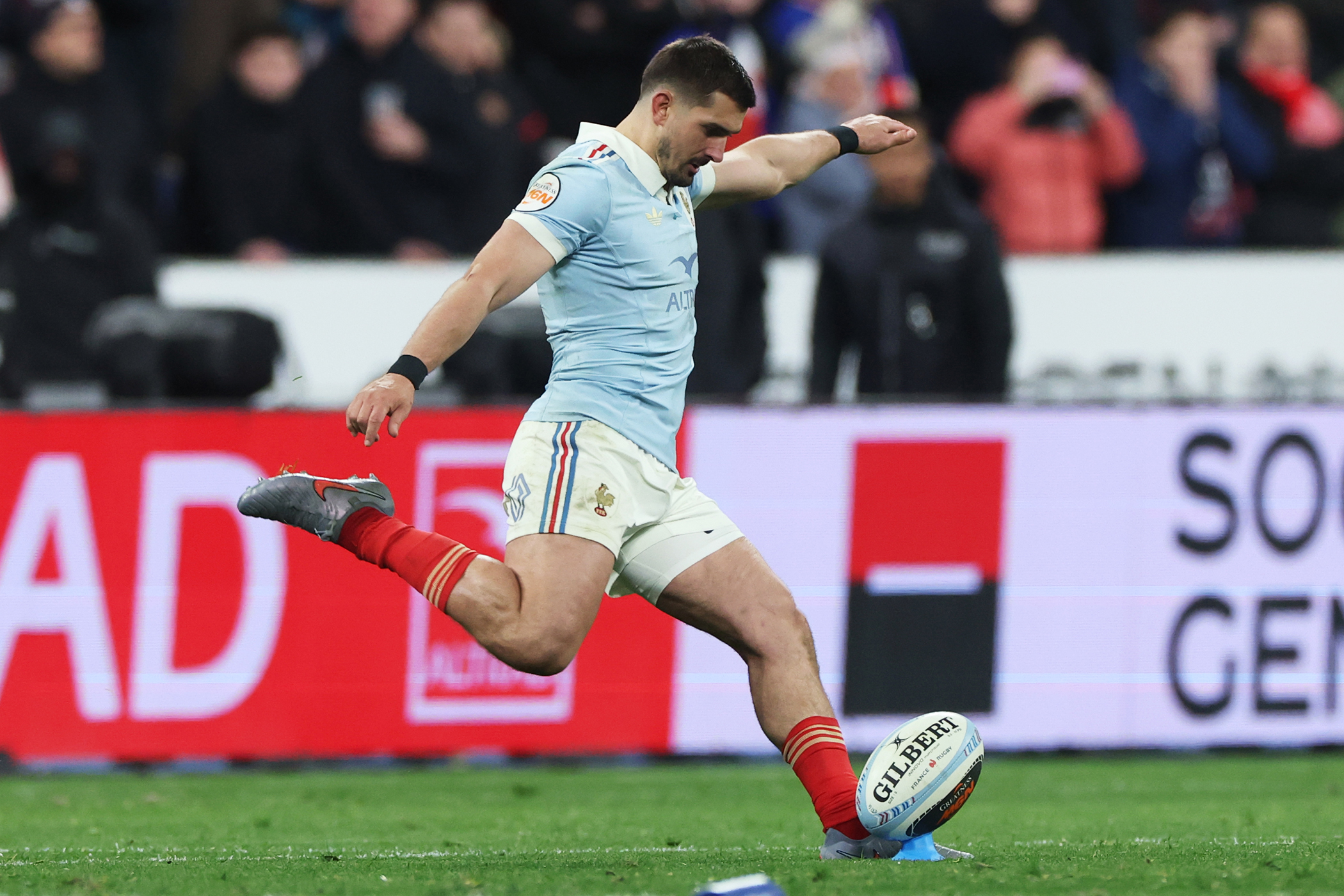
There is no other kicker in the championship, perhaps the world, that you would want lining up a shot at the posts with the entire Six Nations on the line more than Thomas Ramos. A camera focused solely on the France full-back captured him celebrating, arms outstretched, long before the ball had split the posts. He knew it was good from the strike. His sixth successful kick of the night and by far the most significant. The top points scorer in the Six Nations for the fourth consecutive year.
France play with so much exciting risk in attack that it must be nice to know that you can bank on having the best goalkicker in the world on hand should you need them. “When I give the ball to Thomas Ramos for the last penalty, he laughs! He's mad," Matthieu Jalibert, France’s fly-half, said afterwards. A bit like all the great geniuses.
They are a curious side, France, which admittedly is an evergreen comment about Les Bleus. For the second year in a row they had a chance to win a Grand Slam and fluffed their lines away from home – England 2025, Scotland 2026 – despite having the most talent and the best strength in depth, exemplified by picking a raw centre pairing for Wales and Italy without too many problems.
Axing three senior players before the tournament began – Grégory Alldritt, Damian Penaud, Gaël Fickou – worked out just fine. They have an alien on the wing in Louis Bielle-Biarrey, with his 29 tries in 27 Tests, his astonishing acceleration making even the most-organised defences look silly. Forwards who pass like backs, backs who carry like forwards. The all-round brilliance of a 23-stone man mountain in Emmanuel Meafou. A captain in Antoine Dupont who overall played at around a seven out of 10 – showing flashes of brilliance, struggling away at Scotland – and still bagged another Six Nations title. Such a young side too, with Les Bleuets, the France Under-20 side, also winning a Grand Slam at that level, suggesting that the conveyor belt of talent is still purring along.
The opening night of the tournament when Ireland travelled to Paris feels about three years ago. How Andy Farrell and his coaching staff would love to have their time again, to approach facing France with less conservatism, less reliance on a kick-first strategy trying to go after Bielle-Biarrey and Théo Attisogbie in the air that never worked. Since then, but especially against England and Scotland, they have looked like their old selves. The precision of their carries, ruck clearouts and passing for Jamie Osborne’s opening try against Scotland was vintage Ireland. And the prop crisis they faced? Tom O’Toole, with his total lack of experience at loosehead, swapped sides and was player of the match against Scotland, taking on a veteran British and Irish Lion in Zander Fagerson and winning that battle. O’Toole has been a key part in the Ulster revival this season. His colleagues Stuart McCloskey, given a prolonged run at last for Ireland with the absences of Bundee Aki and Robbie Henshaw, carried and tackled with remarkable ferocity. Robert Baloucoune also had to wait, and seized his chance.
Does their ongoing Irish hoodoo, without a win against Andy Farrell’s side since 2017, make Scotland’s efforts in the Six Nations irrelevant? Not quite. The performance against France, scoring 50 points against the eventual champions, may just rank as the greatest of Gregor Townsend era. They were ruthless against England as you knew they would be, the dominant force in that fixture for years now losing only two of the last eight. Kyle Steyn and Jack Dempsey were excellent, as was Rory Darge. Finn Russell still has the keys to every defence while his half-back partner, Ben White, comfortably outplayed Dupont in that raucous win over France. Gregor Brown makes them more physical. Things looked ominous for Townsend after losing in Rome. Even with another dud against Ireland - not quite as “there for the taking” as Darcy Graham proclaimed - there has been enough progress, enough elation from those wins over England and France, to quieten down the fire around his future after Scotland’s disappointing autumn.
As for Italy, the fear before the tournament was that injuries would derail their progress after an impressive campaign at the end of last year when they knocked off Australia and tested South Africa. In the game against England they produced their worst performance of the championship up to that point, and still won. Tommaso Menoncello can become a superstar. Others - Manuel Zuliani, Leonardo Marin, Lorenzo Cannone and Louis Lynagh - can join him in that category if Italy’s upward curve continues. They do have, in Gonzalo Quesada, an outstanding coach. Imagine the best of Italy from the last few weeks supplemented by the return of Ange Capuozzo, their best attacking threat, along with Ross Vintcent, Sebastian Negri and more.
The full English post-mortem is ongoing. As expected, now the adrenaline from Paris’s try-fest has subsided, there are serious questions being asked about their defence, their ethos, everything but the scrum really. Whether the current set of coaches can help a young group reach their potential. Even their attitude, with those micro celebrations after mini events in Test matches coming under greater scrutiny when the results fail to follow. Steve Borthwick ripped up his backline with two games to go and failed to find a win, even if England took France to the final kick. Their enterprising attack at the Stade de France was exciting but felt reactive to the pressure of becoming the first English side to lose four out of five Six Nations games, rather than a glimpse of their true identity under Borthwick. Or was it? No one knows anymore. Next up is the light task of travelling to South Africa to face the Springboks at Ellis Park. Gulp.
Newsletters
Choose the newsletters you want to receive
View more
For information about how The Observer protects your data, read our Privacy Policy
Which of course leaves Wales, who if you had said before the start of the tournament would finish up by defeating Italy in Cardiff to lift the national mood, having shown steady progress up to that point across multiple facets of their game, then that outcome would have been welcomed with both hands. Dewi Lake has led this young side up against all sorts of on and off-field issues with admirable decency. Alex Mann, Eddie James and Ben Carter all made leaps forward. Oh, and Rhys Carré produced certainly the try of the year with his break in Dublin. The ‘Keep Calm and Carré On’ signs one week later in Cardiff were a lovely touch.
So, was it the best Six Nations? Truth be told, bar the odd clanger, the championship always feels this good. Maybe the difference is that by cutting out that first fallow week, reducing it into one block of three with a pause before a final sprint, means that emotions are kept at a peak for longer. If you do want to play that ‘best ever’ game, then the 2015 edition – when Ireland clinched the title on points difference as England attempted to hunt them down in a mad final game defeating France 55-35 – and 2019’s Grand Slam for Wales paired with Scotland’s improbable comeback from 38-7 down at Twickenham would both have to be in the mix. Is 2026 a worthy contender, though? Absolutely.
Rugby’s great struggle, outside of France where the Top 14 is the pinnacle of the club game globally, is convincing the millions who tune in for the men’s Six Nations to retain that interest in rugby all year round, to dip in a toe into the domestic game and see what the PREM has to offer. Squeezing five rounds into six weeks sure ups the intensity and may leave some fans a little weary. Are you hungry enough to now watch Bath-Saracens on Friday night? If you are then good, because it should be excellent. Others after that spectacle in Paris will still be having a lie down.
The great hope is that those intrigued by what they saw in Le Crunch will be desperate for more. The rivalries make the Six Nations the greatest competition of them all. Now to pray that those people flicking through the TV guide or watching in the pubs decide they would like to enjoy more of the same. If so, tune into the action from Bath on Friday evening. The more the merrier. The game needs you.
Photos by Jean Catuffe and David Rogers/Getty Images