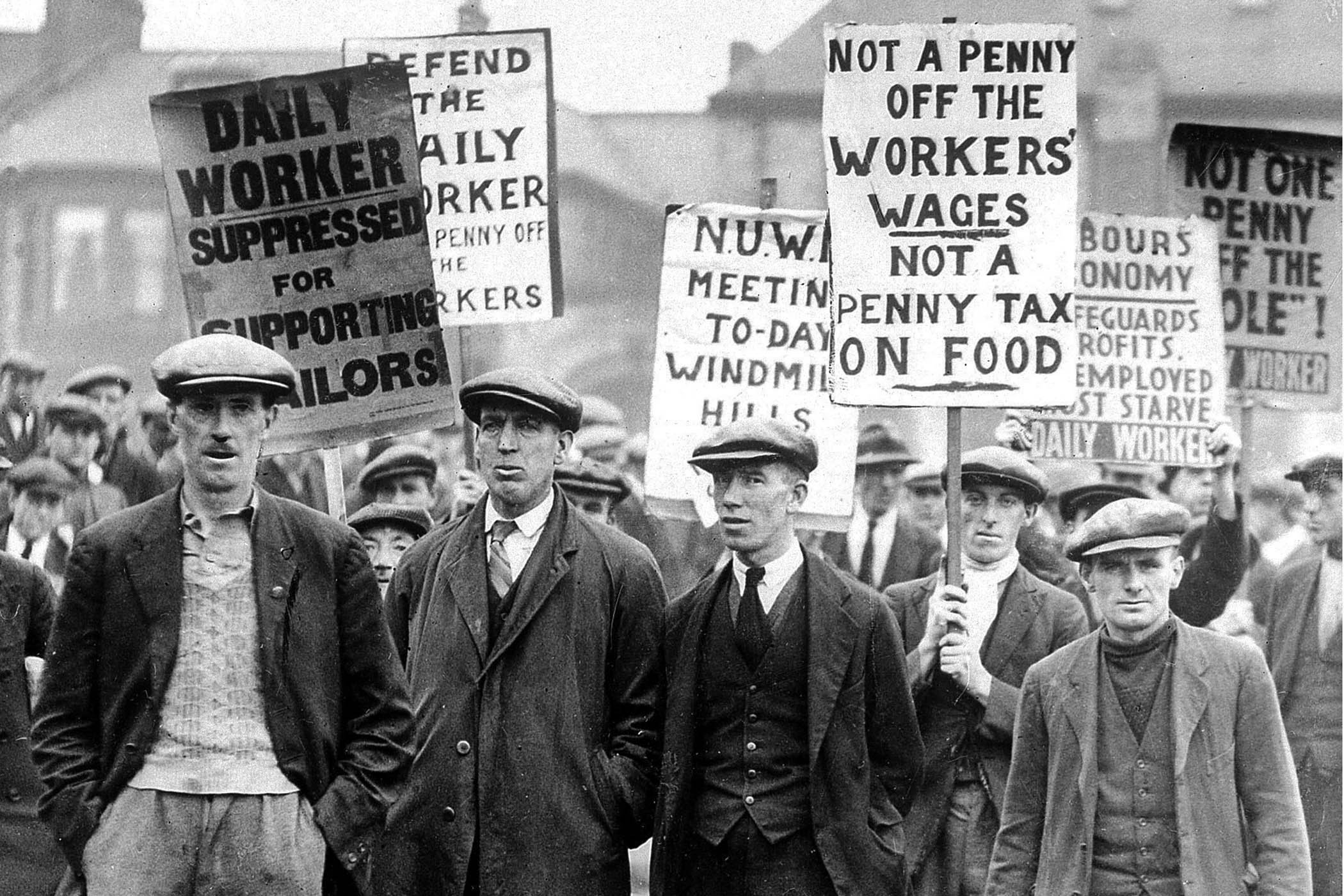



From a historical perspective, wealth inequality in the UK is not particularly high now. Go back a century, and participants in the 1926 General Strike lived in a society where around 90% of all wealth was held by the richest 10%, and 60% of all wealth by the richest 1%. Today, a little less than 60% of wealth is held by the top 10%, and about 20% by the top 1%. Those numbers have barely budged since the mid-1980s.
Nor is UK wealth inequality particularly high by international standards: the top 1% share is lower here than in France, Germany, Sweden, Norway, Spain, Italy, Canada, Australia and the US, according to the World Inequality Database.
But to focus solely on the headline statistics is to miss the more complicated, and more concerning, changes underneath.
For starters, household wealth – the value of houses, pension pots, bank accounts, financial investments and other assets – has soared in recent decades. It has consistently grown faster than the overall economy. In 1991, the wealth of all households in the UK amounted to roughly three and a half times annual GDP; it’s now more like seven times.
So, even if the richest households have a similar percentage share of the total as they did in the past, their level of wealth has shot up, and the absolute gaps (in pounds and pence) between the haves and have-nots (or between the haves and have-mores) are wider.
This wealth explosion has coincided with an extended period of abysmal pay growth. After adjusting for inflation, average weekly earnings are only a smidgen higher now than they were in early 2008 – a remarkable stagnation which underpins so much of our economic and political malaise.
Whether or not someone has wealthy parents is becoming an even more important determinant of their financial position – which hardly screams social mobility
Whether or not someone has wealthy parents is becoming an even more important determinant of their financial position – which hardly screams social mobility
The combined result is that it’s simply harder to work, earn and save your way up the wealth distribution ladder than it was in the past. The Deaton Review of Inequalities, recently published by the Institute for Fiscal Studies (IFS), summarised it as follows. Imagine that everyone is placed into 10 buckets, depending on how much wealth they have, lined up from poorest to richest. In 2008, to go from the fifth bucket (near the middle) to the ninth bucket (the second richest), you needed the equivalent of 10 years of full-time work on the average salary – assuming you could miraculously save every penny. In 2022, you needed the equivalent of 16 years. The rungs on the ladder are drifting further apart.
Because the majority of the increase in wealth in recent decades has been driven by rising asset prices, rather than active saving by households, it has most benefited the people and places which already had wealth to begin with. Older generations, in particular, have been major beneficiaries.
This wealth will flow down to younger generations eventually, thanks to the scythe’s remorseless swing. It will be a big deal for those who benefit. For those born in the 1960s, inheritances are set to boost their lifetime income by 9% (again, according to the IFS). For the 1980s generation, the boost will be more like 16%.
Looked at another way, whereas the median inheritance for someone born in the 1960s is four times average annual earnings, for those born in the 1980s, it’s expected to be eight times. But that’s just an average. Some will get nothing; some will get a lot. Whether or not someone has wealthy parents is becoming an even more important determinant of their financial position – which hardly screams social mobility.
It may also be official measures, however carefully constructed, struggle to capture what people are really concerned about: the wealth and influence of those at the very, very top. Billionaires are a very small group, and who knows whether they’re reliably filling in the surveys government statisticians send their way.
Attitudes are shaped by more than the economic fundamentals, of course. In the age of social media, ostentatious displays of wealth and luxurious lifestyles are ever more visible. And in a globalised world, the latest series of Selling Sunset or the actions of Silicon Valley tech bros might matter just as much, if not more, than whatever happens on our own shores. There’s not a huge amount UK policymakers can do about that.
But that doesn’t mean a government concerned about wealth inequality and its impacts has no levers at its disposal. At least some elements of our national destiny are still within our control. The rules on political donations would be as good a place as any to start.
Newsletters
Choose the newsletters you want to receive
View more
For information about how The Observer protects your data, read our Privacy Policy
Photograph by Mirrorpix via Getty Images