
The first desperate message arrived late one night in early March as missiles flew across the Gulf. “My brother is a seaman on a ship called the Liana off the coast of Iran,” it read. “He is one of three Indian sailors on board, they need to sign off and get home. Please help them.” The Liana, a 3,000-tonne ship built to transport limestone, was moored in the Iranian port of Bandar Abbas on the Strait of Hormuz. Drones and missiles flew overhead, terrifying the crew of six Iranians, three Indian sailors and three from Myanmar; those who could flee were looking for an escape route.
Mohamed Arrachedi, a lawyer with the International Transport Workers’ Federation (ITF), spotted the text among hundreds flooding his inbox. “Sure, brother,” he wrote back. “Give me the details.” Arrachedi got to work but was stonewalled. The ship’s Iranian owners, its Cameroonian flag carrier and the port authorities in Iran all ignored his messages. The three Indian sailors were stuck on board.
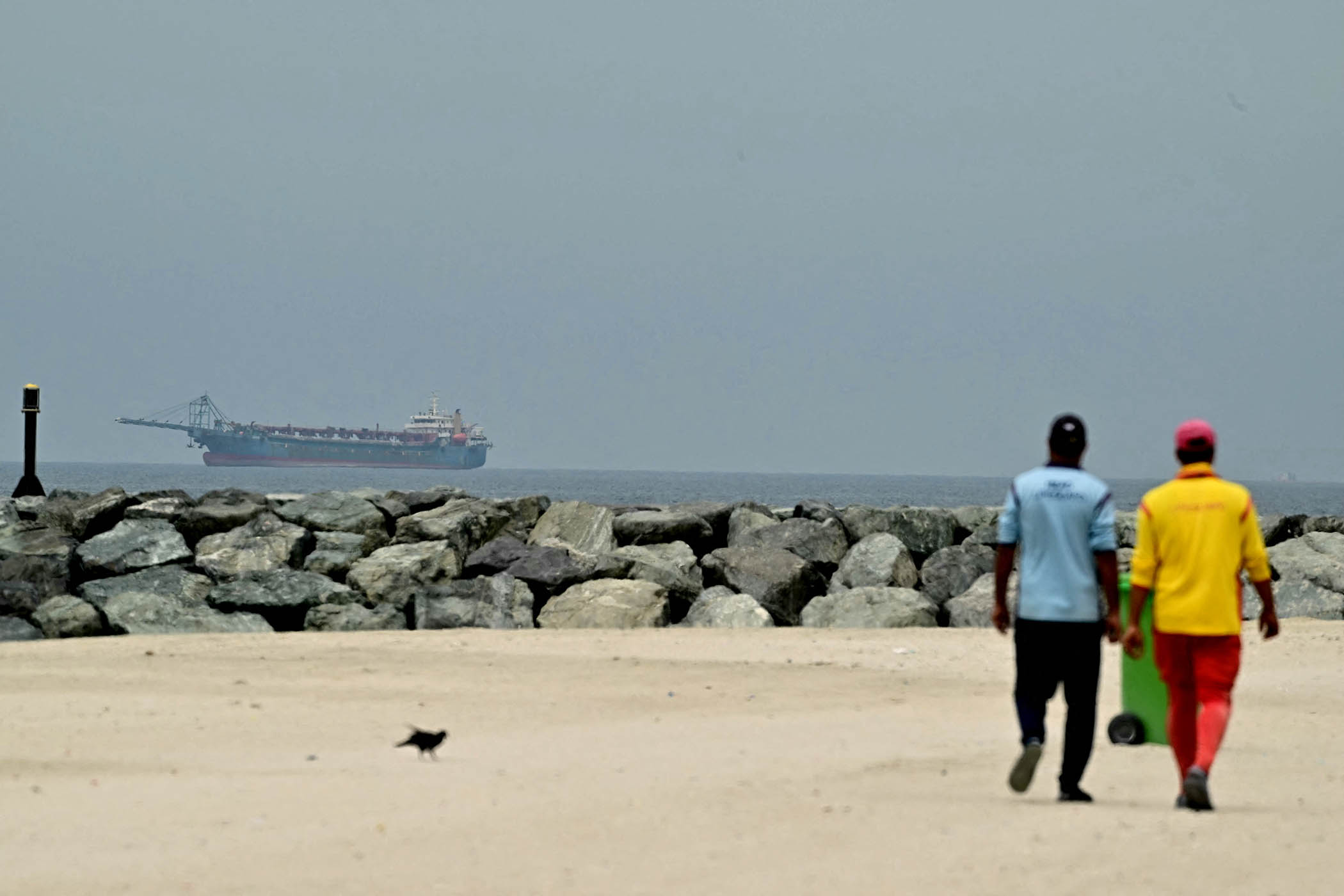
The Liana stayed in the port for weeks as US and Israeli bombs pummelled Iran, while Tehran returned fire across the Gulf. Iran declared the strait closed, and the Liana joined more than 1,200 tankers and hulking container ships left bobbing in its waters as the global economy reeled. For seven weeks, the waterway along which a fifth of the world’s oil and natural gas is transported has emptied, while hundreds of ships sit at anchor in nearby ports.
An oil tanker in the Gulf of Oman was targeted by an Iranian kamikaze drone boat last month, days after an Iranian drone hit a fuel tanker in the strait; another drone attack targeted a tanker laden with crude oil in a Dubai port, setting it ablaze. Ten sailors were killed in the first month of the war and eight more injured, according to the United Nations.
The 20,000 sailors stranded in the waters of the Gulf could only take cover and watch. Sunil Nair, head of India’s National Union of Seafarers, which represents as many as 15,000 of the stranded sailors, said the union’s emergency line had not stopped ringing in recent weeks as sailors already exhausted from months at sea faced weeks floating in the middle of a war zone. Most responsible shipping companies had found ways to get extra food and water to the stranded ships, he said. Alluding to sailors on board going hungry for weeks, Nair added: “The problem is with the bad apples. Those are the ships which might be having difficulty. The calls we’ve been getting are mostly about sailors’ state of mind, asking us when this situation will come to an end and whether they are physically safe out there.”
As backchannel talks between the US and Iran continued, the situation in the strait lurched from stasis into chaos. Iran’s foreign minister, Abbas Araghchi, and Donald Trump declared the strait open for the duration of the ceasefire, before Trump said the US would continue to blockade Iranian ports. A small number of ships transited the strait before Tehran’s Islamic Revolutionary Guard Corps (IRGC) publicly rebuked Araghchi and declared the strait closed due to the US blockade. IRGC forces then opened fire on two tankers and the Iranian supreme leader, Mojtaba Khamenei, threatened that Iran’s navy was ready to inflict “new bitter defeats” on its enemies. Araghchi said ships should sail a route prescribed by Iran to avoid mines it had laid; data from Lloyd’s shows 15 ships used it last week.
Diplomats continue sounding the alarm about the closure: the UN’s shipping agency, the International Maritime Organization, called it illegal, proposing a safe corridor to evacuate stranded ships. Others, such as Jorge Moreira da Silva, executive director of the UN's office for project services, who heads the UN’s taskforce on the Strait of Hormuz, warned closure risked wrecking not just the global economy but also food supply: 45 million already vulnerable people faced hunger or even starvation, if essential supplies of fertiliser did not move through the waterway by the end of the planting season in May, he said, adding that the impact could be felt for years after even if the strait reopened immediately. “This is becoming a global problem,” he said. “One third of all seaborne fertilisers in the world go through the strait...we need a solution urgently.”
***
By the time stranded sailors call Arrachedi, they are desperate. The jocular Spanish lawyer has spent years aiding abandoned seafarers, but rarely, if ever, has he experienced anything like this. “The overall sense of panic, of deep psychological pressure, is extraordinary: these are not simple consultations about pay,” he said. “It’s ‘sir, we are worried, please help get us out of here right now.’ There is a constant feeling of vulnerability. Most of these seafarers want to seize the moment while these ceasefire talks are going on to get repatriated.”
The global shipping industry is rife with abuse and corruption: Arrachedi has spent years tackling problems such as companies failing to pay their sailors for months (known as abandonment) or discarding crews and their ships in the docks around the Gulf. He had a caseload of 200 before the US and Israel began their assault on Iran. More than 100 vessels are officially classified as abandoned in the Gulf by a UN database, listing tens of thousands of dollars in unpaid wages and years-long legal cases in which fly-by-night companies abandon their workers and disappear.
Newsletters
Choose the newsletters you want to receive
View more
For information about how The Observer protects your data, read our Privacy Policy
Now his caseload mounts by the hour: Arrachedi estimates the ITF is currently handling 1,800 urgent complaints, a number that rises each time he checks his phone as thousands try to flee the ships. Ukrainian seafarers are stuck on board the Sakai, a tanker for exporting natural gas floating off the coast of Oman: they told Arrachedi they had not been paid since December. On the other side of the strait, another of his cases is at anchor: the oil tanker the Sudarshan, whose captain hopes to escape the abandoned ship that became his prison even before the war began. “It’s not an easy case,” said Arrachedi. “He’s been there for 14 months without being paid.”
***
In the hours before the US imposed its own blockade, targeting any ship coming from Iranian ports last week, the Liana quietly slipped out of Iranian waters. It switched its signal to pretend it had departed from a port in Oman: the same signal data – bearing the telltale signs of what experts refer to as signal spoofing, in which ships fake their location – shows it hugging the Pakistani coastline before anchoring for days off the coast of Karachi. The Liana may still be spoofing its signal so it can slip back into Iranian waters using the same route, attempting to avoid detection by US naval forces.
General Dan Caine, the chairman of the US Joint Chiefs of Staff, threatened that US forces will stop Iranian vessels anywhere in the world, including those used to evade international sanctions, referred to as the “dark fleet”. The US navy said ships leaving or heading to Iranian ports risk being boarded, searched and seized. Caine claimed the blockade was a success, forcing 21 ships to turn back. But data from the analysis firm Lloyd’s List Intelligence shows at least eight ships transited the strait to reach Iranian ports, including two sanctioned oil tankers.
The Liana may have disappeared but the fight to repatriate the three crew members to India goes on. “Those sailors said they were not paid for eight months. I can see they weren’t paid for at least two,” said Arrachedi. “By the time I got them on the phone, they were begging me, saying: ‘Please, I don’t want to die.’”
Photograph by AFP via Getty Images