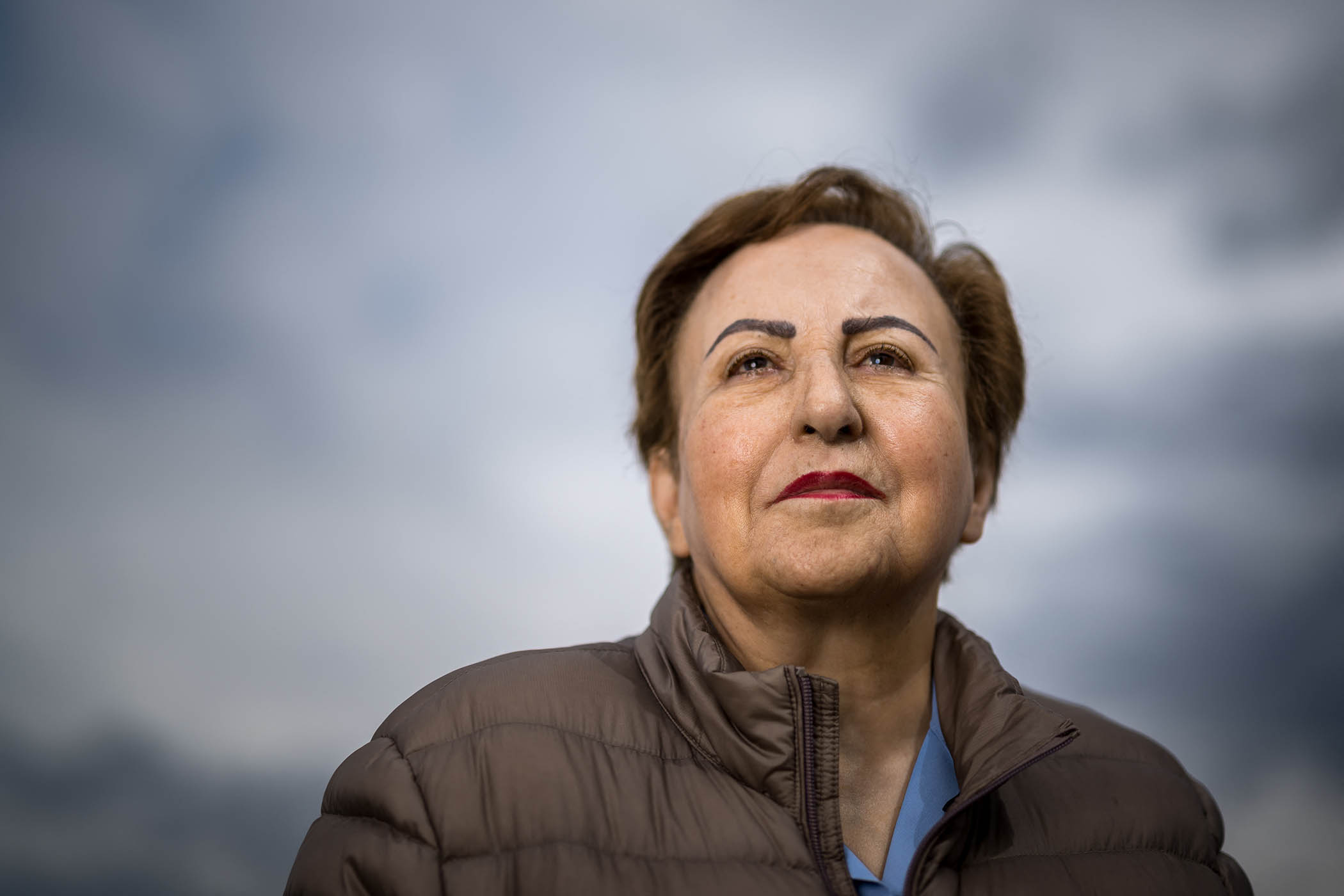

Shirin Ebadi is someone who should have made Iran proud. She was her nation’s first female judge and its first Nobel laureate. Instead, she spent years being hounded by the Islamic regime: it bugged her flat, sent her death threats and even set a honeytrap for her husband.
She was forced to leave, but 17 years after making London her home, the human rights lawyer is still not out of reach of the long arm of the regime. The police have cautioned her against allowing anyone but close friends into her home, so we meet online. The 78-year-old appears onscreen wearing a cheerful pink jumper and matching lipstick sitting against a blank beige wall.
She has never been able to bear the idea of a bodyguard, instead choosing to rent offices and flats in secure high-rise buildings. Even there, however, she suspects that on at least one occasion an Iranian intelligence agent was renting the flat next door.
Last week, the Iranian opposition figure and son of the former shah of Iran, Reza Pahlavi, announced that Ebadi was working with him to oversee a committee that will prepare a legal framework for a new Iran.
In the past, Ebadi has insisted she is neither a monarchist nor a republican. “I am for Iran,” she has said. But republicans have failed to come up with a leader behind whom they can coalesce, she says.
The heir to Iran’s monarchy, Pahlavi, she points out, is the person most of the opposition seems to be falling behind. “His hands are not bloodstained. And he’s promised that, once he returns to Iran, he will call a referendum and accept the vote of the people [if] it’s for a republic rather than a monarchy.”
And yet Ebadi admits that she was previously tricked into believing in promises of democracy. Back in 1979, as a lawyer in her 30s, she longed for the shah to fall and a new, freer government to take power. “While he was still in exile, Ayatollah [Ruhollah] Khomeini spoke about the rights of women and political freedoms. We were deceived,” she recalls.
‘The regime won’t be toppled by military intervention. Its collapse will be brought about by Iranians’
‘The regime won’t be toppled by military intervention. Its collapse will be brought about by Iranians’
Within weeks of the shah’s overthrow, Ebadi had been relieved of her position as a judge after being told: “Women were fickle and indecisive and unfit to mete out justice.” Instead, the state offered her a new position as a clerk in the same courtroom that days earlier she had presided over.
She was filled with sadness, she says, though not just for herself. “I kept thinking about all those girls with ambitions of becoming successful lawyers and judges. They would have to let those dreams go.”
As educated liberal women left the country in droves, Ebadi chose to stay in Tehran and defend the human rights cases that began piling up. Over the next few decades, she fought in the courts against children being executed and hung from cranes, as well as in defence of detained journalists on hunger strike and religious minorities facing charges of heresy.
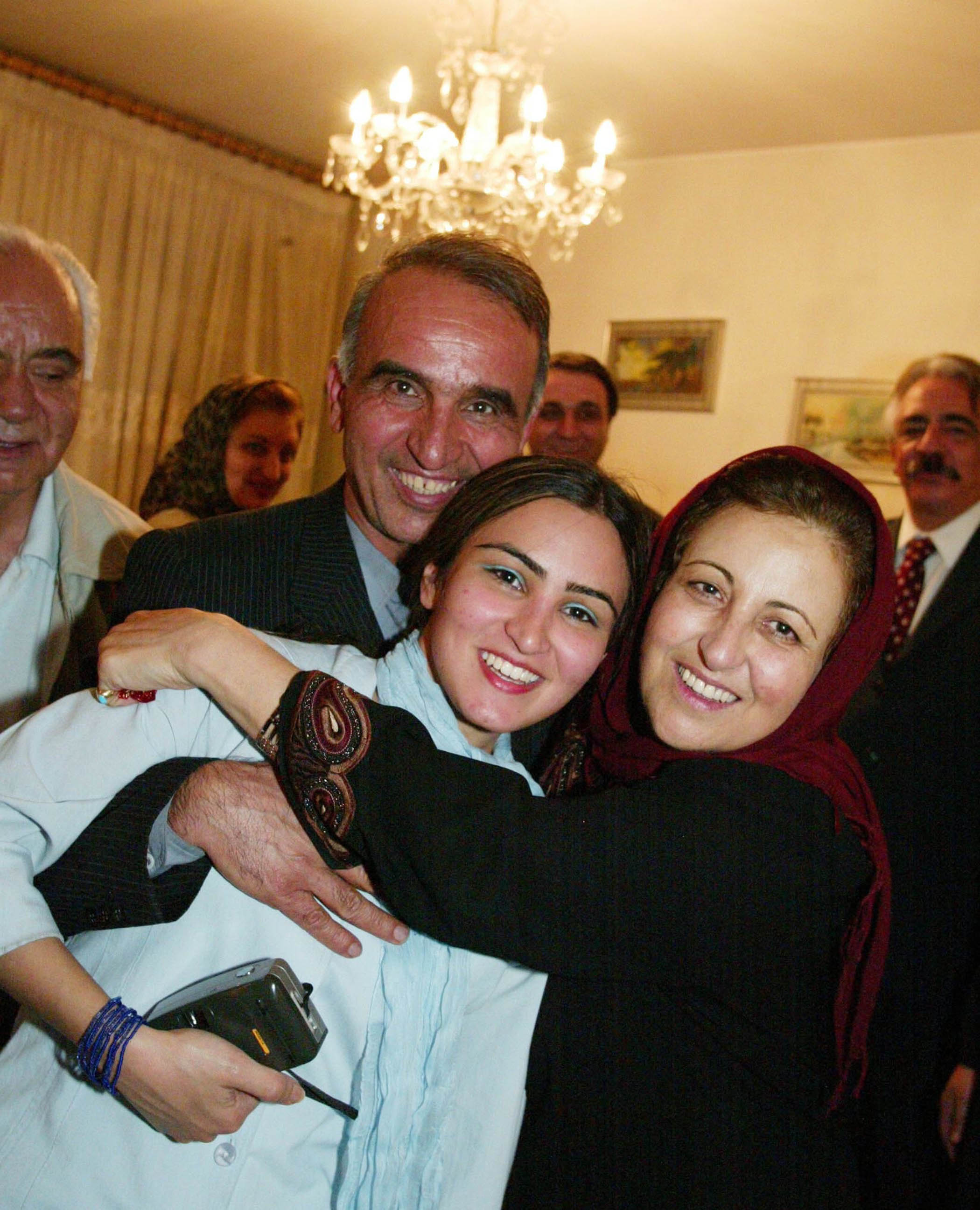
With her daughter and husband in 2003. Photo by Micheline Pelletier/Getty Images
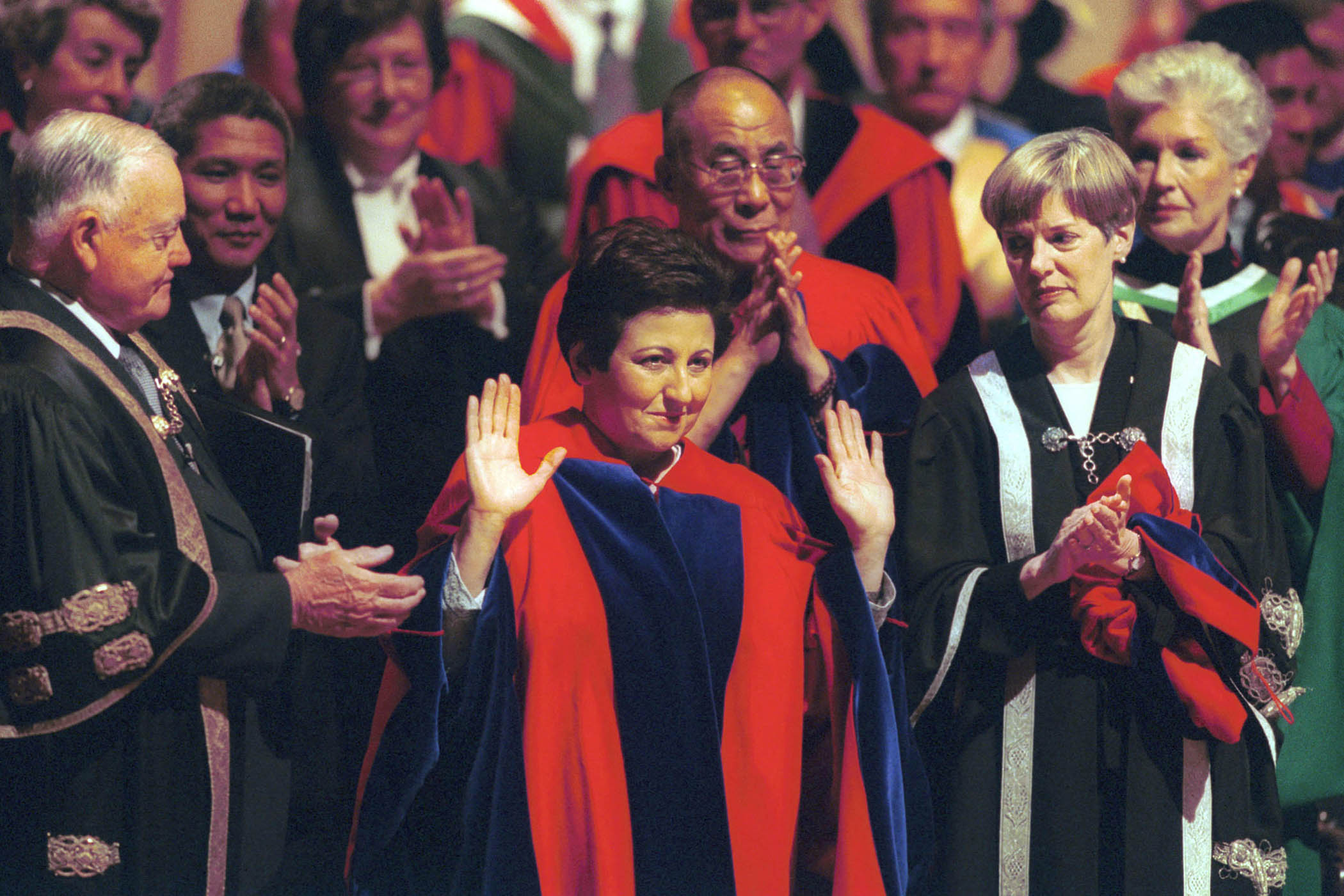
Receiving a doctor of laws degree in Vancouver to applause in 2004. Photo by UPI/Alamy
Days after she was awarded the 2003 Nobel peace prize, she began receiving threatening letters; unsigned and explicit, one or two came through the post every day. Then there were the anonymous phone calls and obvious plainclothes agents monitoring her home and office.
When she discovered listening devices behind the telephone sockets in the wall of her office, she says she left them there. “I didn’t mind them eavesdropping on my work conversations. I had nothing to hide,” she recalls. “Even before seeing the bugs for myself, I had long known that my phones were tapped.”
One evening, when she returned home from work, she found a note tacked to her front door that read: “Stop all this noise you are making outside the country. Killing you is the easiest thing we could do.”
Ironically, it was when she was outside the country that the regime finally managed to get to her. While visiting her daughters, who were studying abroad, the intelligence services set a honeytrap for her husband, tricking him into a sexual relationship with a woman; the whole affair was filmed by undercover agents.
He was hauled in front of a judge, found guilty of adultery and sentenced to death by stoning. His only way out, the authorities told him, was to marry the woman he had been caught with and make a televised statement denouncing his wife.
“Shirin Ebadi did not deserve to receive the Nobel prize,” he read for the cameras. “She was awarded the prize so that she could help topple the Islamic Republic. She is a supporter of the west, particularly America.”
The regime even stole her Nobel peace medal from a security box where she kept it in Tehran.
Ebadi has never returned to Iran.

With the Dalai Lama at the 10th anniversary of PeaceJam in 2006. Photo by UPI Photo/Gary C. Caskey
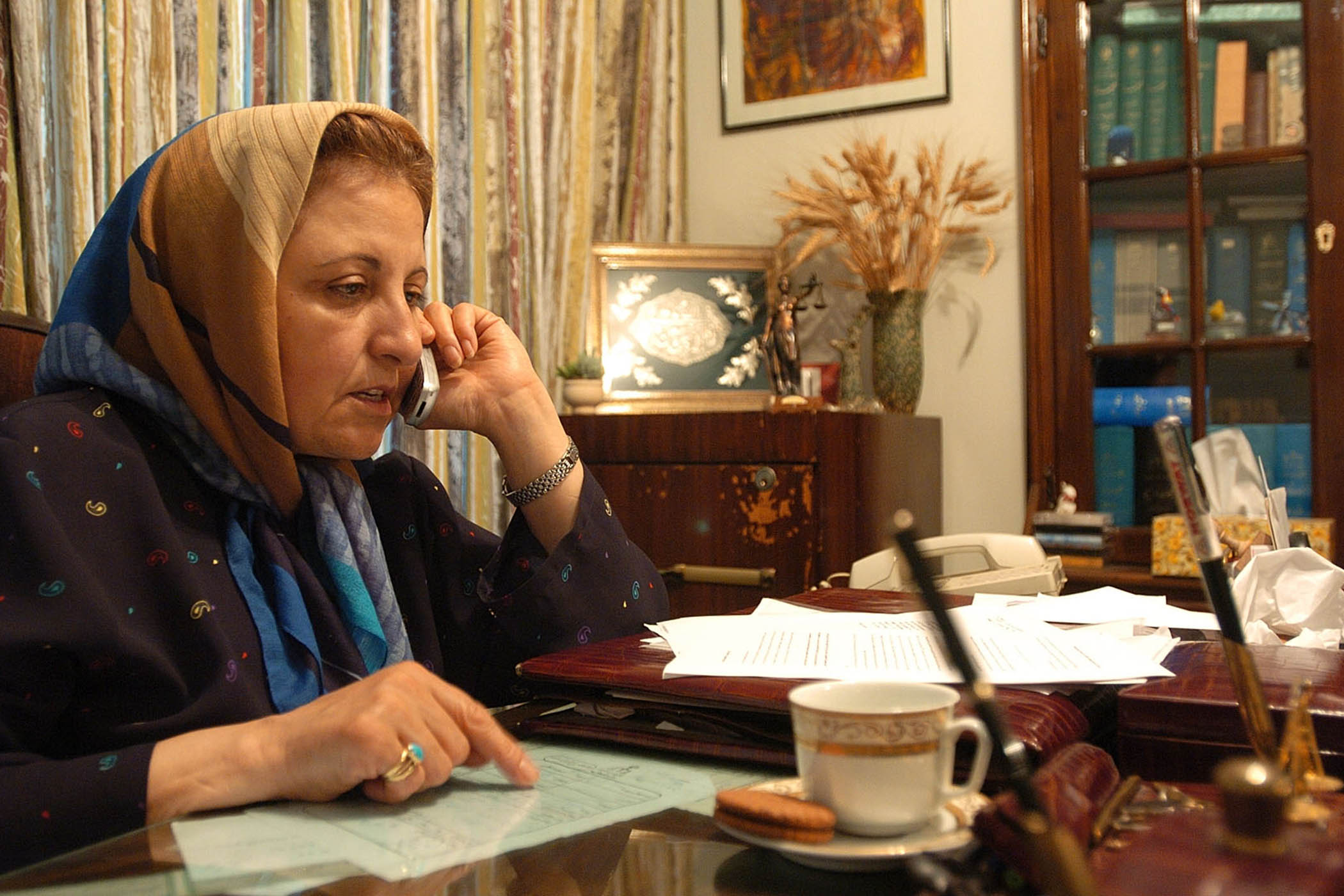
Ebadi in 2005. Photo by Scott Peterson/Getty Images
In the diaspora, opposition to the regime has struggled to form a united front. Funding from the US, Israel and allegedly Azerbaijan and Saudi Arabia for competing groups has helped cement bitter rivalries and historical hatreds so that royalists, communists and secularists have seemed too busy arguing among themselves to take on the regime in recent years.
The continuing war has posed a conundrum: while the assassination of the senior leadership of the Islamic Republic has generally been seen as a positive thing, there remains the question of whether or not to welcome the foreign bombs raining down on their country.
Earlier this year, when protesters were being gunned down in the streets, Ebadi called on the international community to intervene and launch targeted strikes against the regime’s top men. “ But that shouldn’t have been understood as a willingness for a war to be staged against our country. We did not want a war,” she says.
“The regime won’t be toppled through military intervention. Its collapse will be brought about by the Iranian people themselves,” Ebadi insists. “The moment the bombings have ended, the Iranian people will once again take to the streets and protest against this regime.”
In January, economic protests escalated into the biggest nationwide uprising in a generation, with millions of people taking to the streets. The regime responded with mass arrests and live ammunition that saw tens of thousands killed.
Ebadi concedes there are vast political differences between the Pahlavi supporters that may be hard to reconcile were he ever to come to power. “ The possibility of civil war does exist, and it is precisely for that reason I am cooperating in the drafting of legislation in this transitional justice committee, so we will have laws to prevent a civil war.”
The aim of the committee is to create a legal framework to ensure justice for human rights abuses and bring the perpetrators to trial. Ebadi says she has had assurances that the death penalty and flogging would be abolished, while still ensuring legal redress for people harmed by the Islamic Republic.
Is it not a little premature to be talking about transitional justice, given the current situation in Iran?
“ Once the regime has been toppled, there might not be any time for us lawyers to sit together and draft legislation,” Ebadi replies. “It's wiser to be prepared.”
Main photograph by Fabrice Coffrini/AFP via Getty Images
More from The Observer
Newsletters
Choose the newsletters you want to receive
View more
For information about how The Observer protects your data, read our Privacy Policy