Photograph by Christian Sinibaldi for The Observer
The buggies and prams are lined up in the foyer of Young V&A in Bethnal Green, east London. Inside, schoolchildren are playing with plasticine Wallace and Gromit models as part of an exhibition about Aardman Animations. The old Museum of Childhood has completed its metamorphosis from a social history of toys into a buzzing hive of artistic activities.
“In the old days parents and grandparents always enjoyed it more than children because it was an exercise in nostalgia for their own childhood, and the children thought, ‘What are all those old things in a glass cabinet?’” says Tristram Hunt, 51, the director of the V&A. “Now it’s all interactive, it’s about play, imagination and design.” There are no screens “apart from one Minecraft [game] that you have to play with someone else. We want to encourage the other parts of the brain. People can no longer hold pencils – we know they’re losing strength. I want to have a day where we use chopsticks all day, just to keep those fine motor skills that are so important.”
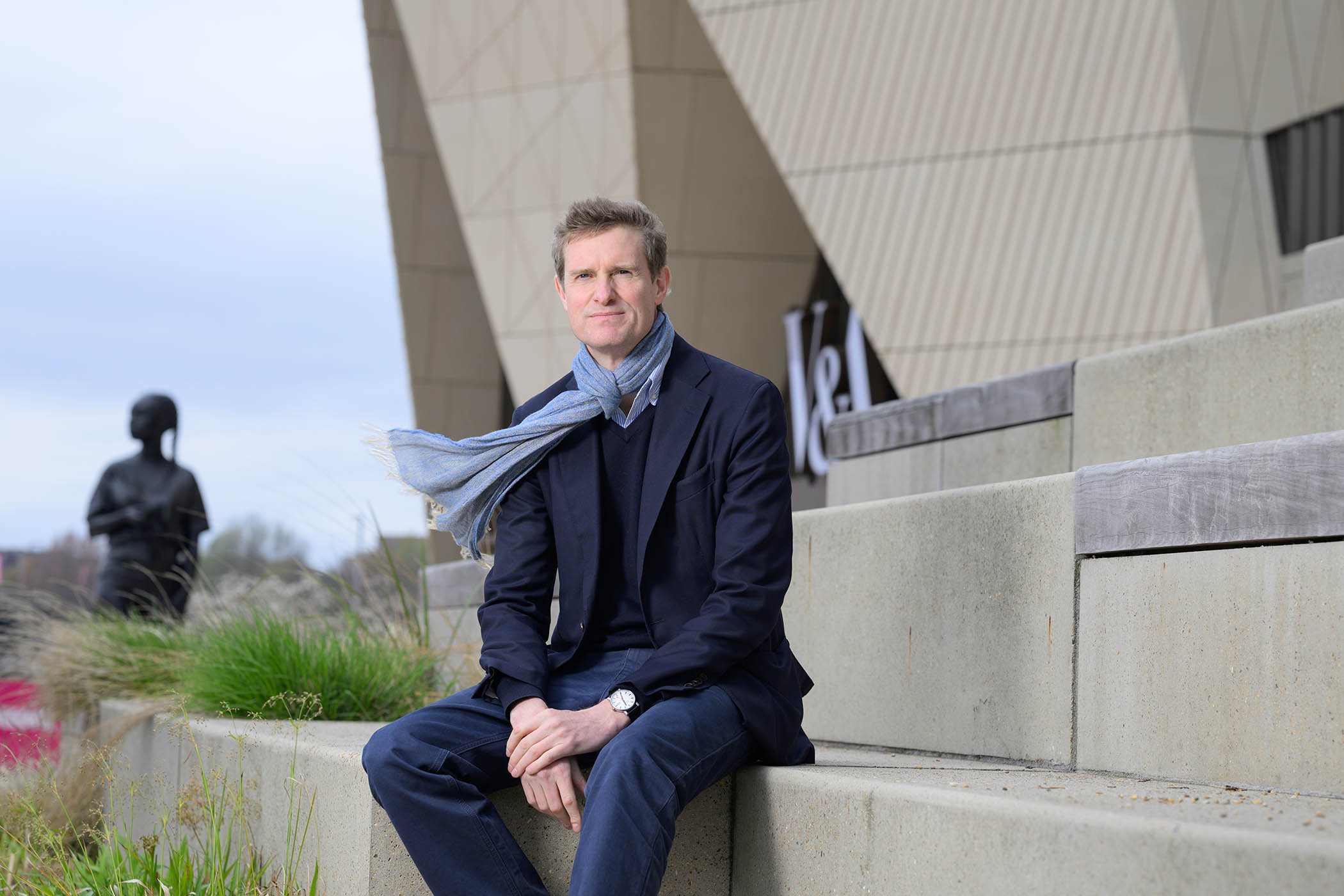
Hunt has reinvented the V&A, the South Kensington institution named after Queen Victoria and Prince Albert, changing it from a slightly stuffy collection of textiles and ceramics into a national network of museums “dedicated to the power of creativity” across six sites. Our walk will take us from Young V&A along the canals of east London to the V&A East Storehouse in Hackney Wick and the new V&A East museum in Stratford’s Queen Elizabeth Olympic Park, which opens in two weeks. We pass the Dundee Arms pub, which the director seizes on as a reference to the Scottish V&A branch. Hunt himself embodies the Wedgwood Collection in Stoke-on-Trent, the constituency he represented as a Labour MP. “This month we will conclude the incredible transformation of the V&A,” he says. “That’s why this walk makes total sense.”
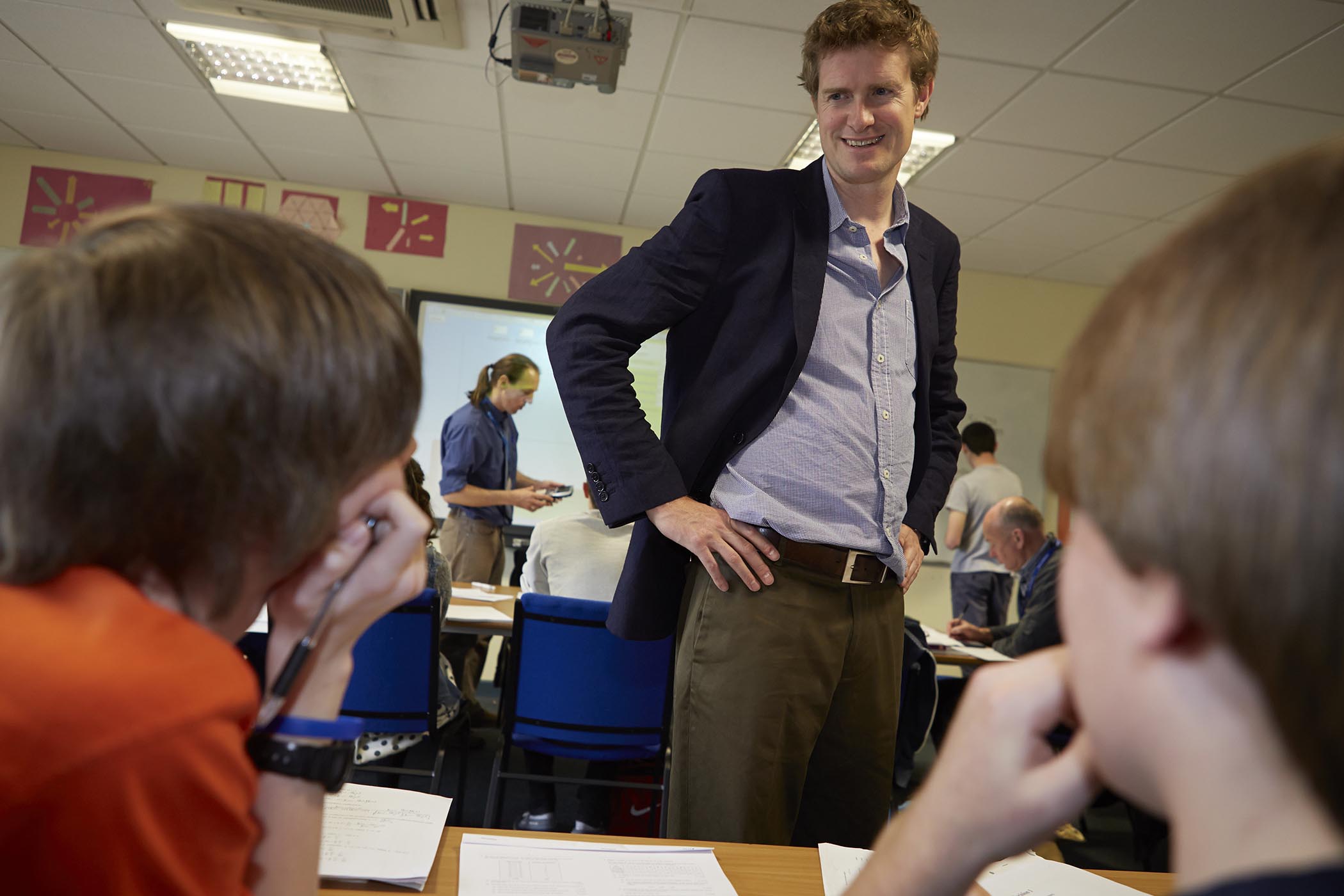
The former shadow education secretary visits a school in 2014
We set off down Old Ford Road, along the side of Young V&A. The trees are full of blossom and the sun is shining. Hunt points out the “incredible original Victorian brick facade” of the museum. He is an enthusiast who wants everyone to share his love of art and design. He says schools must put a much greater emphasis on creativity to prepare children for the jobs of the future. “We’ve seen a horrible stripping-out of those subjects – a 70% fall in the numbers taking design and technology and a big drop in those taking performing subjects,” he says. “But the creative industries deliver £125bn a year to the British economy. We have something in our waters that means we are really strong in this area – whether it’s film or music or design. If you have a competitive advantage, the obvious thing to do is to ensure that you’re maxing it out to the full. Instead we’re eroding it.”
He worries that a divide is growing between private schools with lavish art rooms and theatres and state schools where pupils are encouraged to focus on exams. “The crime is there’s this huge social disconnect between the people who are allowed to do it,” he says. “Think of all the effort that we put into ensuring children knew coding, but now AI has completely swamped that, whereas a study of literature, drama, art, unleashing those functions in the brain through a creative curriculum, is profoundly important. It’s not just finger painting.”
There is, Hunt suggests, a tendency in Whitehall to downplay the economic importance of fashion and film. “Think about the amount of money going to the steel industry relative to the creative industries. I get the politics of it, because those communities need the support, but think about the wealth you could generate – you just need to look at how France supports its fashion industry. It’s a huge art form. The number of people it employs right around the country is enormous and it’s a big money-spinner for the Treasury. The king is working with Chanel to ensure that craft skills remain.”
‘The V&A is democratising the arts. That’s what it’s always been about’
‘The V&A is democratising the arts. That’s what it’s always been about’
We turn down on to the Hertford Union Canal, heading east. Victoria Park is on our left and houseboats are lined up on the water to our right. To some, the arts seem like a luxury at a time of squeezed public finances and global insecurity, but Hunt insists: “We need museums and galleries more than ever. When you’re facing clashes of civilisations, growing chauvinism, growing populism, museums tell the stories of exchange and multiculturalism and cultural appreciation and cultural appropriation. If we are concerned about the concentration of nationalism, museums and galleries are really important spaces to take you beyond your prescribed identity.”
The path divides and we follow the righthand fork next to a lock. Hunt is a natural optimist but visitor numbers are down for most museums, including the V&A. Now ministers are considering charging foreign visitors to access permanent collections. The V&A director thinks that a terrible idea, though he agrees tourists should contribute more. “My heart is set on the hotel tax,” he says. “It should be 3%-5% of the cost of the hotel room, so it’s progressive – you pay more at Claridge’s than [at] Travelodge. I’d rather do that than think about charging foreigners for museums. Eighty per cent of tourists in London say they come for the culture, including the cultural institutions that are free.”
Newsletters
Choose the newsletters you want to receive
View more
For information about how The Observer protects your data, read our Privacy Policy
In his view, the government needs to do more to encourage wealthy philanthropists. “We definitely saw the exit of a large number of non-doms from London because of the tax changes,” Hunt says. “We absolutely know people who have left. It’s not just anecdotal. The pool of opportunity shrunk, and that was a challenge. All cultural institutions have felt that.” He is pleased that the chancellor, Rachel Reeves, has now scrapped a key component of the non-dom regime, which meant people had to pay inheritance tax on their non-UK assets. “That really frightened the wealthy. I’m feeling positive that, with the changes to the inheritance tax bit and the realisation of the intrinsic merits of London and the UK, we will see some people return. They’re very mobile. Many of them haven’t sold their houses.”
The V&A cut its ties to the Sackler family, descended from the US makers of addictive opioid prescription drugs, but Hunt insists Britain “should do more to celebrate philanthropists, who are such an important part of the civic fabric of the country”.
We cross a bridge and walk along another canal. Conversation moves on to the growing pressure on museums to give back treasures stolen in the colonial era. “I think it’s really complicated and you have to deal with it object by object,” Hunt says. “We had Asante gold, which was looted in 1874. That’s [now] on a rolling loan. My view is that it is working far harder and achieving more in Kumasi [in Ghana] today than it did in our galleries in the V&A.” But he doesn’t want to see British museums filled only with British items.
“I would also, in time, want to lend other material, it shouldn’t just be Asante gold going to Ghana. We should also be lending Wedgwoods and Turners. The V&A has 2.8m objects, of which around 600,000 are probably displayable. Of all of those objects I would say around 40 to 50 are contested. So this idea that you would strip out everything from the museums, for the V&A that’s not the case.”
We have arrived at the Storehouse, a cavernous space where objects are lined up on shelves across four floors. The art historian Roy Strong once compared the V&A to an “extremely capacious handbag”. Hunt says the east London depot, which opened last year, is more like an “Amazon warehouse” with half a million works. “There’s an ‘order an object facility’ that you can use on your phone, then it sends you an email saying it’s ready and you can come and look at it.”
Keith Moon’s drum set is standing next to a section of the facade of Robin Hood Gardens, the iconic brutalist housing estate in east London. There are harpsichords, motorbikes, paintings and marble busts, as well as the David Bowie archive, including his costumes and the rejection letter he got at the start of his career from an unfortunate music executive. A dustbin from Glastonbury is displayed beside a Luca Della Robbia marble relief, a New Labour mug, Ronnie Barker’s Bafta and an Olympic torch. It is a crazy cornucopia of treasures.
“This is my favourite,” Hunt says, waving towards a giant marble arch. “It’s the Agra colonnade, built in the 1630s for the Red Fort at the same time as the Taj Mahal. It’s beautiful. This is the first time it’s been displayed since 1957.” There is a gap for it in an Indian courtyard but he says if he were asked to return it, he would make a case for it to stay. “In a country full of diaspora communities you have to think about those cultures as well.”
We head out across the park towards Anish Kapoor’s Orbit and the Olympic Stadium, now the West Ham ground. Tony Blair secured the 2012 Olympics for London but Hunt thinks Margaret Thatcher was the last prime minister who really understood design: “We have some of her clothes, including the handbag. She understood fashion and power.” Keir Starmer, he says, “has got a strong musical sensibility, not really so much design”. Downing Street “is in a terrible condition and the cabinet room is awful. They’ve got three copies of Jeremy Clarkson’s collected columns in the library.”
‘There’s a pang of envy on election night, or when you see the researcher of your researcher becoming a minister of state’
‘There’s a pang of envy on election night, or when you see the researcher of your researcher becoming a minister of state’
We have arrived at the new V&A East building, next to the London College of Fashion, a Sadler’s Wells outpost, a BBC music studio and a UCL campus. “It’s what we call East Bank, mixing arts, science, humanities and design in a cultural district,” Hunt says. He hopes it will be the 21st-century answer to “Albertopolis”, the South Kensington enclave created by Prince Albert, with the Science Museum and the Natural History Museum alongside the V&A. “We could probably do with cleaning up the canal a bit – if we were in Copenhagen there’d be swimming lanes.”
His new museum is aimed at those aged 18 to 30. “We curate not around geography or material type or chronology but questions of the environment, identity, social justice, internationalism,” he says. “Our opening exhibition is called The Music Is Black. It’s a story of black British music for the last 100 years.” There are steps outside “like an agora”, Hunt says. “It’s democratising the arts. That’s what the V&A has always been about, much more at the beginning than other museums. It was open late and had gas lighting so that working people could come and visit. It had labels next to the objects, so you didn’t have to buy a catalogue. It always had this very strong democratic feel.”
He sounds momentarily like a politician. Hunt was a Labour MP between 2010 and 2017, and served as shadow education secretary when Ed Miliband was leader. A historian by background, he stood down when he was appointed to run the V&A. Now he urges the Labour plotters to rally around Starmer. “I do think the prime minister should stay,” he says. “We’re in really difficult and complicated times.”
Hunt worked for Peter Mandelson as a young researcher. “Everyone was surprised, including some of those closest to him, by the extent of the connections he had with [Jeffrey] Epstein,” he adds.
If Hunt had stayed at Westminster, he would probably now be in the cabinet. Does he miss his old life? “There’s a pang of envy on election night, or when you see the researcher of your researcher becoming a minister of state,” he replies.
“I’m full of admiration for people who did the long haul, like Rachel [Reeves] and David [Lammy], who have stuck it out, but I think politics is so short-term and fickle.
“At the V&A you can transform things. Over nine years I’ve had the space and opportunity to build really important institutions which will last.”
Photograph by Andy Hall/The Observer