As Barack Obama knew, and Andy Burnham is finding out, hope is a potent political commodity. It can catch fire and spread. It can also be quickly extinguished. For anyone hoping to convert hope into change, the trick is to seize the moment. That is what Burnham has been trying to do this weekend, but there is a fine line between seizing the moment and seizing power behind closed doors.
Before the Labour party lurches beyond the point of no return in its dash to name a new leader, a few facts bear repeating.
Keir Starmer rescued it from Corbynism, reorganised it to become a credible opposition and won a landslide majority two years ago. He won 411 seats in open combat. Burnham has won one and now would like to smooth his path to power by persuading Starmer he has no chance in an open contest. This may be true, but without an open contest, we will never know.
Starmer deserves a chance to defend his record. The public beyond Makerfield deserves a chance to scrutinise Burnham’s, and – one more fact – democracy has to be open to be trusted. Of three options now open to Labour under its own rules, only two come close to meeting this bar. In a leadership contest with more than one challenger for the top job, party members would vote to pick the final two and MPs would choose between them.
With only one challenger, there is still the option of a proper debate and a vote by MPs. Instead, team Burnham wants a Labour version of men in grey suits telling Starmer his time is up.
In this scenario, Burnham would be the fifth prime minister in 10 years to enter No 10 courtesy of a backroom deal or an internal vote by the ruling party with no obligation to publish details of its membership. There is something sordid about cycling through prime ministers without knowing enough about them or those who put them in power.
There is also something dangerous – witness the calamity of Liz Truss and her mini-budget, and the hair-trigger vigilance of the bond markets over British debt levels ever since. That is one reason, The Observer argued, after Labour’s own calamity in the recent local elections, that Starmer should stay – at least long enough for an open contest.
The argument for an open contest is as strong now as it was six weeks ago. What has changed is a sense of inevitability around Burnham’s candidacy. He won a remarkable victory in Makerfield: a majority of 9,000-plus votes for a remainer in a constituency of Brexiters, more than for every other party combined, and, most importantly, humiliation for Reform UK.
After the ballot, Burnham grinned for pictures next to Count Binface. His insouciance recalled that of Elle Woods on getting into Harvard in Legally Blonde. How hard can it be?
Labour’s most pressing political need is to see off the threat from Nigel Farage and Reform, and from the evidence available, Burnham looks up to the task. That is why his aides have the nerve to tell the prime minister he has this weekend to consider his position and announce a timetable for his departure or face an ultimatum at Tuesday’s cabinet meeting. But the evidence is thin.
Newsletters
Choose the newsletters you want to receive
View more
For information about how The Observer protects your data, read our Privacy Policy
Burnham’s record in Manchester is one of building consensus around the obvious need for decent public services and more private sector investment. “Manchesterism” is a label, not a plan. “Business-friendly socialism” may turn out to be a contradiction in terms. Burnham himself is good at being popular, but what about unpopular?
The UK 10 years after the Brexit vote faces painful trade-offs over tax, spending and borrowing in which public services and finances – but also national security – are at stake. As prime minister, he would have to make tough decisions without much time to think them over and without much chance of simultaneously placating the markets and the left.
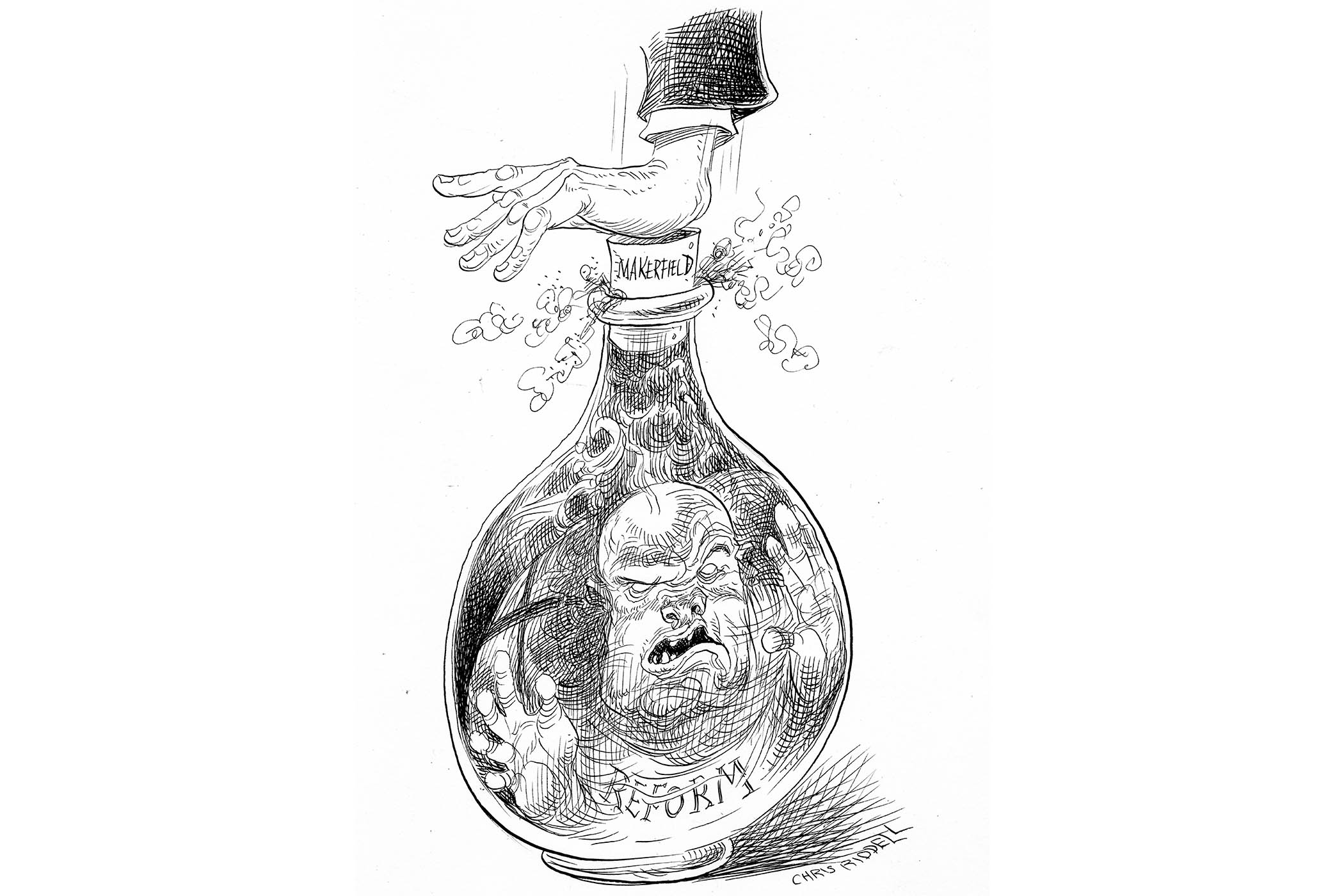
Burnhamism is no magic potion. And yet, for many, it does seem to signal hope. If he becomes prime minister, he may want to convert that into a personal mandate by calling a snap election. That is an option to be considered when the time comes. It is not a reason to sidestep an open leadership contest now.
Illustration Chris Riddell