
Two hundred and 50 years ago yesterday, on 4 July 1776, there were two, not one, declarations made in Philadelphia. The famous one declared independence. The second declared something every startup would recognise: we need a logo.
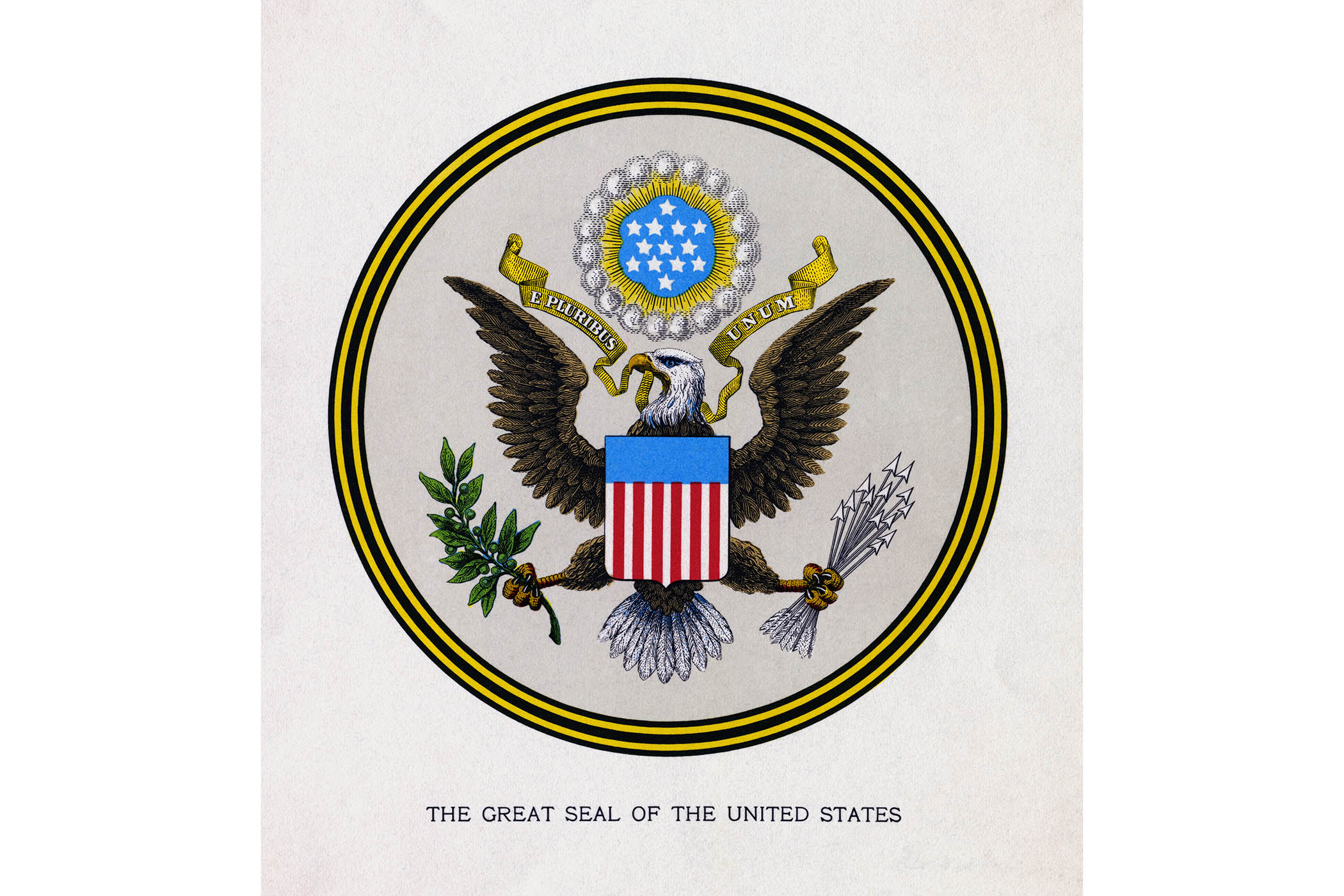
That second declaration would, in time, become the Great Seal of the United States. You can still see it on the back of a $1 bill and the front of every US passport. It did not come easily. Congress handed the job to the same three men who had drafted the declaration – Adams, Jefferson and Franklin. Brilliant with words, they proved hopeless with pictures. Adams reached for classical mythology. Franklin preferred scenes from scripture. Jefferson looked back to Anglo-Saxon legend. All of it was rejected by Congress, but their suggestion for a motto was accepted: E Pluribus Unum (“From Many, One”).
It took nearly as long to design the Great Seal as it took to win the war.
According to the conventions of heraldry, every Great Seal required a crest: the image that captured the essence of the whole enterprise, something in addition to the eagle and the shield that would sit above the motto and give it meaning.
With the war finally won, they at last found the answer. Above the eagle’s head they placed 13 stars of different sizes arranged in an asymmetrical pattern, with rays of light emanating outward. They called it the radiant constellation.
They knew any band of revolutionaries can declare independence… the constellation pointed to something harder and more meaningful: interdependence
They knew any band of revolutionaries can declare independence… the constellation pointed to something harder and more meaningful: interdependence
At the most obvious level it represented the 13 colonies that had become one nation. But on another level it also represented the new country taking its place in the constellation of nations alongside Britain, France and the other established powers of the day. It also pointed inward, symbolising the animating idea of the country itself: independent bodies freely choosing to act in concert to accomplish something bigger, more useful and more powerful than each could alone. Aristotle observed that the “soul never thinks without an image”. Whether or not the founders had that thought in mind, they behaved as though they believed it. They weren’t simply decorating a republic. They were trying to create a symbol by which it could understand itself.
They knew that any band of revolutionaries can declare independence. That takes an afternoon. The constellation pointed towards something harder and much more meaningful: interdependence. It offered a way to imagine unity without demanding uniformity, and to draw strength from difference rather than succumbing to division.
That, of course, was the ideal. In practice it arrived wrapped in brutal hypocrisy: in the taking of native land, in centuries of enslavement. But hypocrisy does not erase an ideal. If anything, it reminds us how difficult the ideal is to achieve.
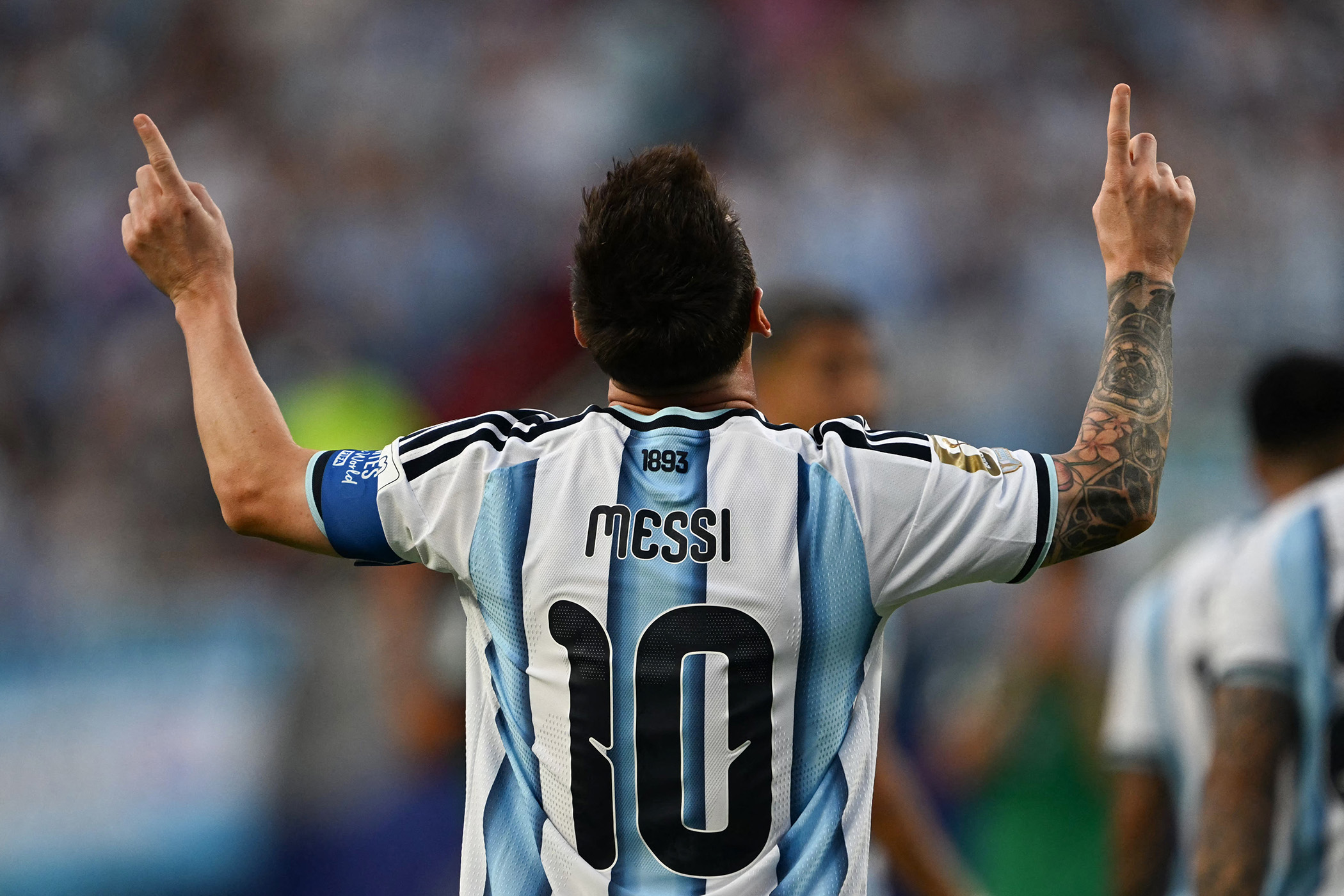
Watching the World Cup over the past few weeks, I have found myself looking for the constellation again. Oddly enough, it isn’t on the shirts. America’s crest no longer carries it. Yet it’s still there on our passports. It’s still there on the back of every $1 bill. Millions of us carry it around every day. Like so many familiar things, though, we’ve stopped looking at it. We look through it.
Footballers playing for their national teams often say they “play for the crest”. On the great sides, stars sit above that crest, one for each World Cup won; the American men have none to stitch above theirs, and may not for some time. (The women’s team, it’s worth recalling, have four.) But what struck me this summer is that the constellation hasn’t so much vanished from our emblems as migrated onto the field itself. Unlike the rigid formations that reset after every whistle in American football, the world’s game is built around constantly changing relationships: spaces opening and closing, patterns appearing and dissolving, 11 people moving freely, each making space for the others, each remaining fully himself while continually becoming part of something larger, no one able to win alone. The constellation wasn’t embroidered on the uniform. It was being enacted before my eyes. If you want a picture of how to thrive together, you could do worse than 90 minutes of football.
Newsletters
Choose the newsletters you want to receive
View more
For information about how The Observer protects your data, read our Privacy Policy
One way to imagine “from many, one” is to envision twigs bound into a bundle, a tight-bound club. In Latin, a bundle of wooden rods is fasces — hence, fascism. But a constellation offers a very different idea: each star retains its individuality and yet is never alone. You have both. That was the dare, the great imaginative leap.
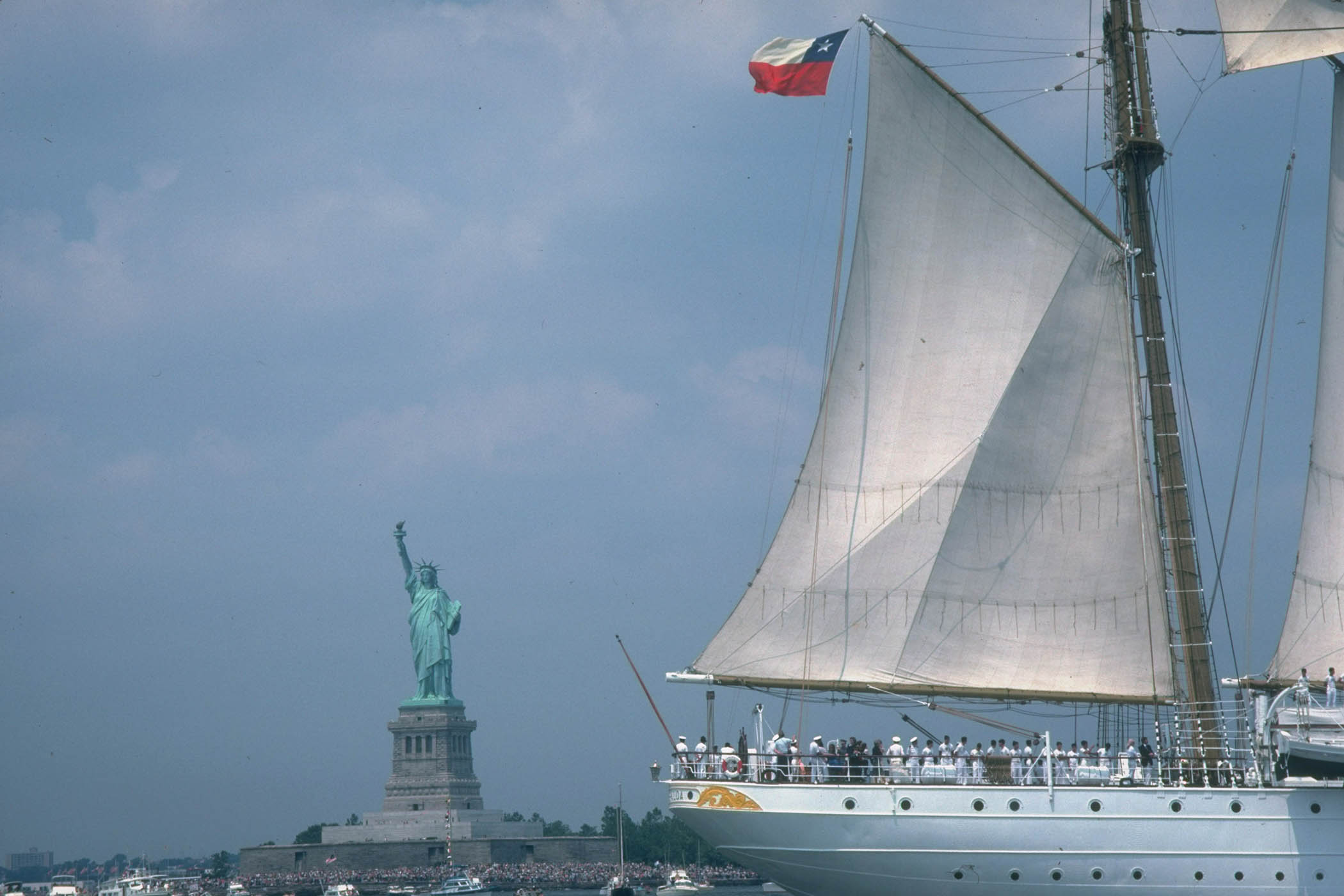
When George Washington became the nation’s first president under its new written constitution, he was asked to name the first five frigates of the US Navy. He avoided biblical scenes, classical mythology and nostalgic Anglo-Saxon legends. His secretary of war offered another set of possibilities: Defender, Fortitude, Perseverance, Protector and Liberty.
Washington went another way.
He named them the USS United States, USS President, USS Constitution, USS Congress and, finally, the USS Constellation.
He understood something we have partly forgotten. He passed over heroes, myths and abstract virtues. Instead, he chose the things he and his fellow founders had actually created together: a country, a presidency, a constitution and a congress. Imperfect, certainly. Provisional, absolutely. But living institutions that could be argued over, repaired and improved. Then he added one more name – not an institution, but the picture that might help hold all the others together.
We need that picture again. Some voices urge complete togetherness, as though the only way to become one is to become the same. Others answer with the opposite vision: every person, every community and every nation for itself. The constellation suggests another possibility. It reminds us that we can stand out without standing alone, and fit into something larger without disappearing into it.
The founders left us laws, institutions and arguments. We have spent nearly two and a half centuries debating all three.
They also left us a picture.
Matthew Barzun is the former US ambassador to the UK, chair of Tortoise Media, and owner of The Observer. His book The Power of Giving Away Power: How the Best Leaders Learn to Let Go is published by HarperCollins
Photograph by Maja Hitij/FIFA via Getty Images