

Journalism evidently needs its own standardised, industry-wide response to the risk of AI-induced plagiarism and misinformation (“What happened when the literary critic asked AI for help? He got sacked”, News, 4 April). Perhaps something akin to the Society of Authors’ “human-authored” certification, launched in March 2026.
The Chartered Institute of Journalists (CIoJ) has been working on an “artificial intelligence assisted” kitemark proposal, which would be given to flag if and how the technology has been used in a work of journalism. A mechanism of this kind would give audiences the assurance that AI has been wielded responsibly – and offer journalists a framework for checking their work against the requisite codes of conduct.
While government attempts to clamp down on the copyright issue would reduce instances of plagiarism down the line, they would not resolve the AI hallucination or disinformation problem. It’s time the non-fiction world caught up with its own, industry-wide response. New technologies demand new approaches.
Hamish Monk Ingatestone, Essex
At the end of John Naughton’s article (“Ten metaphors for AI”, New Review, 3 April), he says that part of the danger of AI is caused by the way people anthropomorphise machines and technology.
This mindset is disastrous in other crucial areas too, including in matters of war and peace. Treating a country as an individual who can be summed up as having one overall view, rather than millions of individuals whose views on any issue might be split down the middle, is one of the causes of international conflict – a problem that is still widely ignored by campaigners and policymakers.
Albert Beale London, N1
In all the discussion around AI there has been no mention of its potential impact on The Archers’ storylines. Surely George Grundy would have used AI when proposing a figure to Brian Aldridge to buy his silence following the notorious “bottle on the head” incident?
Cecilia Harrison Nottingham
Seeing pillarbox red
I enjoyed Tom Lamont’s wonderful and funny piece about uniforms (“The end of the office uniform”, Magazine, 29 March).
However, Lamont falls into the same trap as many others. Royal Mail and the Post Office were separated by the Conservative-Lib Dem coalition in 2012 in an act of incomprehensible folly. This separation means that all post boxes are now the property of Royal Mail, despite having “Post Office” embedded on them in the cast iron. We now have a so-called Post Office that is not responsible for posting anything to anyone.
Tom Lamont writes: “I think it takes real talent… to bring to heel the bright shade of red that has been standard for Post Office employees since the 2010s.” But while Post Office red has been standard for mail boxes, vehicles and some uniforms for many decades, all those things and use of the colour are now Royal Mail’s.
The Post Office still uses red in its logo, but the uniform either no longer exists or few PO employees wear it.
Graham Mytton Coldharbour, Surrey
Present pupils excepted
Amid the Send review, rising Neet figures and persistent absence dominating the education agenda, there is a group nobody is measuring yet (“School system is creating a ‘wasted generation’ which is unprepared for work”, News, 28 March). Students who are physically in school. Not disruptive. Not flagged. Often compliant. Just quietly slipping through.
We are calling them “invisible learners”. After 20 years in UK classrooms, I have watched this trajectory play out repeatedly: early disengagement, missed signals, late intervention, then absence, exclusion, or Neet. What is striking is not how rare this is. It is how consistently it goes unnamed.
Gloria Dalafu London, SE13
Grave concerns
We too like tracking down eminent people’s last resting places (“In search of Gertrude Stein”, New Review, 5 April). Popping into the Oxfordshire village of Sutton Courtenay last November, we found your long-term editor, David Astor, next door to George Orwell and just metres away from Herbert Asquith.
Robert Boston Kingshill, Kent
Write to us
Letters, which may be edited, should include a full name, telephone number and postal address.
Email letters@observer.co.uk (please insert Letters to the Editor in the subject field).
Or write to us at Letters to the Editor, The Observer, 22 Berners Street, London W1T 3LP
To be received by noon on Thursday
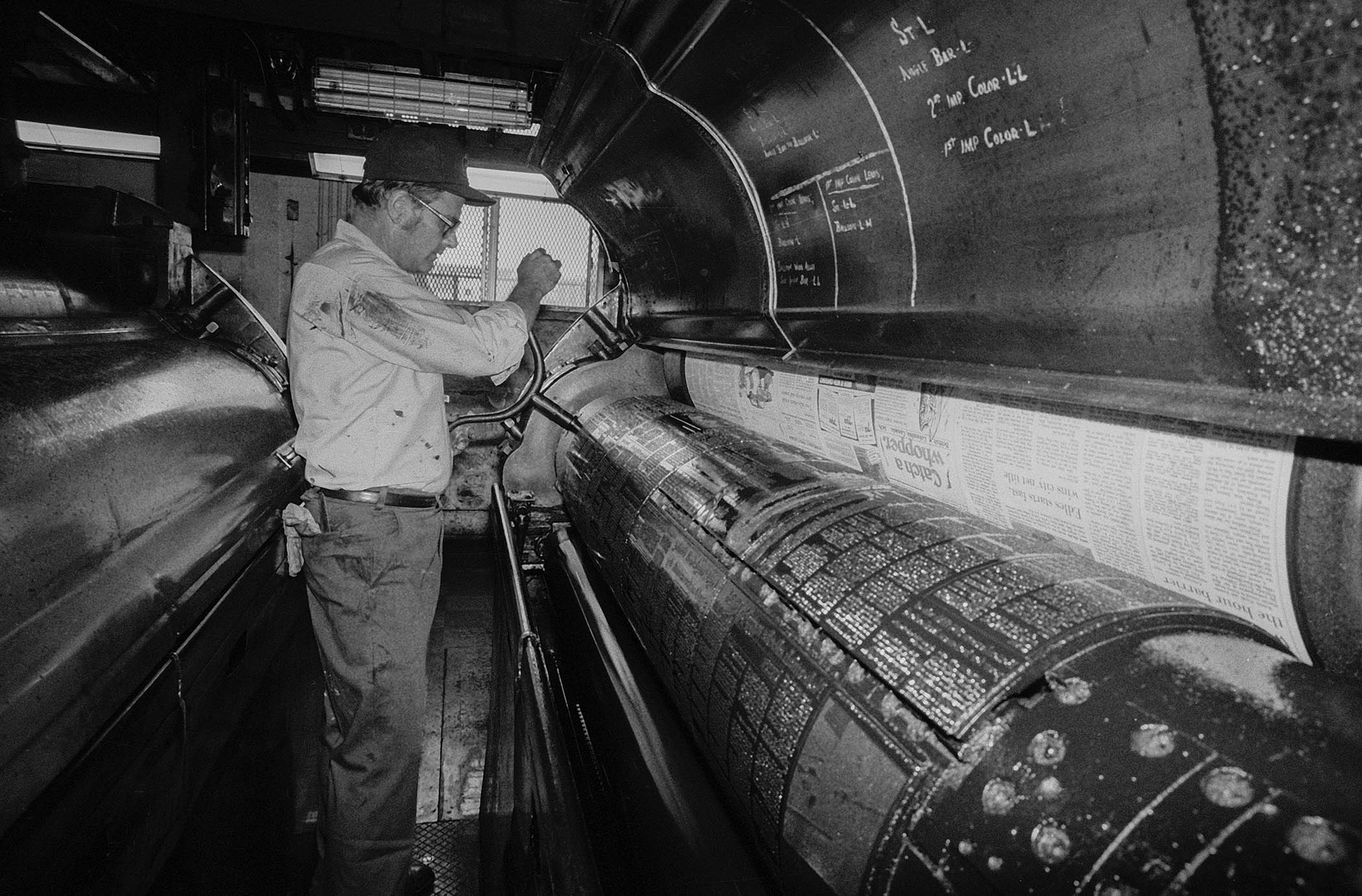
Photograph by Bob Riha, Jr./Getty Images