As a retired health visitor, I was disappointed, but not surprised, to see no mention of the health visiting service in Rachel Sylvester’s article (“Not ready for school: the children coming to class in nappies and unable to sit up”, News, last week).
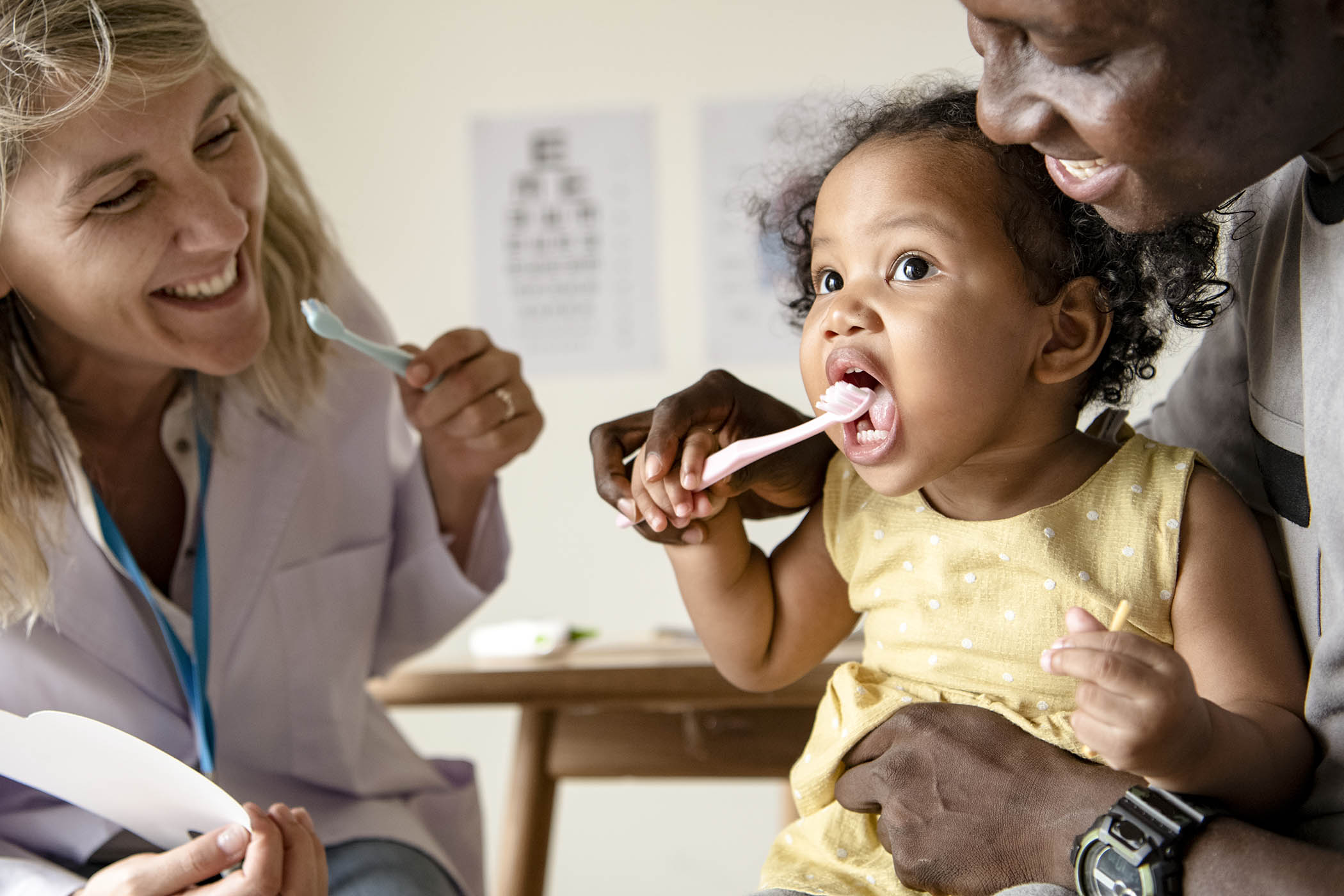
Although significantly reduced and devalued over recent years, the service is uniquely placed to reach families with children under five. Health visitors make contact with all parents of newborns from about 10 days postnatally, and offer continuing advice and support with child and maternal health, and with parenting worries, via home visits and child health clinics. Problems are identified early and referred on before they become entrenched.
Poverty undoubtedly causes additional stress and hardship, but what this article describes is family dysfunction and neglect that have gone unnoticed due to a lack of proactive community work.I hope that a renewed interest in the significance of early years support by the government will include more health visitors.
Wendy Phillips, Brighton, East Sussex
“Squeamishness about telling parents what to do”? It’s hardly nanny-statism to require children to be toilet-trained for school. In fact it’s a requirement – with medical exemptions – in Wales, where teaching unions backed Blaenau Gwent’s demands that parents come to school to do it themselves if they wanted nappies changed.
Cassy Firth, Morley, West Yorkshire
Brett Wigdortz calls for “a first-class early years education system” (Children cannot learn if they cannot play, March 15). We already had one of these, targeted at districts around the country where it was most needed. Set up by the new Labour government at the end of the last century, Sure Start did all that was expected of it. Costing £1.8bn a year by 2010, the programme more than paid for itself in the end. The trouble is, we only discovered this after Conservative austerity had effectively killed it off.
In research published between 2019 and 2025 the Institute for Fiscal Studies (IFS) showed that at school entry children from the most disadvantaged families had greatly improved language and social skills, and by their mid-teens significantly better GCSE results and far fewer hospital admissions. Boys, always the most vulnerable, were the greatest beneficiaries. There were also big reductions in convictions and custodial sentences, mostly among minority ethnic children.
Set up in the poorest areas but open to all, children’s centres were staffed by early years professionals including health visitors, speech and play therapists, family support workers, and by volunteers. These were neighbourhood places where anyone could go with their babies, toddlers and preschoolers up to age five. For many, attendance there led to new and lasting friendships between parents – between families. That is social capital.
In May last year, IFS calculated that “every £1 of up-front spending on Sure Start generated £2.05 in total benefits over the long run”. Sure Start was the greatest investment in early years since mass vaccination.
Dr Sebastian Kraemer, London NW3
The only way is to rejoin
Any EU reset and consequent growth is welcome (“Closer ties with the EU become the ‘biggest prize’ for chancellor”, News, last week). However, as elicited by William Keegan (“History of energy crises has much to teach this government”, Business, last week), the reality is that this will claw back only a small part of the 8% Brexit reduction to the value of our economic output. However successful a reset, we will continue to be substantially worse off than if we had stayed in the EU.
Any objective analysis clearly indicates that rejoining the EU, or at least rejoining the single market/customs union, is the only meaningful “biggest prize”; and a platform for an inspiring vision for our future – especially for the younger generation, with recent ITV polling showing 83% of 16-to-24-year-olds would vote to rejoin if there was another referendum.
David Newens, Milton Keynes
Portsmouth’s on the up
I would take issue with the inclusion of Portsmouth – a city that has a university, major employers, and is the home of the Royal Navy – among the seaside tourist towns affected by the “doom spiral” of neglect (“The seaside is now a place of last resort”, Forum, last week).
While “25 historic sites” may indeed be at risk, the city has 500 more, and great emphasis is placed on their preservation and usage.
Its “seaside” has plenty of traditional tourist attractions, and a million-pound sea defences programme is, inter alia, delivering a magnificent seafront to further enhance its attraction. I’m sure Martha Gill would appreciate it.
Ric Carey, Portsmouth
A mother’s sacrifice
The child’s relationship with the mother is not always a joyful one (“Nothing’s more perfect than the cry that delivers a mother to her baby”, New Review, last week). My mother made a great sacrifice to send me and my brother to England on the Kindertransport.
“Reunited” after a decade, she and I were total strangers, speaking different languages, in worlds that were largely incompatible. Having lost my mother when I was four, I was meeting her again as a teenager. It wasn’t easy for either of us. Bonds once severed cannot simply be repaired.
Ruth Barnett, London NW6
You’re no Jimmy Carter
David Aaronovitch makes good points about Donald Trump (“War is not a game of Call of Duty, Mr Trump”, Forum, last week) but ignores his general lack of military experience and, frankly, frequent lack of backbone. It is difficult to imagine him accepting blame if his decisions misfire; he’ll probably just fire people. Compare him with another president widely regarded as a figure of fun: Jimmy Carter.
As well as serving on submarines, the 39th president led a US Navy maintenance team who prevented a nuclear meltdown in Chalk River, Canada in the 1950s. Bluster doesn’t imply bravery; it suggests the opposite.
Iain Climie, Whitchurch, Hampshire
Howay, Frank
As a proud Black Country person born and bred, (albeit with unacceptable football alliances?) Frank Skinner should know that, far from being a Geordie greeting (Forum, 7 March), “AI” means “aren’t I” in his mother tongue. I note this as a fellow “Yam Yam” (translation: you are, you are).
Michael Bates, Walsall, West Midlands
Newsletters
Choose the newsletters you want to receive
View more
For information about how The Observer protects your data, read our Privacy Policy
Get in touch
Letters, which may be edited, should include a full name, telephone number and postal address.
Send to:
Email letters to letters@observer.co.uk (please insert Letters to the Editor in the subject field).
Or write to us at:
Letters to the Editor
The Observer
22 Berners Street
London W1T3LP
To be received by noon on Thursday.
Photograph by Getty Images