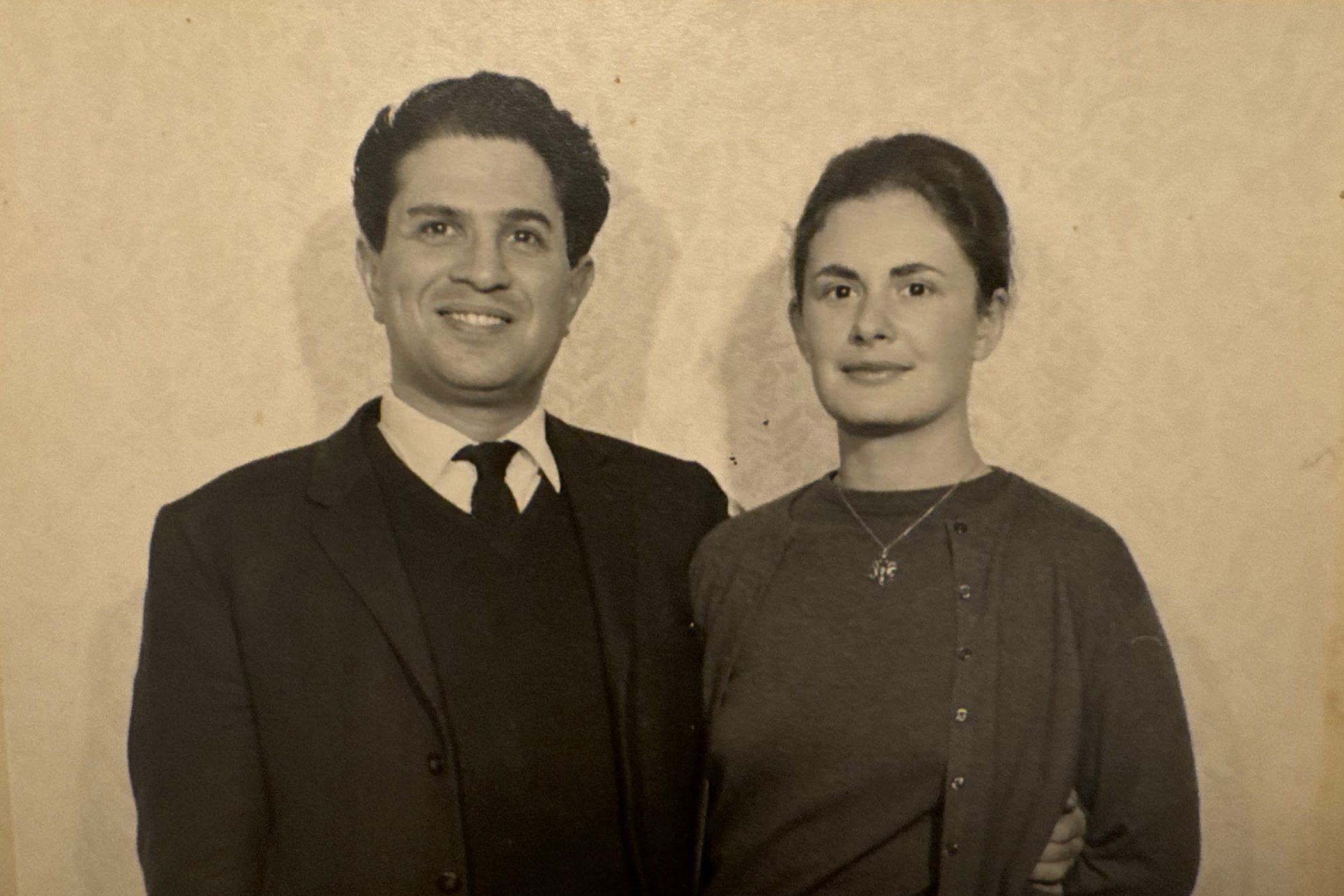

During the Labour leadership contest in 2010, Marion Kozak met a friend in New York who said she must be proud that her two sons were the frontrunners. “Proud?” she replied. “One is not proud of adults. One is proud of children. If they had asked for my advice, I would have told them not to get into this ridiculous game.”
She may have preferred that David and Ed had become socialist academics like her husband, Ralph Miliband, yet while the sons didn’t occupy quite the same place on the left wing of politics as their parents, it surely pleased her that one became foreign secretary and the other led the Labour party, even if they sometimes needed to be reminded of what they learned at home. Kozak became known as “WOW” to friends when speaking of the governments in which her sons served, not out of amazement but for her frequent lament of “why, oh why”.
The Miliband boys were immersed in politics from birth and their parents influenced their interest in social justice, even if the sons realised that you had to be pragmatic to deliver it. Unlike Ralph, Kozak remained a member of the Labour party and would encourage her sons over Sunday lunches after her husband’s death in 1994 as they moved from being party advisers to MPs.
From an early age, the boys were invited to join dinner-party discussions at the family home in Primrose Hill, north London, attended by academics, writers and politicians such as Tony Benn. A dissident from General Pinochet’s Chile slept in their spare room, giving David “one of my first experiences of political courage”, while Ed spoke in a party conference speech of seeing his mother in tears in 1982 at the news that Ruth First, an anti-apartheid campaigner and friend, had been murdered by the South African police.
In 2003, Kozak lobbied for a blue plaque outside the Camden house where First had lived for 12 years with her husband and fellow freedom fighter Joe Slovo. Since Slovo had died as recently as 1995, it meant persuading English Heritage to break its rule that plaques be given only for those who have been dead for 20 years. It was unveiled by Nelson Mandela.
She was born Dobra Jenta Kozak in the Polish town of Częstochowa in 1934. Her parents owned a factory that the Nazis seized. On Yom Kippur in 1942, 2,000 fellow Jews were murdered in the town’s ghetto, with 40,000 more destined for concentration camps. While her father, Dawid, stayed with his elderly parents, and would die during the war, Dobra went into hiding with her mother, Bronislawa, and sister, Hadassa.
They were first sheltered by nuns, then by a widow named Helena Sitkowski in Warsaw. After the war, Bronislawa and Hadassa moved to Paris and Israel but Dobra, now called Marion, was sent with the aid of a rabbi to continue her education in Stamford Hill, north London. She arrived speaking no English but went on to read history at the London School of Economics (LSE), where she was taught by a fellow refugee called Ralph Miliband.
Kozak was involved with the Campaign for Nuclear Disarmament and demonstrations against the Algerian war and Ralph recognised a kindred spirit. She was described as a “formidable critic” and shaped Ralph’s first book, Parliamentary Socialism, which came out in 1961, the year the couple married. Their home became a leftwing salon where Kozak was both a fine cook and active participant. The Socialist Register, a journal edited by Ralph and the Marxist historian John Saville, was conceived at their dining table in 1963 over kebabs and after a discussion of Shakespeare’s sonnets.
In 1963, Kozak was commissioned to edit a history of The Observer for this newspaper’s 175th anniversary in 1966. It covered 1791 to 1901, from the French Revolution to the death of Queen Victoria, and became a pregnancy project before the birth of her eldest son, David, in 1965. The cover was one of the rare occasions when she used her married name.
She taught history at Camden School for Girls but after Ed was born, in 1969, she left to do a master’s degree in economic history at the LSE. She then wrote a PhD on women munition workers during the first world war and conducted research into education for new mothers for the West Midlands Health Authority. She also worked for the National Childcare Campaign and the Daycare Trust. Harriet Harman, the former Labour deputy leader, called her “a feminist pioneer”.
Newsletters
Choose the newsletters you want to receive
View more
For information about how The Observer protects your data, read our Privacy Policy
She was an activist throughout her life. Hilary Wainwright spoke of her attending weekly silent vigils of an anti-war, pro-justice group called Women in Black beside the Edith Cavell statue near Trafalgar Square. “She was a striking figure: tall and majestic,” Wainwright said. Campaigner and children’s author Ann Jungman recalled Kozak speaking “passionately and with such conviction” at meetings of Jews for Justice for Palestinians, which she co-founded in 2002. She was also secretary of the Lipman-Miliband Trust, which supports socialist education.
After his mother’s death, Ed remembered her whispering to him at bedtime: “Are you a boy to go tiger-shooting with?” Far from betraying an unlikely enthusiasm for hunting, he said it showed and instilled in him a sense of adventure and a belief that you shouldn’t just sit around moaning about life being unfair: you should get up and campaign for it.
Marion Kozak, activist and teacher, was born on 22 December 1934, and died on 27 May 2026, aged 91
Photograph courtesy of David and Ed Miliband