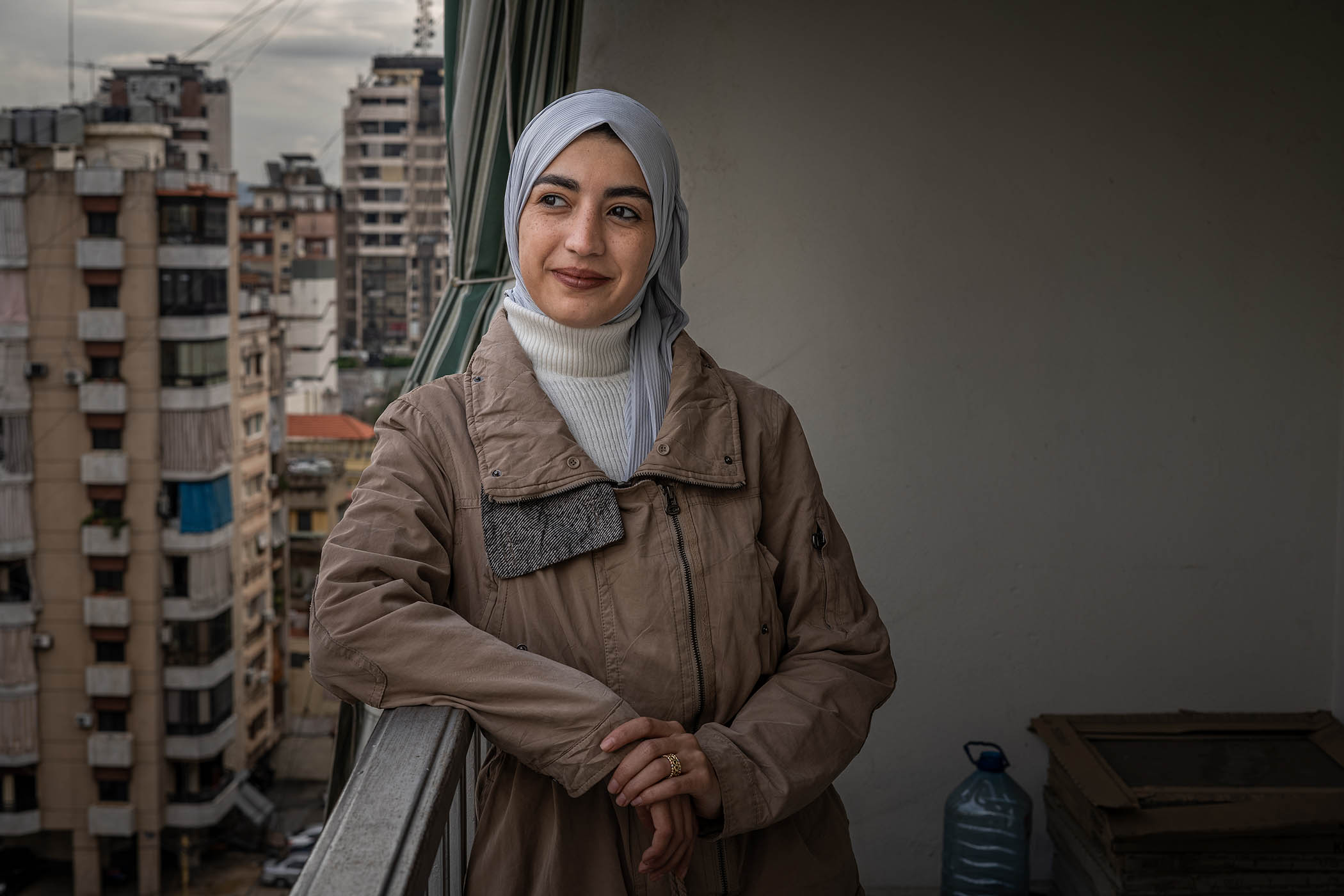


The screen of my phone lights up. “My dear, as I write this message to you now, the shelling is intensifying again. The sounds of the bombardment are terrifying. Our children are scared.”
The message has been written by Tayma, a young woman living in Beirut, as Israeli bombs targeted her city. I met Tayma when I was in Lebanon earlier in the spring. I was there to visit a centre run by the charity I chair, Makani, where women who had already fled from Syria into Lebanon were trying to rebuild their lives.
The centre is on the second floor of a large building on the Corniche al-Mazraa, a busy street in central Beirut full of flats and offices, and the bustle of shops and cafes. When I entered, the noise of the traffic from below fell away, and instead there was a gentle buzz of voices and laughter. Alongside education and therapy, women do skilled work at the centre, producing beautiful crochet and embroidery. As their fingers fly through bright wool, or stitch vivid patterns on to thick material, they talk together.
One woman, Fedwa, is 69 years old. She left her home in Syria in 2012. Fedwa is a widow. Three of her children now live in Europe: one son died in Syria and another son died on the journey to Europe. For a long time, she admits, she felt completely broken by having to flee her country and losing her loved ones. But getting involved with other women has given her back not just some economic independence, but that less tangible thing called community. “I am part of a family here,” she says.
Tayma, at only 24 years old, is the coordinator of the centre; a darting, energetic figure who is constantly in motion, setting out food, sorting embroidery silks, explaining the work to me. She too is a refugee from Syria and was married at 16 without completing her education. She started off attending a workshop at the centre and then moved to a staff role. “This job has made me feel very proud of myself,” she says. “Honestly, I don’t see this place as just a job. I care about it deeply, and I feel that it cares about me. This is a rare and very meaningful feeling.”
When I left Lebanon, I took with me a powerful sense of the resilience of these women. Having been forced from their homes in Syria, they were getting on with rebuilding, not just physical homes, but also an emotional sense of home, which rests on that “rare and very meaningful feeling”, as Tayma put it, of being both caring and cared for. So I was horrified when, just a couple of weeks after my visit, I started to get messages from Tayma and Fedwa about bombs and evacuations rather than crochet and embroidery.
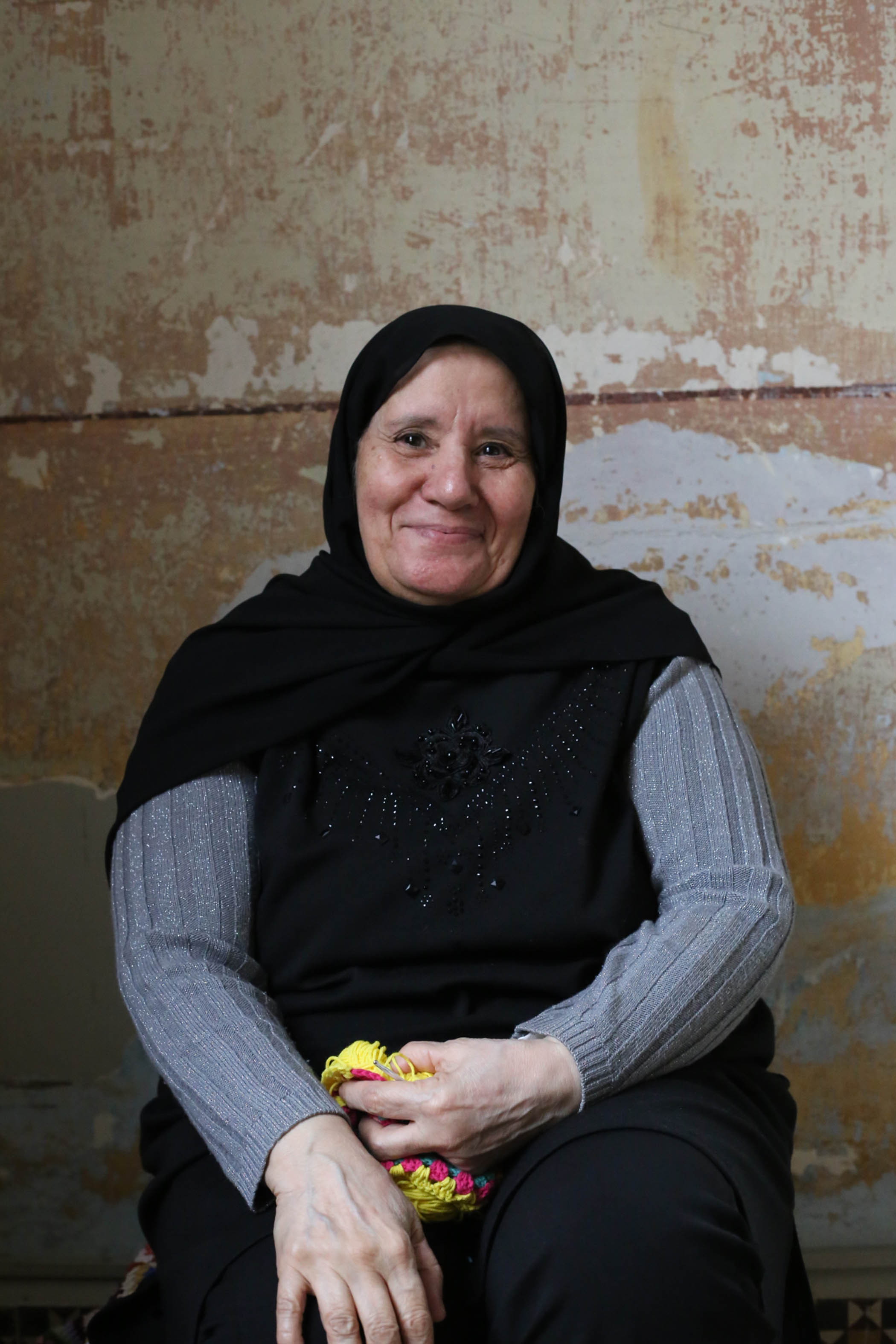
Fedwa, 69, left her home in Syria in 2012. Main picture: Tayma, 24, is the coordinator of a centre in Beirut where woman try to rebuild their lives
The recent Israeli bombardment of Lebanon has been carried out with the stated aim of neutralising Hezbollah, the Iran-backed armed group founded in response to an earlier Israeli invasion and now dedicated to destroying Israel. But, as in Gaza, Israeli attacks have often gone far beyond military targets. Whole villages have been razed and mass evacuation orders issued.
As the bombs fell, the centre closed, the embroidery work stopped and many of the women who had originally come to Beirut as refugees were forced to move again. Fedwa tells me that some of the women went to sleep on the beaches and the streets, and some even went back to Syria. But Fedwa’s old home in Damascus was long ago flattened, and she decided she had no choice other than to stay put in Beirut, in the crowded Shatila refugee camp. “I can hear the bombing,” she says. “But I have nowhere else to go.”
In April, the Corniche al-Mazraa itself was targeted. Tayma sent a video of smoke rising from a collapsing building; a bomb had fallen metres from the centre.
Looking at the women’s messages in the past weeks, I have felt horror but also anger. In the news reports of war in the Middle East, we are constantly being asked to focus on the motivations and desires of powerful men. One headline after another tracks how successful they are in twisting the world to their desires: “Netanyahu looks to be the biggest loser,” says one. “Why Putin is the biggest winner,” says another. Or: “Trump’s approval falls.” Or: “The Iran war has been good for Starmer.”
But the effects of war on the women who have to flee or sit out the bombs, seeing homes and work destroyed, families broken, children crying, are so often ignored or flattened into images on a phone screen as we scroll past.
Over the last 20 years, I have been working with refugee women – currently with Makani in Lebanon, and previously with an organisation called Women for Refugee Women, which I founded nearly 20 years ago – and I feel that this work has given me a much deeper understanding of the dangers that women are facing. It has also given me, I think, a recognition of where hope is still to be found.
To start with the dangers: they are real and growing. Even before this latest conflict in the Middle East, the last two years have been the most dangerous in terms of armed conflict since the end of the second world war. In many of these conflicts, civilians are being directly targeted or armies are simply careless of their suffering – and those civilians are so often women.
Schoolgirls, journalists, hospital workers, displaced people, ordinary women; we see their coffins, we read the testimony of witnesses and yet, over and over again, there are no investigations, and redress is out of reach. The postwar dream of the 20th century – that international law could help turn the corner into a safer world – lies in ashes.
I am part of a family here. I can hear the bombing but I have nowhere else to go
I am part of a family here. I can hear the bombing but I have nowhere else to go
As the world becomes more dangerous, authoritarian governments become more popular, because strongmen are seen as the necessary answer to growing uncertainty. And so we enter a tightening loop, a chokehold in which force becomes both the question and the answer. All authoritarian governments degrade women’s rights and freedoms, and, in country after country, the direction of travel for women’s rights is going backwards. There are real differences in the extent of repression of women carried out by governments across the world; from the extreme gender apartheid of Saudi Arabia or Afghanistan, to those governments that are trying to downgrade women’s freedoms in more subtle ways.
But from one country to another, from Russia to China, from Turkey to Argentina, from Iraq to South Korea, trouble for women is mounting as dissenters are being silenced, reproductive rights are being rolled back and violence goes unpunished.
And, across the world, we see how resources are now being diverted from care to conflict, from welfare to weapons. In 2025, the US defence budget request for 2026 rose by more than 13% to almost $1tn. At the same time, billions of dollars have been cut from healthcare provision and food stamps for poor Americans, and at least 80% of US foreign aid has been slashed. Women are particularly affected by cuts to health and social programmes, and so the politics of violence has a knock-on effect, even through peaceful societies. Just last week, the head of the UN development programme warned that rising debt as a result of the war in the Middle East is hitting women particularly hard across the world as social spending is pared to the bone.
Another thing that working with refugee women has shown me is never to underestimate the scale of the other war against women – not the war of armies and bombs, but the war of personal violence.
Every single female refugee I have met brings with her a story of such violence; from harassment and assault to extreme brutality and sexual torture. The last few years have taught us that this epidemic of violence is not confined to one country or culture: from a small town in Provence to a rich man’s island playground, men exploit women’s bodies throughout the world.
Newsletters
Choose the newsletters you want to receive
View more
For information about how The Observer protects your data, read our Privacy Policy
This ubiquitous male entitlement to women’s bodies is being exacerbated by the rise of misogyny online. And while debate about the manosphere has exploded, the inertia on tackling it remains in place – and will remain in place as long as those who hold power and influence rake in so much profit from those networks of hatred.
As I researched my new book, Feminism for a World on Fire, this was the reality that I knew I needed to capture, which is the way in which all the dangers facing women are now interconnected. This is not just about one conflict or one country. This constantly mutating misogyny is horribly hard to pin down, and yet its effects are being felt by women across the world, even those of us who are far from the centres of conflict. At a time when stories and images cross borders so easily, women feel a sickening sense of unease as we contemplate how the world around us is becoming more hostile to our freedoms – how women just like us elsewhere are living in fear.
As the challenges for women rise across the world, we need a women’s movement to rise with them. Yet the kind of feminism we meet in the mainstream often misses the connections between all these crises. Too often, feminist discussions focus only on the individual woman’s journey to success. Rather than looking at how we can fight these fires together, a feminism that celebrates only personal empowerment is putting the onus on each individual woman to become fast enough and strong enough to outrun the spreading blaze.
Indeed, in these dangerous times, there is even a tendency among many to build walls and lean into divisions. More and more people – men and women – are blaming the poor, the dispossessed, while dismissing whole communities and civilisations. This means that those women at the sharp end of conflicts and repression – the refugee women themselves – are made invisible and disposable. Over the last 20 years, policies and laws against the movement of people have become ever harsher, borders have become more violently policed, and it is more and more difficult for women who have been displaced to find safety and community.
But at the same time that danger and division are growing, there are also so many women who are tracing very different paths. As I was writing my new book, I was constantly surprised by the resilience and resistance of women in every country who are working with one another to build inspiring alternatives. There are women working to ensure redress for violence, women working to regulate extremist content, women supporting survivors, women trying to combat inequality, women trying to remake democracy, women making their voices heard, in every corner of the world.
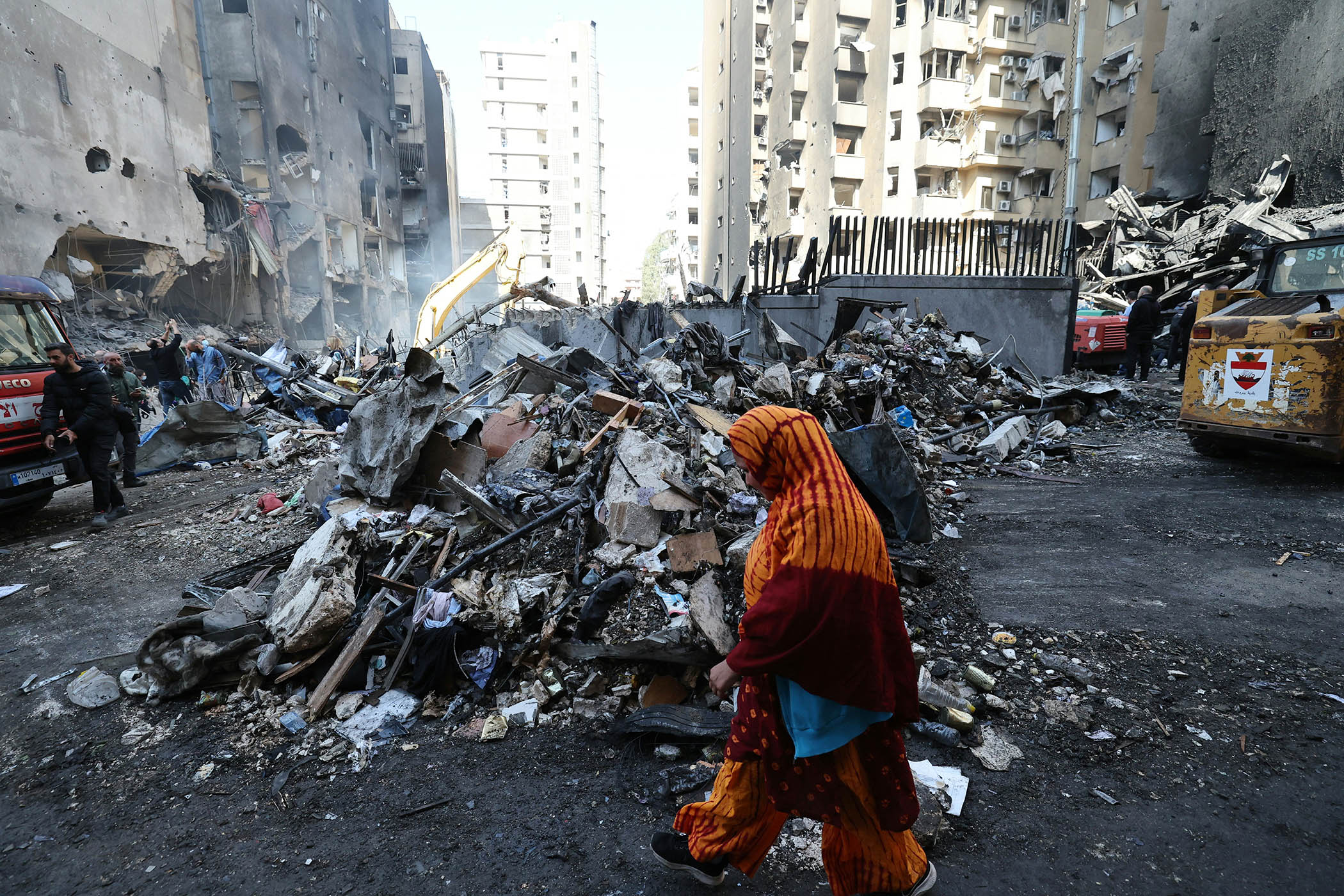
Beirut’s Corniche al-Mazraa after an Israeli airstrike
This resistance is not just about slogans and protests, shouts and anger – although those are still vital. It is also about connection and care, about constantly building and reweaving relationships in the face of all those who would destroy them.
The day the bombs stopped falling on Beirut, Tayma returned to the centre. She and her colleagues swept the floor, sorted the materials for a new soap-making project, telephoned the women who had been displaced, distributed cash grants to meet immediate needs and discussed when they could restart the crochet work.
When I questioned whether it was safe to go back to work, Tayma reminded me how important it was: “The women forget their worries when they are here. They consider the centre their home and second family, and they are very proud to work with us.” Everywhere, women are getting to work, sweeping up the mess, tending to people’s survival. While powerful men move fast and break things, ordinary women move slowly and make things.
That kind of slow and gentle work is often overlooked when we think about the changes that we need to see in the world. But, to be honest, there is nothing unique about the centre I visited in Beirut. I didn’t have to go to Lebanon to experience this resistance based in connection rather than division. Back home, I often visit a refugee centre in west London where, every day, neighbours and migrants sit together and eat together. I volunteer in a community orchard that a friend has planted by a local school.
The workers at these places are joining campaigns for political change, but they are also at the same time putting their time and energy into tending the seeds of a gentler world. I know how tiring it can feel to be part of these projects that are trying to build communities, when everywhere powerful men are bent on destruction, but the work goes on, reminding us that we need to remake our politics with this spirit of care and connection at its heart.
“I hope peace will prevail,” Tayma says to me a week after the bombs stop falling, but she also adds. “We need to keep working.”
Feminism for a World on Fire is published by Virago (£25). Order a copy for £22.50 from The Observer Shop. Delivery charges may apply
Photographs by Téa Ziade, Tabitha Ross / Makani, Ibrahim Amro/ AFP via Getty Images