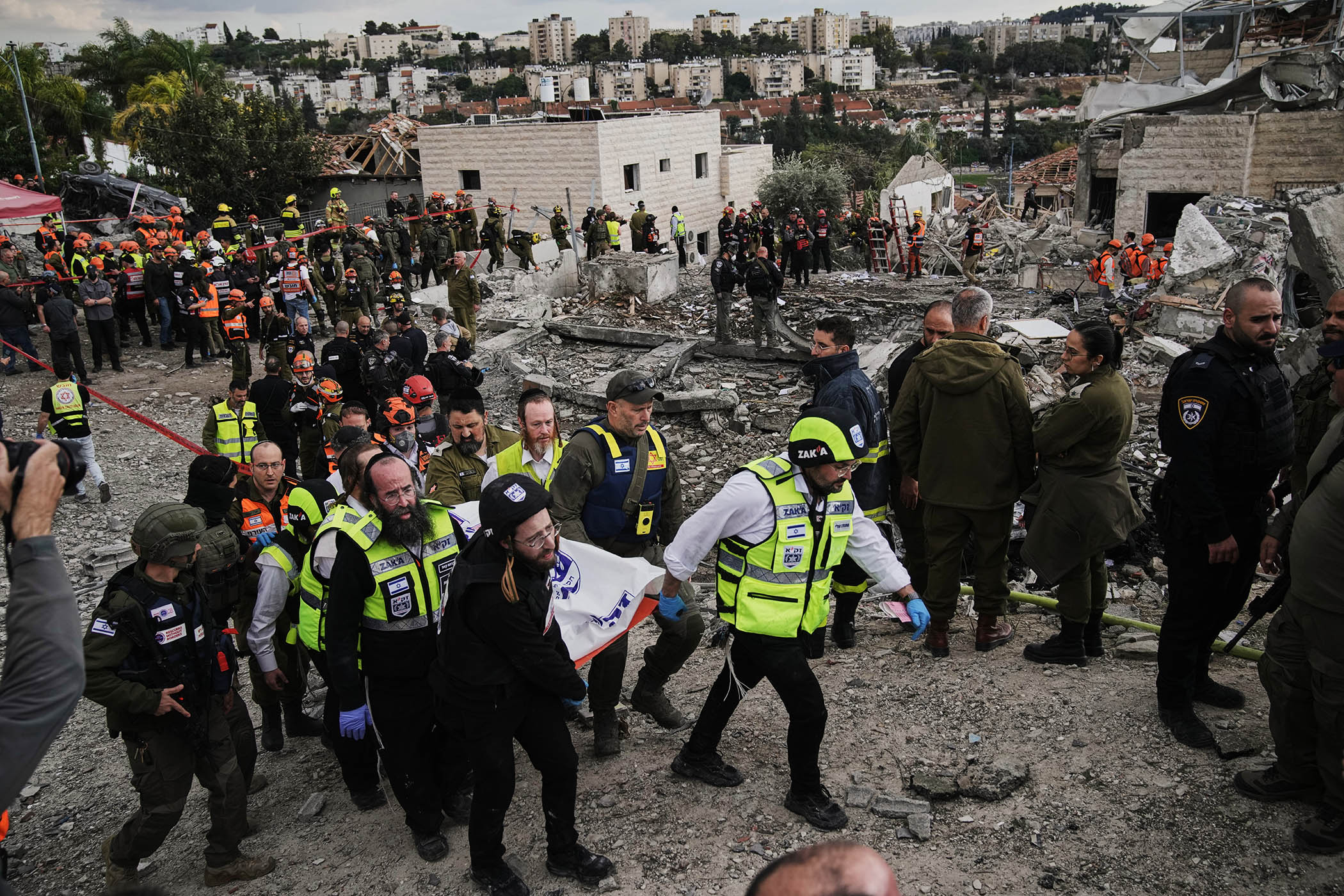



Ten days into the war with Iran, a ballistic missile landed in a forest on the edge of a city in central Israel. It scarcely made the news. Iran had fired hundreds of missiles at Israel and other countries in the region since the killing of Supreme Leader Ayatollah Ali Khamenei — and this one had landed in an empty area near Beit Shemesh, causing no injuries.
Israeli journalist Emanuel Fabian wrote a short post about the strike for The Times of Israel’s liveblog and thought little more of it – until he received an email the following day.
“Sorry for reaching out without a prior introduction, but I assume we will get to know each other well,” read an email in Hebrew from an individual who identified himself as Daniel, according to an account published by Fabian in The Times of Israel. “There is an inaccurate report from you about the missile attack on March 10, and it’s causing a chain of errors”.
If Fabian could amend the report that night, he would be doing Daniel “and many others a great favour”.
Fabian was surprised. It was the second email he had received quibbling with his report about a relatively inconsequential event, which was based on a statement from Israeli first responders and footage showing a blast at the moment of impact. Both Daniel and the other individual disputed the fact a missile had landed on Israeli territory, insisting it had been shot down, causing debris and interceptor fragments to fall at the scene. Fabian pushed back: falling debris or interceptor fragments would not typically produce an explosion like that captured in the video, he said.
More emails began to arrive, asking when he would change the report. Others contacted Fabian on Discord and X. The accounts on X appeared to be involved in gambling on Polymarket – a platform that allows punters to bet on anything from the sartorial choices of Volodymyr Zelensky to the second coming of Jesus Christ.
It began to dawn on Fabian that he was at the centre of a betting war. More than $14 million had been wagered on the question: will Iran strike Israel on March 10?
“This market will resolve to ‘Yes’ if Iran initiates a drone, missile, or air strike on Israel’s soil on the listed date in Israel Time (GMT+2),” stated the rules of the bet on Polymarket. “Otherwise, this market will resolve to ‘No’”.
If, however, the missiles or drones were intercepted, it wouldn’t count as a strike – regardless of whether they had landed on Israeli territory, or caused damage.
It was just one of dozens of bets placed on war with Iran: the odds of a ceasefire; the likelihood of a US ground invasion; the number of countries that Israel will strike in 2026.
Newsletters
Choose the newsletters you want to receive
View more
For information about how The Observer protects your data, read our Privacy Policy
Prediction markets exploded in popularity after a legal victory cleared the way for them to accept election bets during the 2024 US presidential campaign. Trading volume on Polymarket exceeded $7 billion in February – and a significant chunk of that was staked on geopolitical events, despite US financial rules that bar trading in contracts involving war, terrorism, assassination or other illegal activities.
The phenomenon had raised concerns about war profiteering and insider trading. An Israeli military reservist and a civilian were recently indicted for using classified information to place bets regarding military operations on Polymarket. Just before Israeli warplanes bombed Khamenei’s compound in Tehran, an account trading under the username “Magamyman” made more than $553,000 placing bets about Iran and the country’s Supreme Leader on Polymarket. The fact that Polymarket accepts only crypto-currency offers a layer of anonymity.
But the attempts to influence an Israeli journalist highlight another danger: that those placing bets on current events will seek to reshape the historical record. If Fabian amended his account, there would be no publicly available record of a missile striking Israel on March 10.
The emails kept coming. One shared a falsified email from Fabian promising to correct the report. A colleague working at another media outlet contacted him, saying an acquaintance had asked that he persuade Fabian to change it. When Fabian shared his suspicions with the fellow journalist, he confronted the acquaintance, who admitted to placing bets on Polymarket. The acquaintance had offered to share his winnings with the journalist if he could get Fabian to change the report.
As Fabian resisted, the tone hardened. “You have two choices: either believe that we have the capabilities, and after you make us lose $900,000 we will invest no less than that to finish you. Or end this with money in your pocket, and also earn back the life you had until now,” read one message.
Fabian went to the police. In a post on X, Polymarket condemned the harassment and threats against him. “This behavior violates our Terms of Service & has no place on our platform,” it said. Polymarket had banned the accounts involved and would pass their information on to the relevant authorities, it said.
The odds of a ceasefire by the end of March were just 6% at the time of publishing. More than $1.8 million has been staked on a change of leadership in Iran before April. If US forces enter Iran by March 31, more than $12 million will be paid out (pilots who are shot down, or other cases in which US personnel do not deliberately enter the “terrestrial territory” of Iran will not qualify).
“The resolution source will be a consensus of credible reporting”.
Photograph by Léo Corrêa/AP
More from The Observer