

Over the past six days, Israel and the US have pummelled Iran with impunity. American forces have struck more than 2,000 targets, including an Iranian frigate that was sunk off the coast of Sri Lanka, without losing a single jet or ship to enemy fire. On Wednesday the Pentagon said that more than 20 Iranian vessels have been destroyed and that the country’s navy has been “effectively neutralised”.
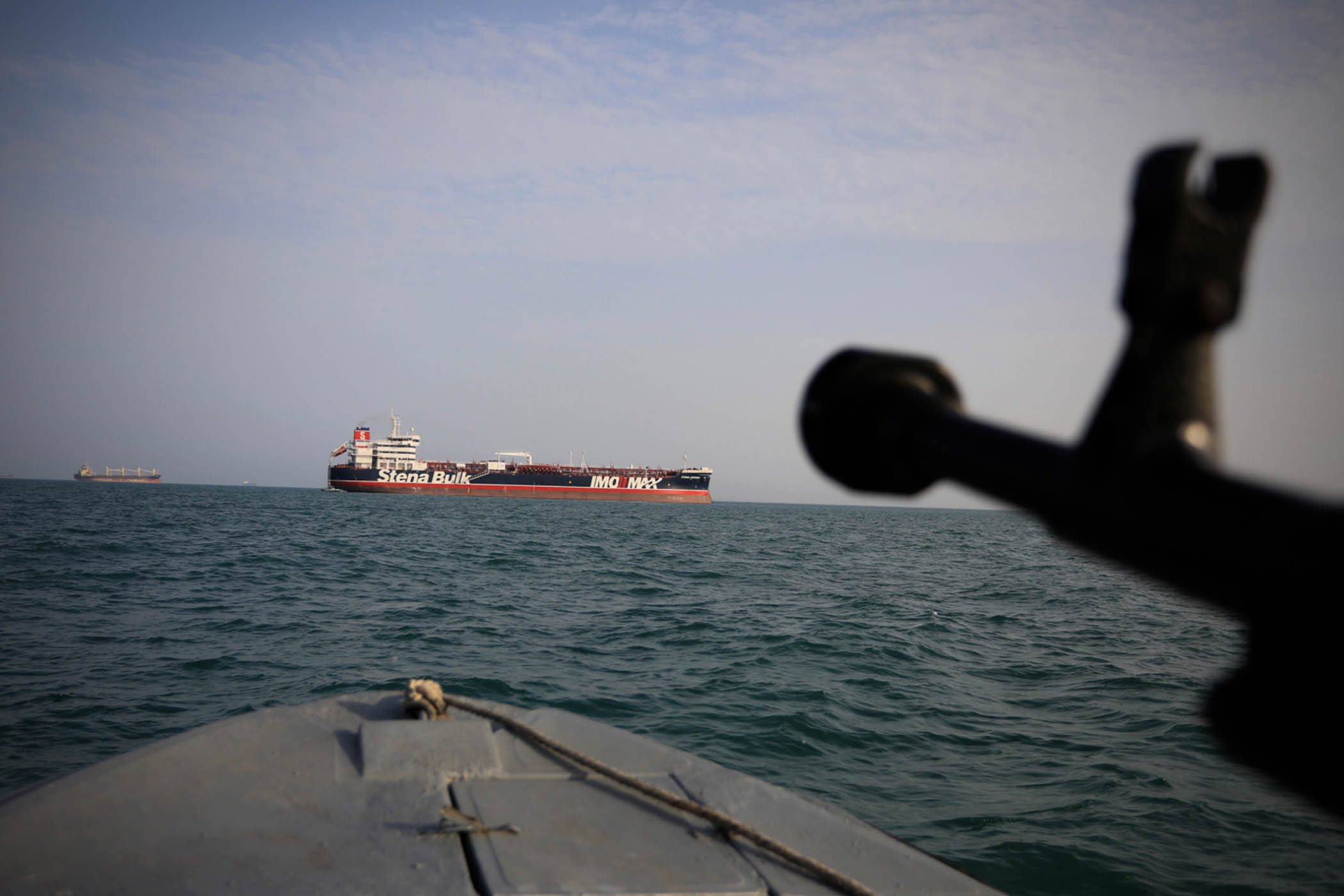
But Iran still has ways to choke tanker traffic in the Strait of Hormuz, a narrow artery in the Persian Gulf that is usually traversed by 20% of global oil and gas shipping. Chief among these are missiles and aerial drones. It also has unmanned naval vehicles. Several ships have been struck since Iran’s Revolutionary Guards vowed not to let a “single drop of oil” pass.
Iran has also gone after its neighbours’ infrastructure, halting operations at Saudi Arabia’s biggest oil refinery and forcing Qatar to shut down the world’s largest liquefied natural gas plant. Markets are spooked. Oil reached nearly $84 a barrel on Wednesday, compared with $60 in January. The spike in gas prices has been even higher, with European wholesale prices jumping 50%.
“This is Iran’s best weapon,” said Martin Kelly, head of risk advisory at EOS Risk Group. “Iran cannot go toe-to-toe with the US military, so they think laterally. By applying economic pressure on Gulf states, they are attempting to coerce Saudi Arabia and the UAE into telling the US to get out of the region.”
It appears to be having the intended effect. At the White House on Tuesday, German chancellor Friedrich Merz said the conflict was “damaging our economies” and urged a speedy end.
To get the traffic flowing again, Donald Trump has offered to insure Gulf shipping “at a very reasonable price”. He also said the US navy could begin escorting ships. American warships did this in the 1980s, accompanying Kuwaiti tankers carrying Iraqi crude to shield them from Iranian attacks. But traffic remains at a near standstill, down by more than 90%. Hundreds of vessels have been forced to anchor in waters on either side of the strait.
Mark Montgomery, a retired US rear admiral, estimates that it would take about one to two weeks to start organising convoys. In the meantime, US and Israeli forces would need to take out more Iranian drones and missiles so that it is safe enough to cross. Montgomery doesn’t believe the threat can be eliminated, but said that it can be reduced to a “manageable level”.
The operation would also require a “ratio of 1:1 or 1:2”, meaning that one US warship would escort one or two tankers at a time, said Montgomery. This is because of the narrowness of the shallow strait. Short distances lessen the time available to American warships to take out fast-moving Iranian missiles.
“What you couldn't do is have one ship trying to protect five tankers,” Montgomery said. “The tighter the geography, the closer you have to be to the protective asset.”
This is a problem for an administration that has wielded untrammelled military might. Normally, about 80 tankers pass through the Strait of Hormuz every day. The US has nine destroyers in the Arabian Sea, several of which are occupied with defending its two aircraft carriers there. With these numbers, an escort operation probably wouldn’t restore traffic to usual levels.
Newsletters
Choose the newsletters you want to receive
View more
For information about how The Observer protects your data, read our Privacy Policy
Nor would it necessarily convince shipping lines to risk the passage. They have seen their insurance policies cancelled or sharply increased since the conflict started. This is the primary reason the Strait of Hormuz is closed, since Iran does not have the capacity to physically blockade the chokepoint.
“How happy will shippers be if they’re in a convoy and drones and missiles are being intercepted by US frigates?” said Dan Marks, an energy security specialist at the Royal United Services Institute. “They’re not getting hit, but they’ll still be blowing up pretty close. What if one gets through? The US can pretty much protect shipping, but you never protect everything 100%.”
Despite this week’s price jumps, oil traders are surprisingly relaxed. More than $80 a barrel is high, but it was the norm for much of 2022 and 2023, following Russia’s full-scale invasion of Ukraine. And there is a glut of shipborne crude that means the market can withstand about 12 days of volatility, said Bjarne Schieldrop, chief commodities analyst at SEB Research.
But prices could start to climb towards $100 a barrel if the conflict lasts longer than that. Asia, which gets 60% of its crude from the Middle East, would be particularly affected. If its factories' energy costs increase for a sustained period, this would have a knock-on effect for consumers around the world.
The key question is how long Iran can keep the strait shut. As an oil exporter, it too is hurt by the closure of Hormuz. But the regime is fighting for its life. Although the Pentagon claims that Iran’s missile and drone launches are down by 86% and 73% respectively, Tehran could preserve enough of its stockpiles to continue hurting shipping in some form. If the regime survives, it may try to continue the disruption up to November’s US midterms.
“Maga can live with a Venezuela overnight strike where they wake up to a kind of awe-inspiring demonstration of US technical proficiency and power,” said Marks. “But if you haven't really achieved anything except for a very high oil price and an incredibly expensive convoying operation, that would look terrible for Donald Trump.”
More from The Observer
Photograph by Morteza Akhoondi/Tasnim News Agency via AP