No great painter in the history of British art has ever been more loved, or more widely shown, than David Hockney. He was so popular and seemed so familiar, with his big specs and bright hair, that people occasionally confused him with that other national treasure from the north of England, Alan Bennett. Both had a dryness to their humour, which masked actual nostalgia in the case of Hockney. Is there a more tender memento in Tate Britain than his cherished double-portrait My Parents? His mother sitting neatly and gazing sweetly, attentively, back at her son; his father buried in whatever it is that he’s reading. The chairs are cheap but the house is immaculate and Hockney has done them proud. On the trolley is a book about Chardin, while the mirror reflects a postcard Piero. There is reflected glory from both in this serene and meticulous work. Hockney always lived alongside the old masters.
There is a painting from way back in 1961, when he was still a student at the Royal College of Art, that stands as one of the great signs of its times. We Two Boys Together Clinging shows the eponymous boys, inchoate, half-scrawled on a wall, somewhere between a cave painting and pop art, with the title scratched beside them like graffiti that tells of the love that dare not speak its name. Many tributes to Hockney’s gay lovers followed, most famously Peter Schlesinger, pulling himself naked out of swimming pools or lying prone in hot LA bedrooms, but for me this remains one of Hockney’s most moving works.
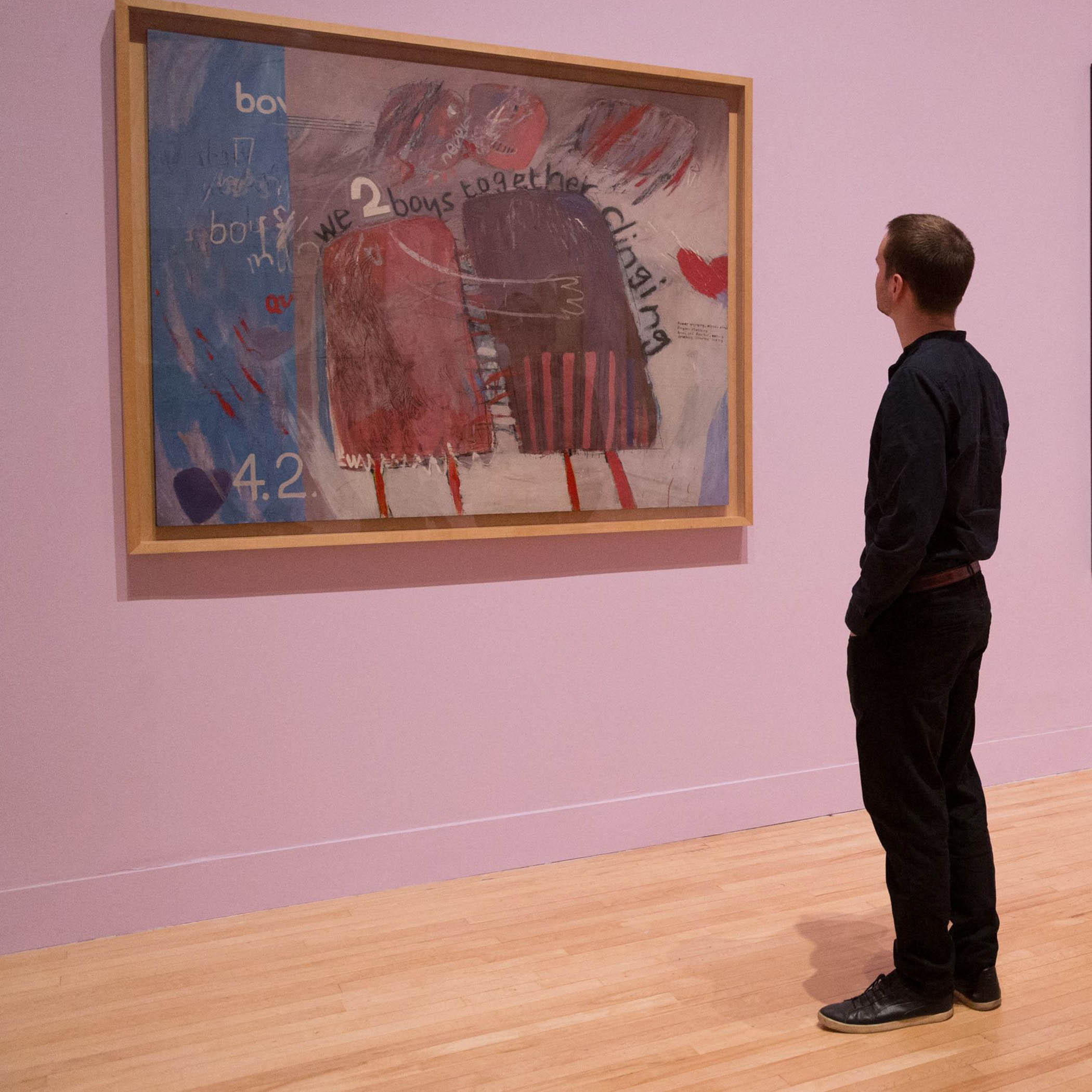
We Two Boys Together Clinging, 1961
His Sixties paintings are amazingly suave depictions of friends registered with tin-tack clarity and cool colour, often in flattest acrylic. Christopher Isherwood casting a long sideways glance at his lover, Don Bachardy. Hockney’s boyfriend in purple flares against pale louvred shutters, a smoky question mark spiralling from his cigarette, an anglepoise lamp leaning teasingly towards him. In his contemporary reprise of A Rake’s Progress, a suite of etchings depict the young Hockney going to New York to try to make his way in the Big Smoke, then ravenous for hot new art. Hockney succeeded in reality, of course, when he emigrated to Los Angeles in 1964. He didn’t leave for more than 50 years.
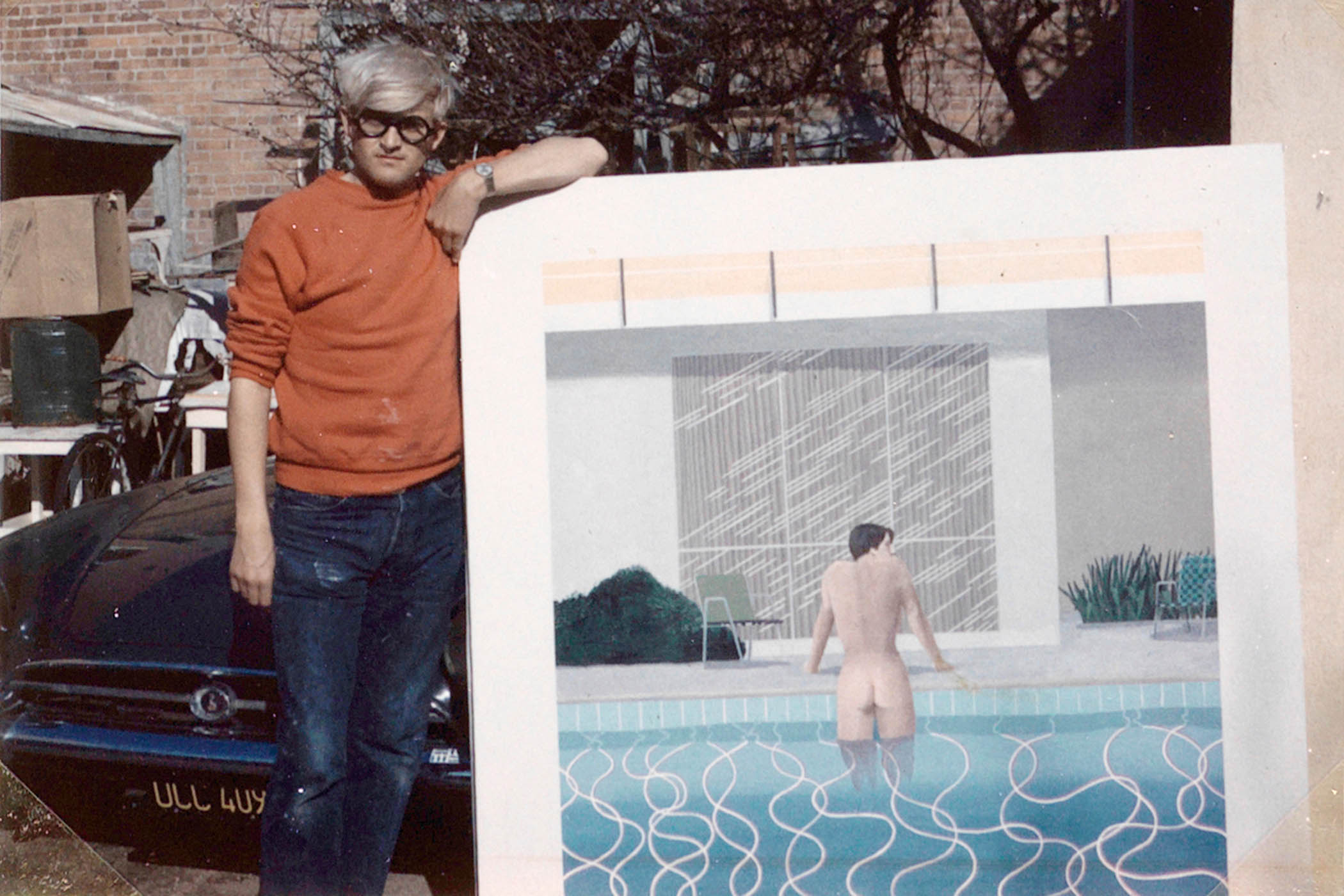
A Bigger Splash, Hockney’s stunning diagram of LA heat and cool blue water, of liquid blossoming upwards in frozen chaos, is a masterpiece of draughtsmanship and graphic intelligence. It was achieved extremely slowly; the splash alone took two weeks to paint. It is not just famous by now, but more or less proverbial in California. People observing someone vanishing into a pool now refer to it as a bigger splash.
Hockney could be caustic as well as tender in those days. His double portrait of the LA philanthropists Fred and Marcia Weisman in their expensive sculpture garden shows Fred with one fist clenched and seemingly leaking paint (art and money flowing through his fingers), while Marcia wears a 1960s hostess gown out of Mad Men. Look closer and you see that her strangely wonky smile exactly echoes the grin of the totem pole just behind her, an extremely pricey work of native American art.
Hockney got away with it because the painting invents such stylish notations for everything in the scene, from the polished plate glass to the manicured lawn. This gift never left him. He could, and did, draw his streams of visitors with virtuoso dexterity and non-stop invention. Hockney, ever young in spirit, never quite stopped being a new prodigy.
He exhibited all over the world in the grandest galleries, from the Metropolitan Museum to the Centre Pompidou, the Van Gogh Museum (dedicated to the works of Hockney’s favourite painter) to the Guggenheim Bilbao. His Royal Academy show in 2012 was seen by more than 600,000 people, breaking museum records for a contemporary artist. Last year’s retrospective at the Fondation Louis Vuitton was Hockney’s largest, showing everything from the Yorkshire valleys to the Pacific Highway and the eye-poppingly bright arrival of spring in Normandy. The latter provides the title of a show at the Serpentine Gallery on until the end of the summer. No doubt there will be Hockney shows until the end of the century.
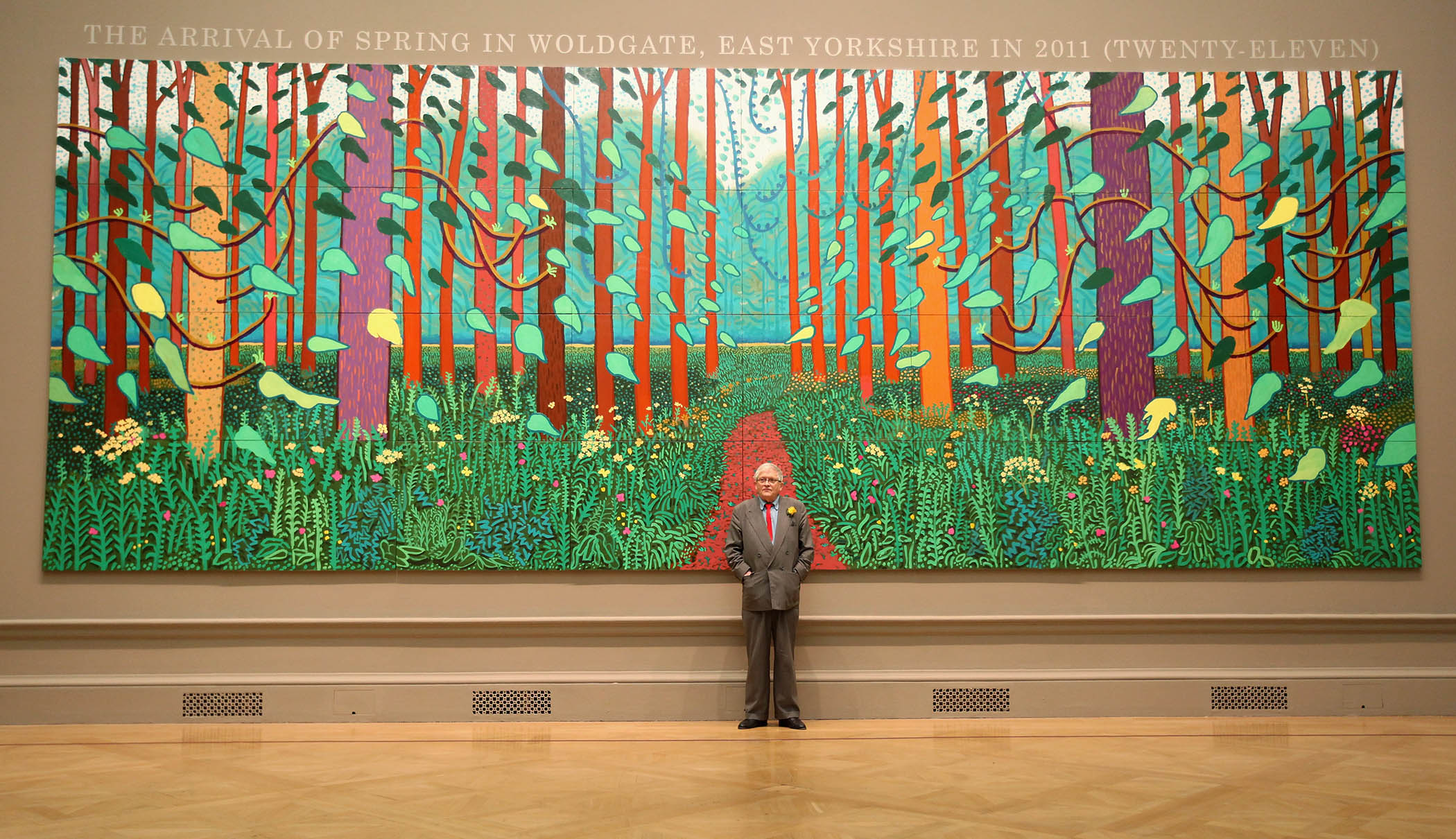
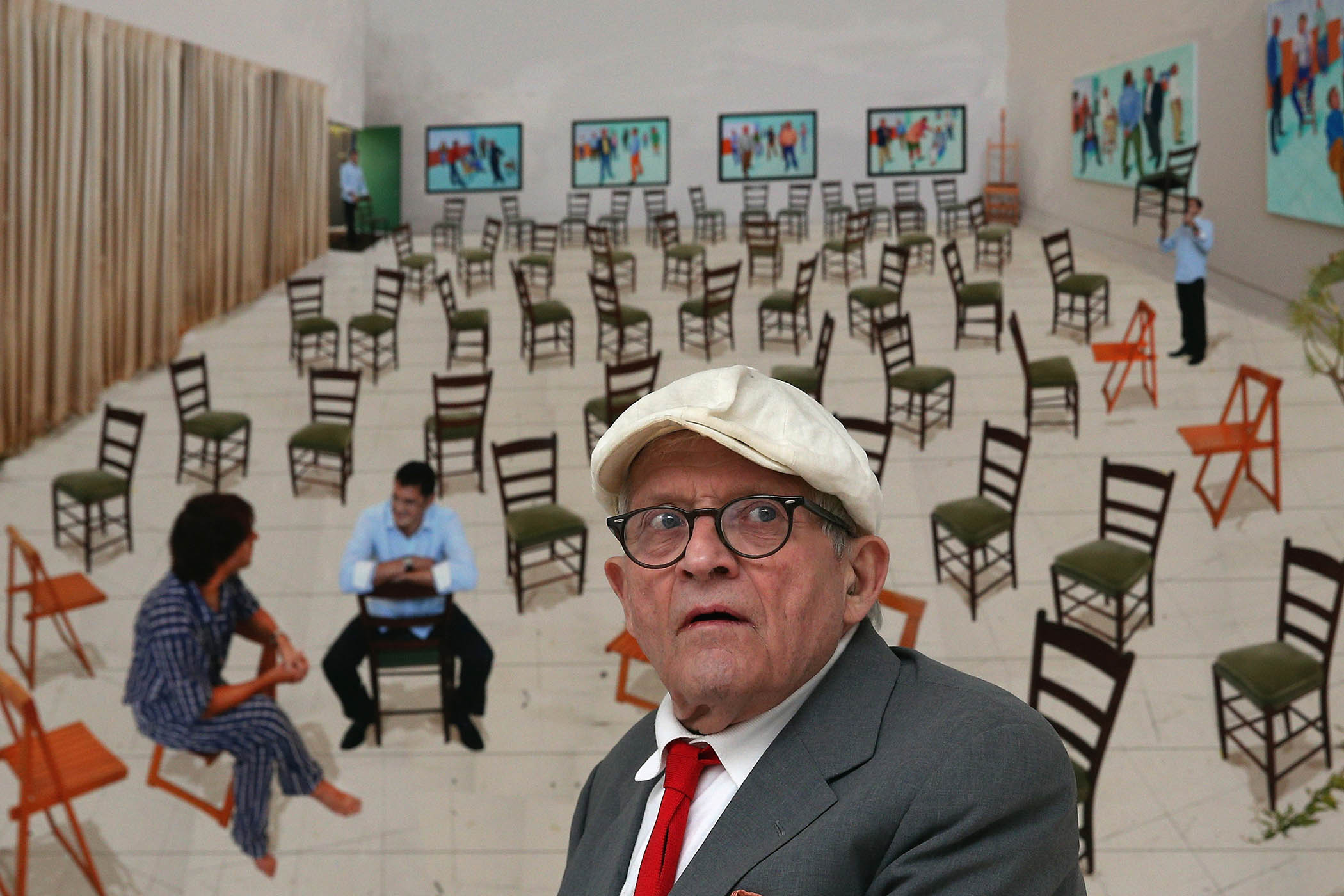
David Hockney in 2012 at the opening of David Hockney RA: A Bigger Picture in the Royal Academy of Arts
He was intensely highbrow and entirely populist, not at all troubled that many people associated him with gorgeous, pleasurable, brilliant colour. The world was full of it, to him, and so was art. He wore what he saw, the canary yellow of Van Gogh, the lime green of spring meadows, the pink and scarlet of frothing French blossom. His sense of colour was so full-blown that the sitters in his many portraits, both painted and drawn, have vivid red faces and chlorine-blue eyes. His paintings of the Grand Canyon were not just outsize but nuclear orange and yellow.
Even in his eighties, Hockney’s work ethic remained stupendous. It went with a vigorous experimental drive. In the second half of his career there were gigantic watercolours, panoramic acrylics, digital portraits and pictures made using photocopiers, lasers, collages and iPads. He worked in every conceivable medium. Somewhere along the way, at least for me, the personal connection seemed to wane in favour of total optical joy. He loved what he saw in nature, particularly in France, where he had moved from LA, perhaps more than he now loved the depiction of people.
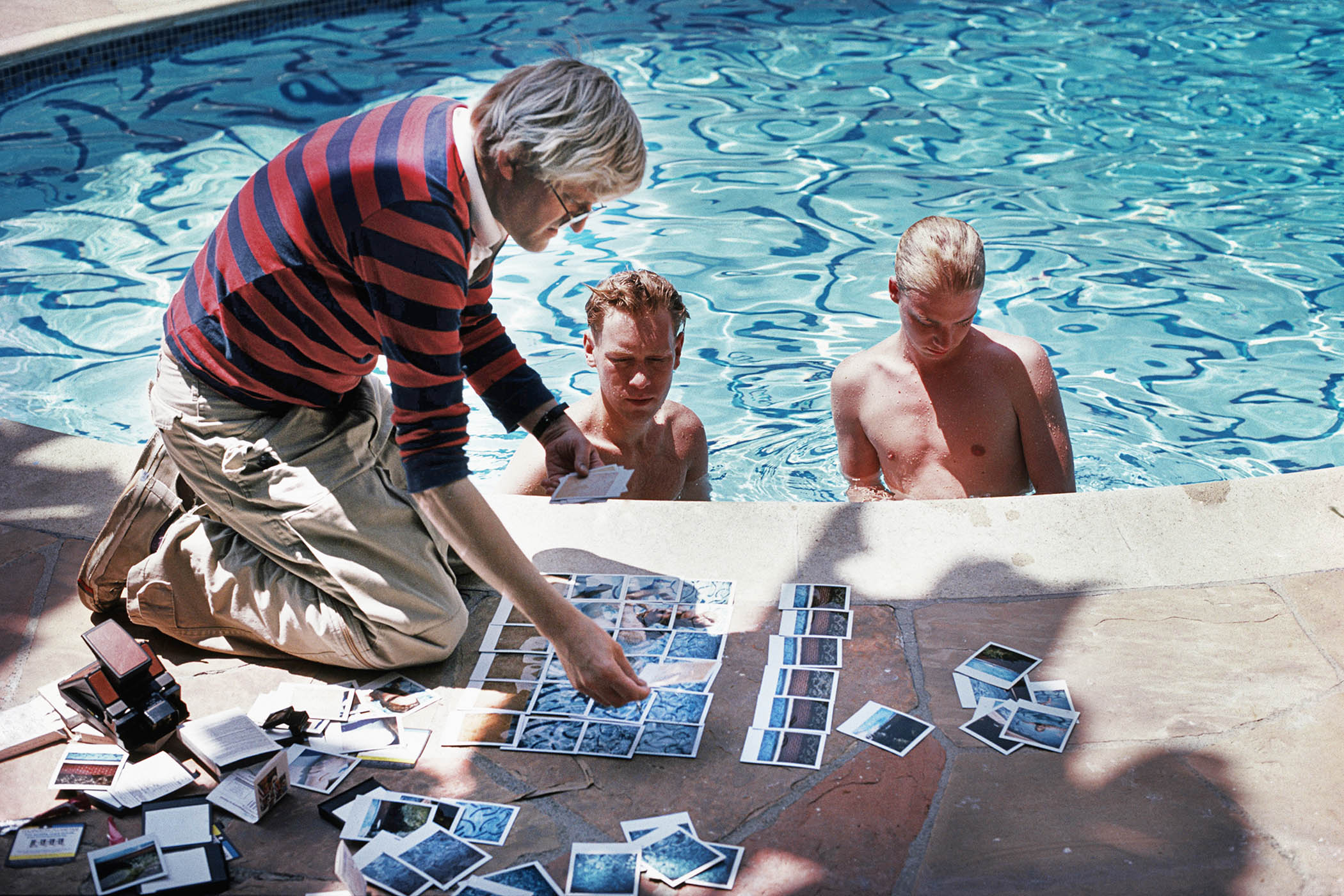
Ever the restless pioneer, Hockney lived in the technological present to such a degree that his art could be animated across Imax-scale screens. It suffered no loss in being so enlarged since it had been created with digital pens on digital screens. But millions of coruscating pixels never meant as much as the artist’s own visible touch, and it is this that many people will remember. The exquisite drawings of the museum guards at the National Gallery in 2000, as refined as Ingres and very much in homage. The designer Celia Birtwell, young and old, light as a butterfly in Hockney’s coloured pen and pencil. The beautiful ripples spreading across chlorinated Californian water like wavy Byzantine mosaics.
Newsletters
Choose the newsletters you want to receive
View more
For information about how The Observer protects your data, read our Privacy Policy
Hockney never ceased to think in visual terms, lecturing and writing on the history of drawing from the Renaissance onwards, on the limitations of fixed-point perspective and, most controversially, on the use of the camera obscura in Dutch Golden Age art. He could mesmerise adults, children and fellow painters with his conversations about art, so affable, so passionate, and continued even up until the month before his death. You can hear him now, with his soft Yorkshire accent, still doing art proud in his late eighties in a YouTube interview for the Serpentine show.
It hardly seems possible that there will be no more instalments of his brilliant career, one of the longest in British art. Hockney was astoundingly prolific. Could he have left us with the largest output in history? With his inexhaustible eye and his indefatigable hand he was still working just shy of his 89th birthday on new works for yet another show.
His curiosity about life, and the look of it, never atrophied, and his joie de vivre, by all accounts, never dwindled either. He lived a life of extraordinary industry and relish, receiving guests at his last home in Marylebone and defiantly smoking the cigarettes of a lifetime to the last.
Photographs by Richard Schmidt/David Hockney, Daniel Leal/AFP via Getty Images, Oli Scarff/Getty Images