
There’s Wilsford, the rich patriarch, and his two nephews in nearby Amesbury, one of whom has a daughter in Porton Down. Together, the Bluestone family shed light on one of the great English mysteries: who built and used Stonehenge?
The family play a key role in a new exhibition that opens this week at the Francis Crick Institute in central London. We Go Way Back reveals insights from ancient DNA using the same techniques employed by modern amateur genealogists.
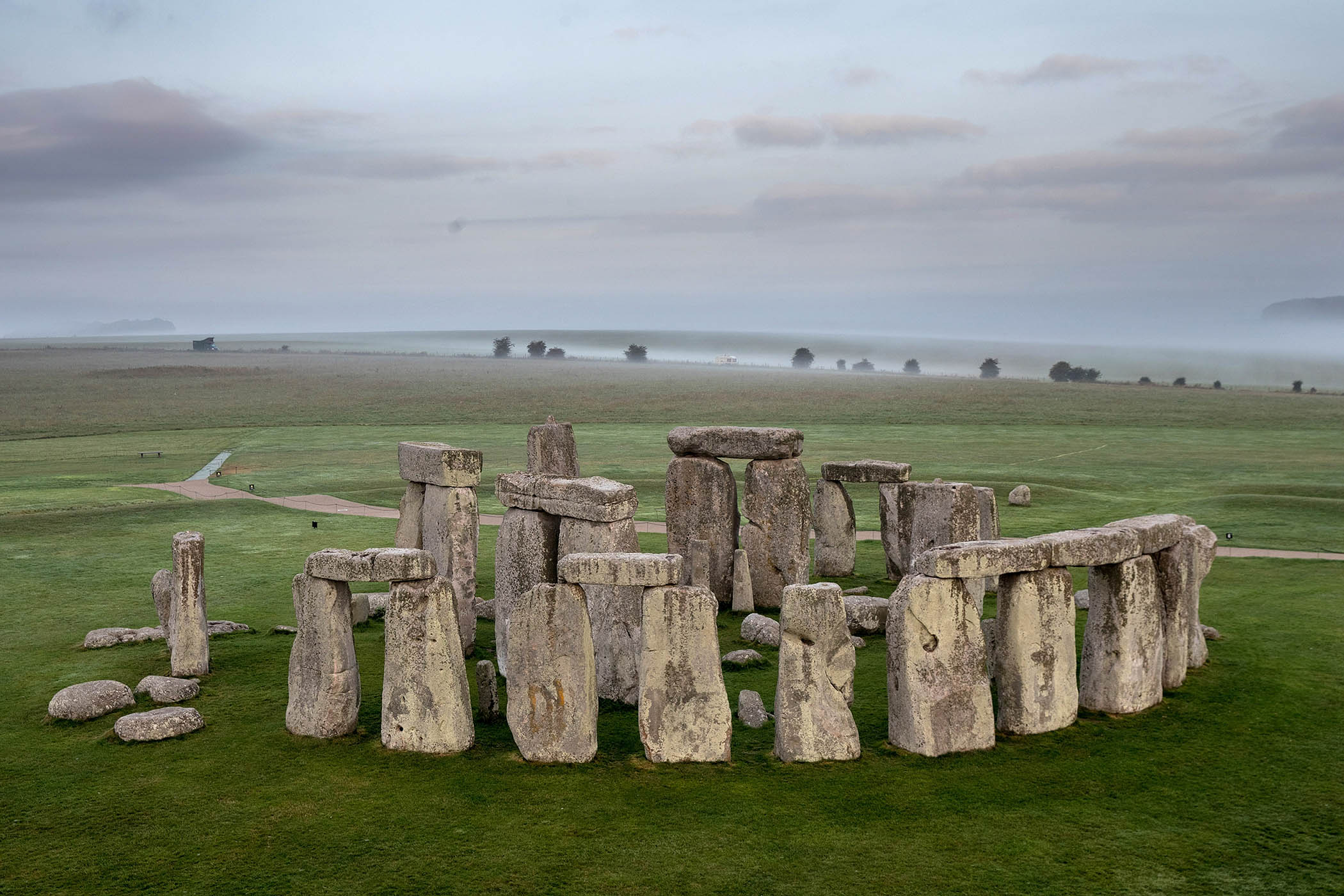
Stonehenge is a 5,000-year old Unesco world heritage site and one of the most famous archaeological areas in the world, but very little is known about its origins and the people who built it.
When first constructed on Salisbury Plan in about 3000 BCE, the henge was a plain 100m diameter circle, most likely made of stones called bluestones that were transported hundreds of miles from the Preseli Hills in west Wales. Then in about 2500 BCE it was rebuilt into something closer to its more familiar shape: the smaller bluestones in a ring around the larger sarsen stones, taken from Marlborough Downs about 25 miles away and arranged like giant doorways in the centre.
The invention of carbon dating in the 1940s allowed archaeologists examining burial sites to calculate when these changes took place. But the question of who originally moved the stones from Wales, and why Stonehenge was rebuilt, has evaded them for decades. Now DNA databases compiled from the data of customers of the DNA home-testing services Ancestry and 23andMe have helped them get at least one step closer to an answer.
As genomic sequencing has become cheaper, thousands of ancient skeletons have been analysed by archaeologists and geneticists. This DNA testing has revealed that, for the first 500 years the original Stonehenge circle existed, the people living near and around it were Neolithic farmers. These were the first people to grow wheat, barley and peas and to raise cattle, sheep and pigs. They cut down forests to build houses and dug quarries to make stone tombs, then quarried larger stones to erect monuments known as dolmens, or to create stone circles.
Then, in around 2500 BCE, Stonehenge was remade. Enter Wilsford Bluestone.
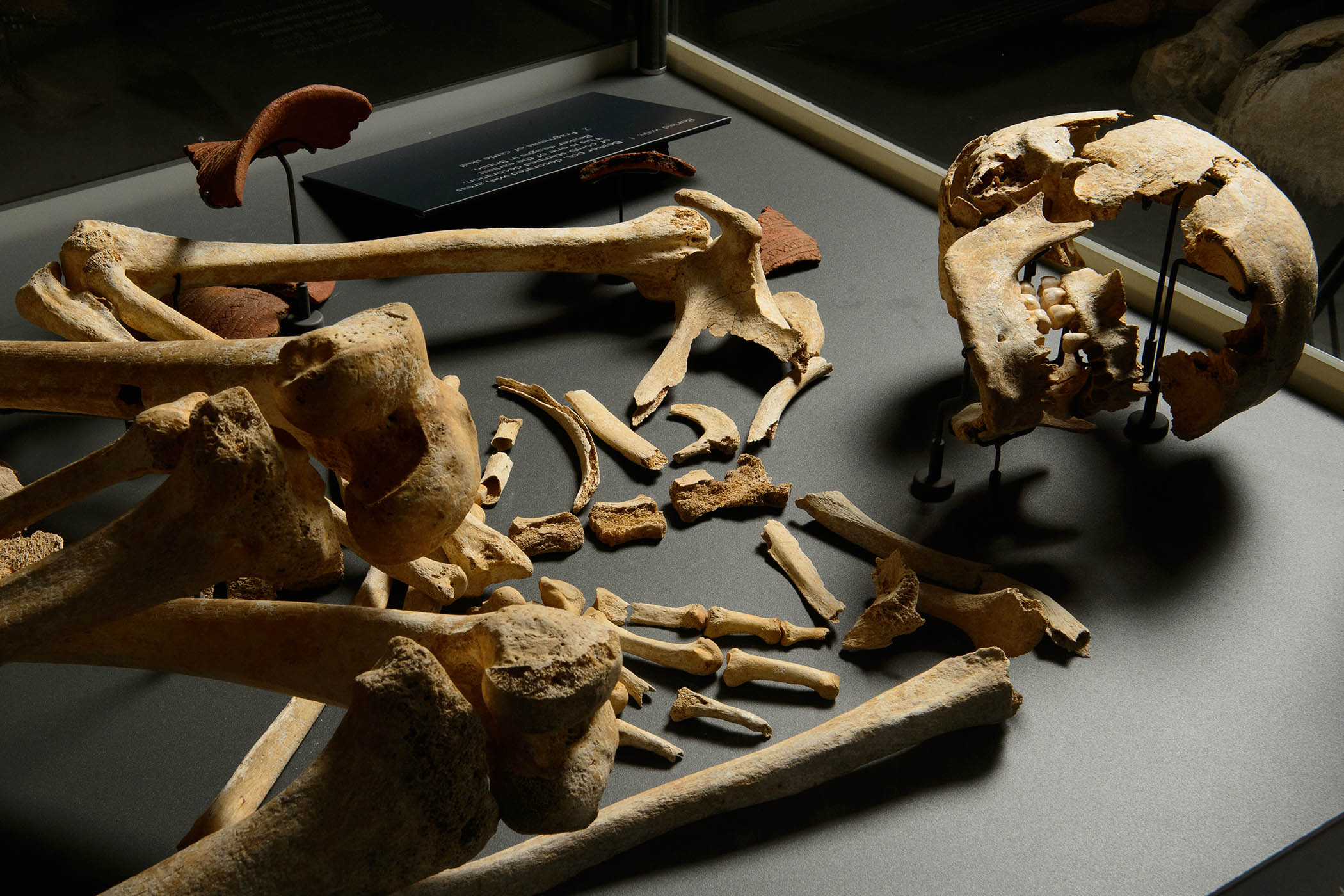
The man named in the exhibition as Wilsford is properly known as Skeleton 7 from Wilsford Barrow G54. He died aged between 17 to 25 and was buried alone in a circular tomb on the Stonehenge site with some rich grave goods: a battleaxe made of Welsh bluestone, a bronze dagger and some pottery.
Tom Booth, a bioarchaeologist at the Crick’s ancient genomics lab, deduced that Wilsford had two nephews, cousins who were buried together in Amesbury Down about five miles away. One of them was the father of a woman buried with an infant in Porton Down, a 10-mile hike from Stonehenge.
“Understanding kinship helps us understand their culture,” said geneticist Pontus Skoglund, who leads the Crick lab. By drawing up the family tree it is possible to understand how communities around Stonehenge worked: who was buried with whom, what they valued, how far they moved – all of which could help work out how and why Stonehenge was built.
Newsletters
Choose the newsletters you want to receive
View more
For information about how The Observer protects your data, read our Privacy Policy
Analysis of ancient DNA shows the family’s ancestors were quite different from Neolithic people. They originated in the Eurasian steppes and had spread through Europe over millennia. Either Wilsford or his parents or grandparents had arrived from continental Europe, bringing copper and gold and new bell-shaped beaker-style jugs: the Beaker people.
“There are these local people who’ve been there for a couple of thousand years and these incoming migrants,” said Booth, who investigated the families buried in the Stonehenge vicinity.
“To what extent is the building of monuments like Stonehenge a reaction to these new people with new technologies, a reassertion of their culture perhaps in a confrontational way?” Booth asked.
Yet there is little evidence of violence. Few Neolithic or steppe skeletons have broken bones or other traumatic injuries.
“It’s not marauding males coming in and killing everybody off,” Booth said. “Britain is quite sparsely populated at this period.”
The incomers moved into empty areas, still gravitating towards Stonehenge for some reason, but staying separate. “You get these Beaker settlements in places where the early Neolithic settlements weren’t, so it seems to be almost a mosaic.”
“These incoming migrant groups are using the Stonehenge monument for something,” Booth said. No one can say for sure if the Bluestones themselves had a direct hand in Stonehenge’s remodelling, but, Booth said, “this family would have been around when all this was happening”.
The exhibition at the Crick invites visitors to reconstruct the family tree. Skoglund hopes that it might inspire a new generation of bioarchaeologists.
“Basically all ancient DNA data is publicly available, and anyone who maybe is a young person interested in a bit of coding can pick it up and ask these questions themselves,” Skoglund said. “Ancient DNA is growing and there are way more things for people to do. There is a big citizen science component of archaeology.”
Photographs by Matt Cardy/Getty Images, Leon Neal/AFP/Getty Images