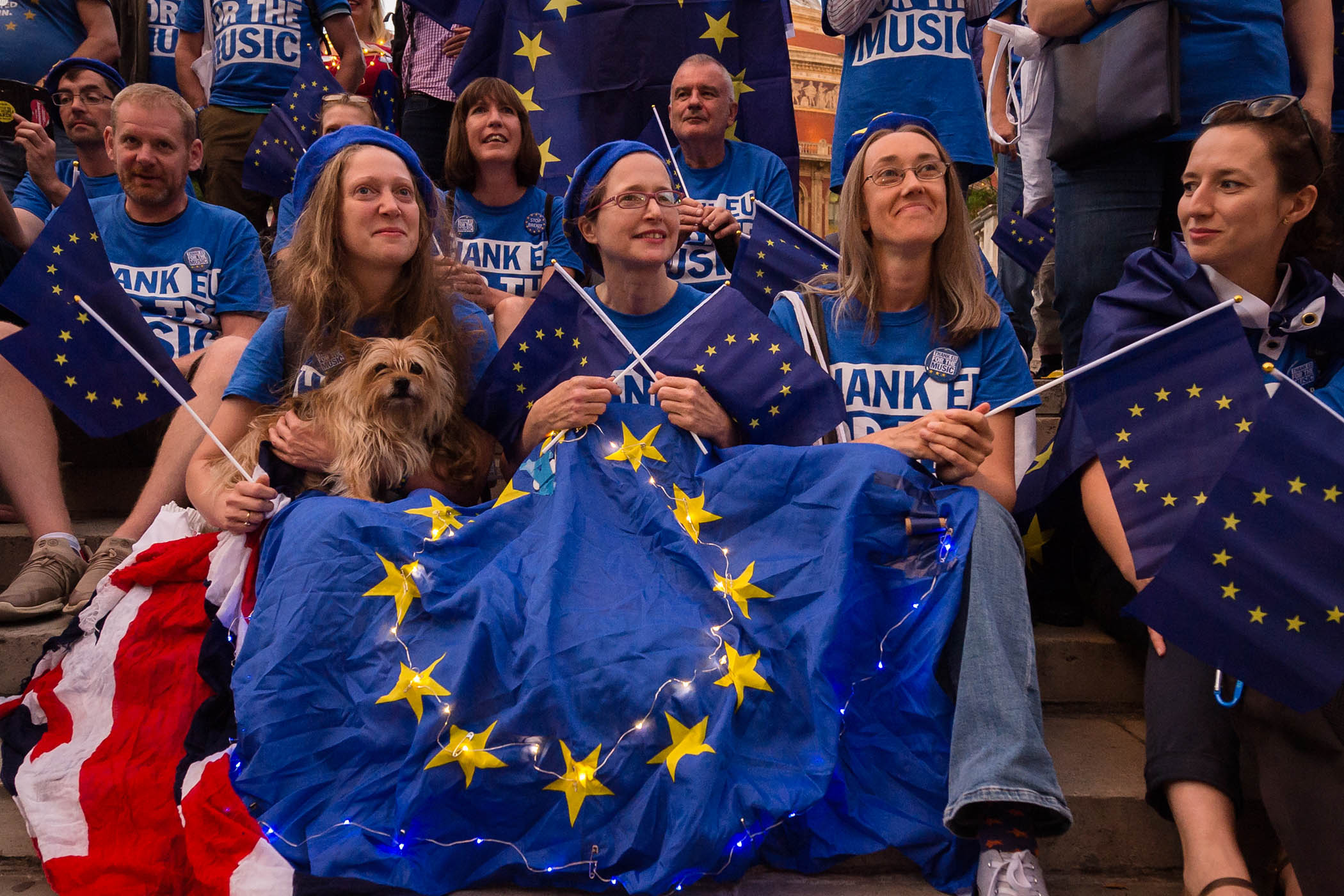


The biggest “what if?” in modern British history is “what if Britain had voted to stay in the European Union?” There is no point in pretending otherwise – in wondering what would have happened if Brexit had been done “properly” or more quickly or enthusiastically. The problem with Brexit is Brexit: the deliberate erection of barriers between the EU and the UK. And the answer to the what if question is 8% of GDP.
Rachel Reeves, the chancellor, in her Mais lecture in the City of London last week, cited independent studies claiming that 8% was the cost of the 2016 referendum. (The Stanford Institute for Economic Policy Research and the US National Bureau of Economic Research have put the hit to UK GDP from Brexit at 6%-8%; it was telling that the chancellor endorsed the upper end of that range as a realistic measure of the damage.)
Eight per cent of GDP was equivalent last year to £224bn, or about £4.3bn a week. That is the equivalent of taking Scotland – the North Sea included – out of the UK economy. It’s a good deal more than the GDP contribution of every person working in every shop, cafe, bar, pub and hotel in the UK.
Ten years ago Boris Johnson said that leaving the EU would enable the UK to invest an extra £350m a week in the NHS. That would have been £18bn a year. Assuming the current tax rate, the Brexit hit to the Treasury is £90bn. Remaining would have made five times more funding available to the NHS than Leaving.
What if? The reality is that these numbers are calculations based on projections grounded in assumptions. They’re not exactly accurate, but they are directionally right. Brexit has been disastrous for the British economy. (Project Fear, as the Remainers were branded, warned of a 4% cost of leaving the European Union; it looks like they weren’t nearly fearful enough.)
Reeves’s adoption of the 8% figure is significant because it is political. She knows that she will be accused on the right of tiptoeing back towards the EU and blaming all Britain’s economic difficulties on Brexit, and Mel Stride, the shadow chancellor, has done just that. Reeves has made the judgment that this doesn’t matter, because more and more people share her view on the centrality of Europe to Britain’s hopes for growth. For similar reasons there are signs that Nigel Farage’s popularity has hit a ceiling, as Sam Freedman reports today. Brexit has made life more expensive for British people and they know it.
Reeves is, therefore, on solid political and economic ground when she promises to bring the UK more closely in line with its biggest international market, Europe. She is not advocating rejoining the EU because that would mean tearing up her party’s manifesto. Her alternative is regulatory alignment with the bloc as the UK’s default preference. Regulatory autonomy will be the exception not the rule.
There will be a cost in terms of “rule-taking” and it is possible that EU alignment may clash with the small print of some post-Brexit trade deals that the UK has agreed with non-EU countries. But most of those deals are lightly edited facsimiles of deals that had already been struck on the UK’s behalf by the EU and, in any case, as Reeves said, “no trade deal can outweigh the importance of our relationship to a bloc with which we share a land border, with which our supply chains are closely intertwined and [which] accounts for almost half our trade”.
Wiktor Szymanowicz/Future Publishing via Getty Images
Newsletters
Choose the newsletters you want to receive
View more
For information about how The Observer protects your data, read our Privacy Policy