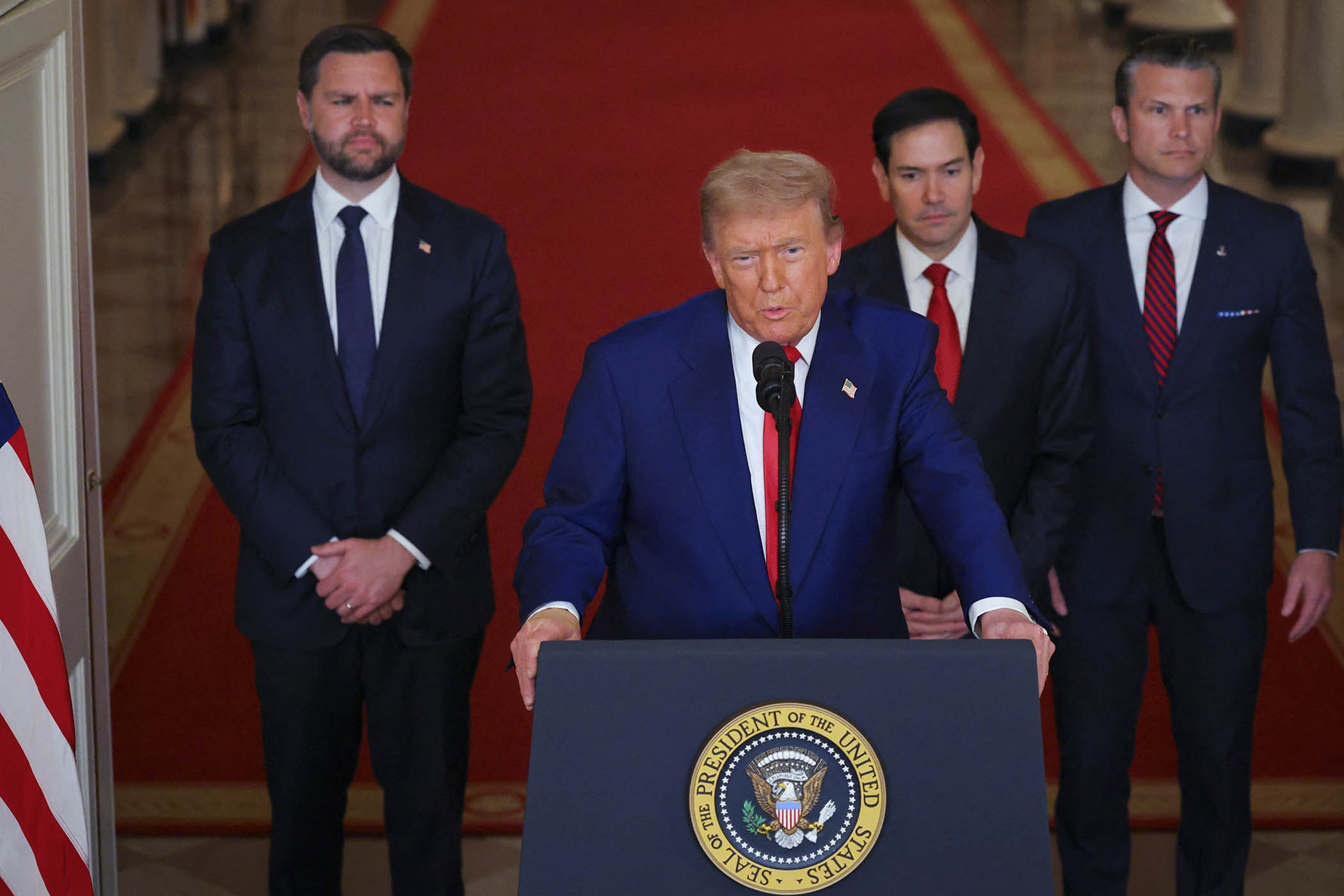


Last week saw some extraordinary headlines on both sides of the Atlantic. They included this in the New York Times: “Why won’t Europe help Trump in Iran? Let’s count the reasons”. There was a pithy comment from the German defence minister: “This is not our war”.
Why is this extraordinary? Because, with a couple of exceptions, the postwar pattern has been that, where the US leads, Europe follows, whether it’s arming Ukraine, or sanctions against Russia, or military action. In the 1990-91 Gulf war, 18 European countries participated in the international coalition that expelled the Iraqi forces from Kuwait. More than 30 European countries participated alongside US forces in the 20-year occupation of Afghanistan. Even George W Bush’s controversial 2003 invasion of Iraq was supported by 18 European countries, though France and Germany stayed out.
But precisely no one has responded positively to Donald Trump’s request for warships to secure the Gulf shipping lanes.
Why has Europe comprehensively blanked the president? Let’s follow the New York Times and count the reasons. First, it’s a terrible idea in present circumstances to send warships to escort commercial shipping through the Gulf. Iran has multiple options, mostly low-cost, for attacking shipping off its coastline: missiles, mines, air, surface or underwater drones, fast motorboats hidden in tunnels.
Any of these could take out a multibillion-dollar warship. Asymmetric warfare works. The military strategists will say that, before escorting can be contemplated, the Iranian coastline will need to be cleared of all of these warship-destroying capabilities.
They will add that the only sure way of doing this is through troops occupying the ground – a reality that, judging by recent media reports about preliminary planning for a ground operation, is just dawning in Washington.
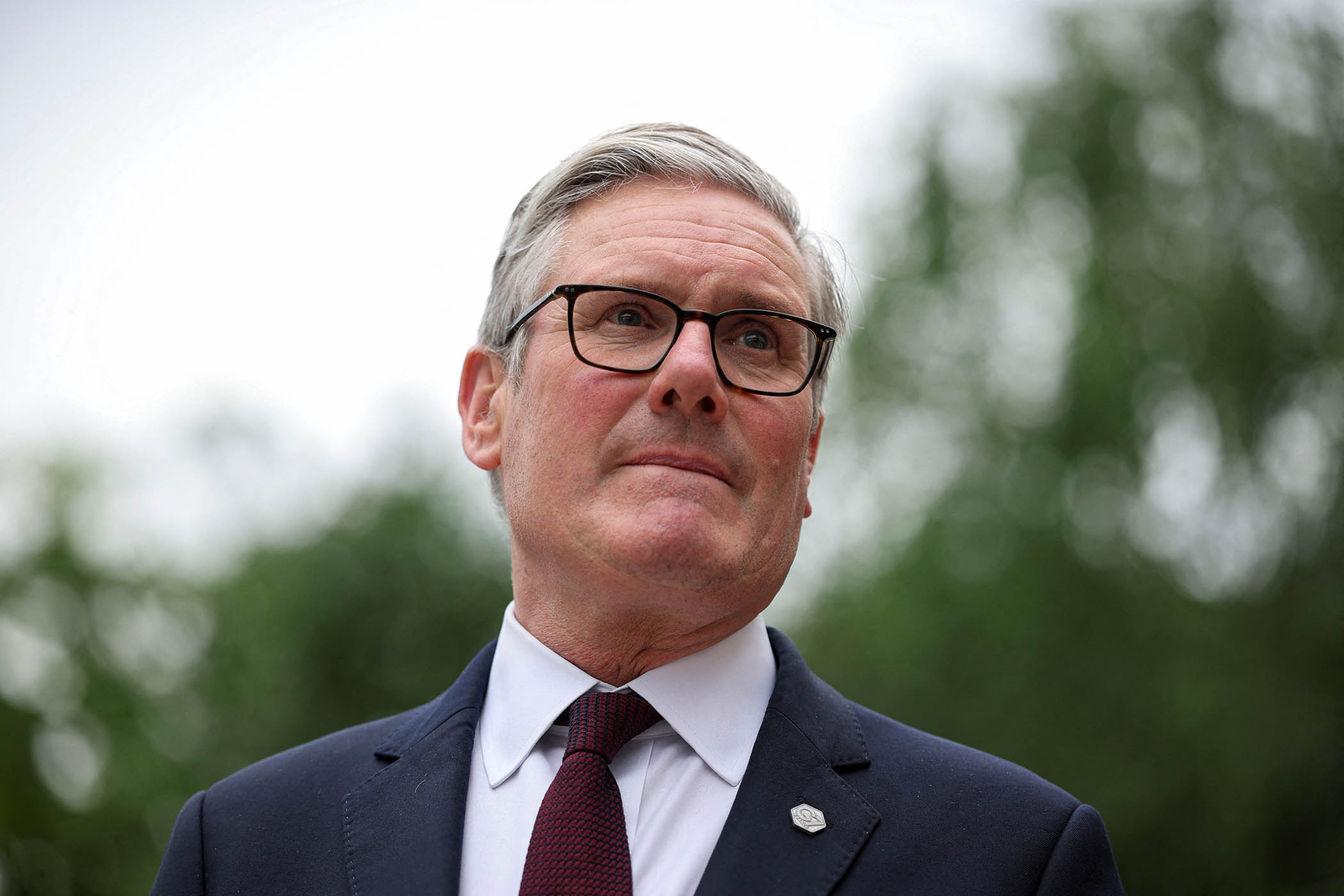
Second, Keir Starmer is not alone in his concerns about the legality of the US intervention. International law is not without grey areas ripe for exploitation by imaginative lawyers. But to do legally what the US did in launching a pre-emptive attack would have needed strong evidence that Iran was about to attack the US – and that evidence isn’t there. It doesn’t help that Iran doesn’t have missiles capable of reaching the continental US and that its nuclear programme was “obliterated” by a previous US attack nine months ago.
Third, the “this is not our war” rebuff reflects deep unhappiness about the way the operation was planned. “America first” leans towards America Alone. There was zero consultation with Nato allies before the first strikes; European governments were relying on the same indicators as the media that action was imminent.
In particular, on the US request to use British airfields, Ministry of Defence contacts whisper that there was so little detail or clarity on the objectives, targets or timing that, whatever the politics or legality, agreement would have been close to impossible. And if allies are ignored as an operation is planned, it’s a stretch to expect them to participate when it starts to go wrong and involve serious risk.
Fourth, there’s a more fundamental reason why European leaders are not prepared to take their cue from Trump. They do not have confidence in his leadership. They consider him impulsive, erratic and capricious; and they simply do not trust his judgment.
They resent his making their jobs harder by wilfully damaging the global economy: where Ronald Reagan extolled free trade, Trump imposes tariffs. They notice how often he and his team disparage Europe, with JD Vance’s speech in Munich and the new US national security strategy the most prominent example s. And they judge his bizarrely pro-Putin manoeuvres on Ukraine to be putting European security at risk. This all contributes to a Europe in which Trump has become spectacularly unpopular, (a recent poll found only 17% of Britons approve of his performance) and in which the French are now finding support from Friedrich Merz of Germany for their longstanding advocacy of European strategic autonomy – being able to defend ourselves without relying on the United States.
Whoever is in the White House, it is hard to imagine the US devoting the same level of resources to Europe by 2035
Whoever is in the White House, it is hard to imagine the US devoting the same level of resources to Europe by 2035
All of which raises two problems, one short term, one long term. The former is: it may be wise to refuse to offer our sailors as a shooting gallery for the Iranians, but we do need the Gulf sea lanes reopened soon. British military planners have been sent to US central command in Florida to discuss military options with their American counterparts. It is hard to see what they could come up with that would do the job and be sellable to their political masters, but the attempt is worth the cost of the airfares.
However, in the light of Trump’s astonishing, responsibility-shedding suggestion on Friday night that the US may walk away – “the strait of Hormuz will have to be guarded and policed... by other nations who use it – the United States does not” – it is at least as important that the UK is working with France, Germany and others to put together a viable plan, presumably involving diplomacy and negotiation rather than an invasion, to restore freedom of navigation. When Starmer, Emmanuel Macron and Merz work together, they can make an impact on Trump; and it may suit Trump to be able to blame the Europeans if the end result is less than a “total victory”.
As for the longer-term question, European strategic autonomy is certainly a valid objective in these unpredictable times. Whoever is in the White House, it is hard to imagine the Americans devoting the same level of resources to Europe by 2035 as they do now. But it is a huge challenge for Europe.
The US provides close to 70% of Nato’s military capability. Europe’s collective gross domestic product (GDP) is about 10 times larger than Russia’s, so it absolutely should be possible to backfill for a declining US contribution and maintain a credible deterrent capability.
Yet this does mean reaching rapidly the new target of spending 3.5% of GDP on defence. Merz has committed Germany to doing so by 2029. Our promise is 2035. Starmer has handled the Iran crisis well so far but defence spending is part of this and he has to do better.
There is already a plan. The recent strategic defence review, led by George Robertson, former secretary general of Nato and respected international statesman, with substantial input from Gen Sir Richard Barrons, the most cerebral soldier of his generation, is a comprehensive and radical plan for the future. The government has accepted its every recommendation. It now needs to deliver it.
Lord Darroch was UK ambassador to the US from 2016 to 2019
More from The Observer
Photograph by Carlos Barría / Getty Images
Newsletters
Choose the newsletters you want to receive
View more
For information about how The Observer protects your data, read our Privacy Policy