Photographs by Tom Pilston for The Observer
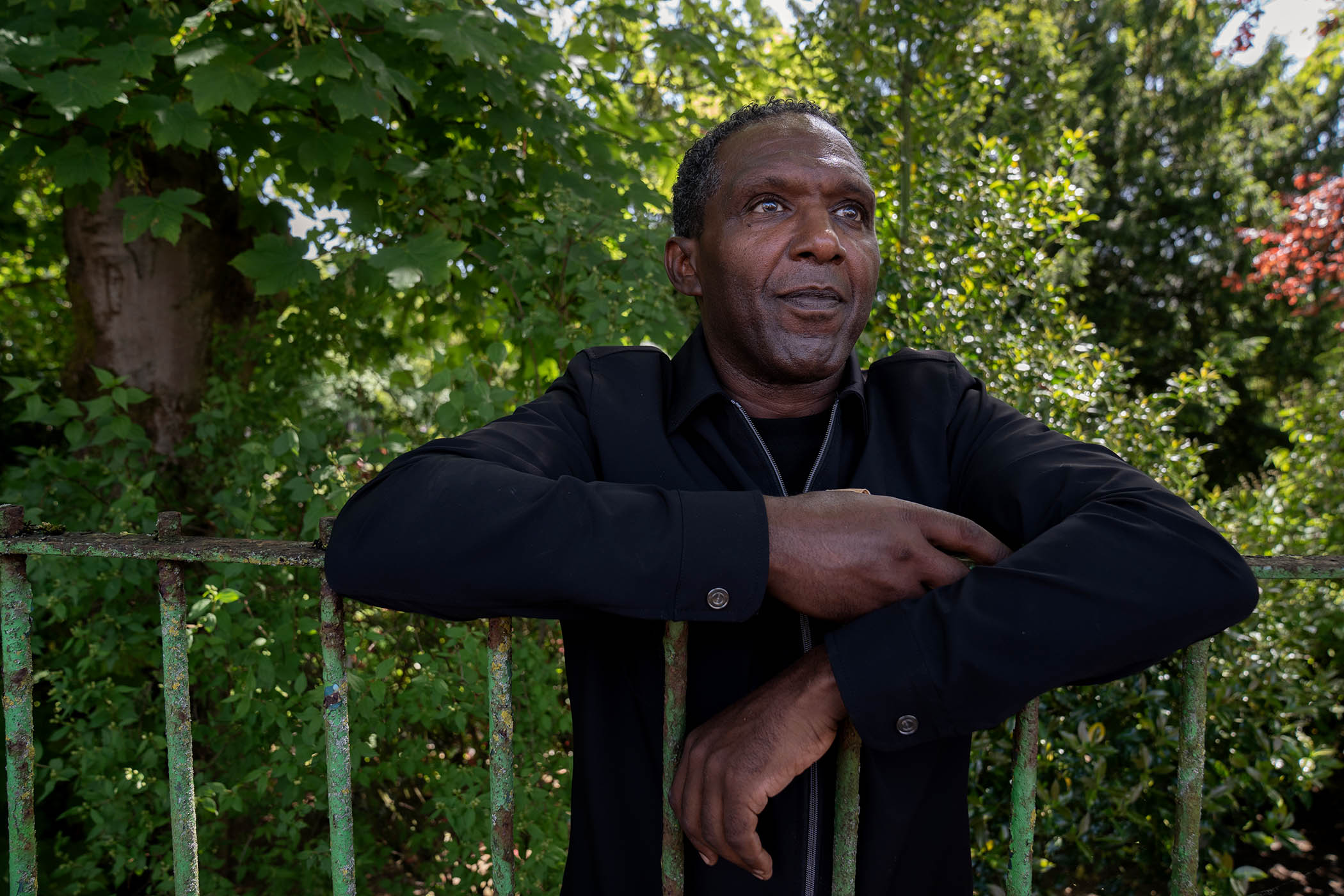
Lemn Sissay ambles towards me across the grass in Ashton-in-Makerfield’s Jubilee Park, a haven of tranquillity amid the political buzz of the byelection taking place in the area. Around him, gardeners are tending immaculate flower beds and the rhododendrons are in full bloom. A man sitting on a park bench greets the poet like a long-lost friend – he remembers him from when he lived in the town 50 years ago.
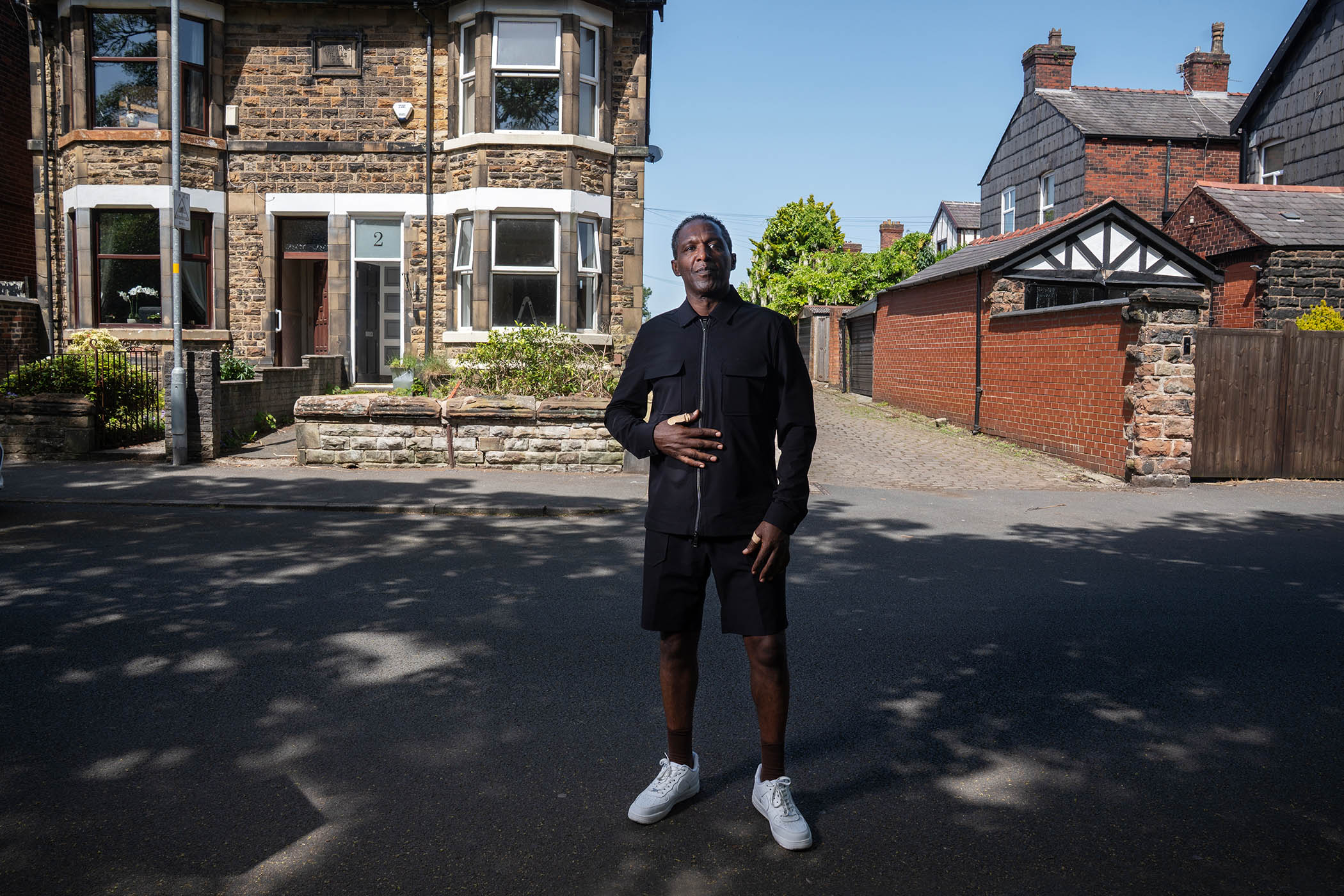
Sissay spent the first 12 years of his life at 2 Osborne Road, across the street from the park. He remembers coming here to collect leaves or play on the bandstand with his brother and sister, watched over by the park keeper. “Every child is an explorer and this park was the beginning of my exploring,” he says. “I was finding new colours, new sounds, new words. It was about independence.”
But Jubilee Park was also where the young Lemn would go after he had been rejected by his foster parents, the Greenwoods, and sent to live in a succession of increasingly brutal children’s homes. He couldn’t understand why the people he thought were his “for ever” family never came to see him or why he was not allowed to visit them.
“I would run away from the children’s homes, sit here and watch the house,” he says. “I knocked on the door a couple of times. They put me in the front room, which was the posh room where visitors went, and then my social worker came to pick me up and take me away. The Greenwoods wouldn’t even drive me to the children’s home. I didn’t have a language to articulate what they were doing to me. I was calling them Mum and Dad until I was in my mid-30s. The lesson they gave me in childhood is that if you are loved you will be destroyed.”
Sissay’s mother, Yemarshet, had come to England from Ethiopia to study. While here, she discovered that she was pregnant and was persuaded to give up her son to be fostered so she could complete her education. She wanted the separation to be temporary but the social worker who took her baby ignored her requests to see her son. He even gave the boy a new name – Norman Greenwood – his own first name and the surname of the family that was going to foster him.
‘I slowly began to realise that there was nobody coming for me, nobody was going to hug me. It was the realisation of not being loved’
‘I slowly began to realise that there was nobody coming for me, nobody was going to hug me. It was the realisation of not being loved’
Lemn Sissay
Then when Sissay was 12 the Greenwoods turned on him. He was beaten, accused of stealing and sent away. “They said it was my fault. People will always say, ‘Why are you in care? What did you do?’ And that’s the question I asked myself. I thought there must be something about me that made this happen.” Mrs Greenwood refused to hug him goodbye when he left for the children’s home. “It’s sad that a person could do that but a person’s got to be hurt themselves to hurt a child.”
Sissay, who is now 58, still has the initials NG tattooed on to his hand – he scratched it himself with a pin as “a form of self-harm”. It was only when he was 17 and finally got to see his birth certificate that he discovered his real name. He discovered that Lemn means “why” in the Ethiopian language Amharic. It was the question his mother had wanted to ask his father and also what he needed to say to the authorities who repeatedly failed him. “The lie started with the name being stolen, and me being stolen from my mother,” he says. “The cruelty was from the beginning. It’s easy to blame the foster parents but this is institutionalisation. It’s emotional fascism.”
As we walk towards his childhood home, past a yew tree commemorating the First World War, Sissay says he has come to terms with what happened there. “I’m reconciled to my past,” he says. He is determined to maintain a connection to Makerfield. “I still think of this as my park and my town. I was sent away as if never to return, the boy who’s gone to the children’s homes where bad boys go. It was like being condemned by the family, by everything that you’ve ever loved, and so I’ve made it my mission to see the absolute beauty of this place and to return to it and say, ‘No, this is part of me.’”
We cross the road to No 2. It is a blisteringly hot day, which reminds Sissay of a heat wave when he was living here. “The tarmac melted,” he says. “We played kerb-ball and bought Curly Wurlys and pear drops from Mr and Mrs Jolly in the shop up the street.” It was the era of The Clangers and Crackerjack. “The rag and bone man would come down here with a big shire horse, clopping through the mist with a flat cap, dragging a cart with bits on it shouting, ‘Rag and bone!’ You’d hear him from miles away.” At the time he thought it was a blissful childhood, but he says: “It was quite an unkind house once the door was closed.”
Newsletters
Choose the newsletters you want to receive
View more
For information about how The Observer protects your data, read our Privacy Policy
‘Writing is a connection between how you feel, where you are, what happened in the past and what will happen in the future’
‘Writing is a connection between how you feel, where you are, what happened in the past and what will happen in the future’
Lemn Sissay
The laburnum tree that used to be in the front garden has gone and the sunlight is streaming through the big bay windows. “Up there was where the swallows would come every summer and go into the eves,” says Sissay, pointing to the roof. The house was recently bought by a couple who are busy painting and decorating. They invite us in and the poet goes upstairs to find his old bedroom. He looks out of the window to the street below. “When I was locked in here and told I couldn’t go out and had to go to bed early I used to look at my friends down there and make faces.” I ask if it is hard to come back. “It’s just a house,” he replies. “I’m not defined by the worst thing that happened to me. Somebody said to me, ‘Your light shone too bright.’ I was a threat. I was too happy.”
A couple of years ago, Sissay met his foster siblings again out of the blue. “They came to a book signing. I looked up and I saw my sister and brother. They both said to me, ‘It wasn’t your fault.’ I said, ‘I’m pleased you got there, I got there when I was 12.’”
He is no longer angry. “I’ve been angry and I’ve seen how anger can destroy people and I know that anger is an expression in search of love. I’ve leant into anger knowing that I have to be angry, but it’s not a place to stay. It’s not my home.” He points to a child running, watched over from a distance by a parent. “That used to be a reminder of everything that I’ve never had but it’s normality,” he says. “If that were to still make me angry I’d be ruined.
“The greatest thing that I’ve done because of what I’ve been through is to be able to empathise with others. I was so hurt that I used to say I deserve to be angry. I would do everything to give myself permission for self-destruction. I think it was when I forgave my foster mother properly and when my birth mother died a couple of years ago [that I realised] there’s something beautiful about knowing that my story is there for a reason.”
We walk on past cobbled streets lined with red-brick terraced houses. There are Reform posters in several windows; a St George’s flag flutters in the breeze. “Those things don’t intimidate me,” says Sissay. “People should be able to be proud of where they’re from.” He thinks support for Nigel Farage’s party is driven primarily by the failings of mainstream politics. “There are people who want change to happen and who feel marginalised. Reform is rising all around the country because the big two political parties are losing touch with the people. You can’t blame the voter. If they feel ignored they’ll find somebody who’s listening to them.”
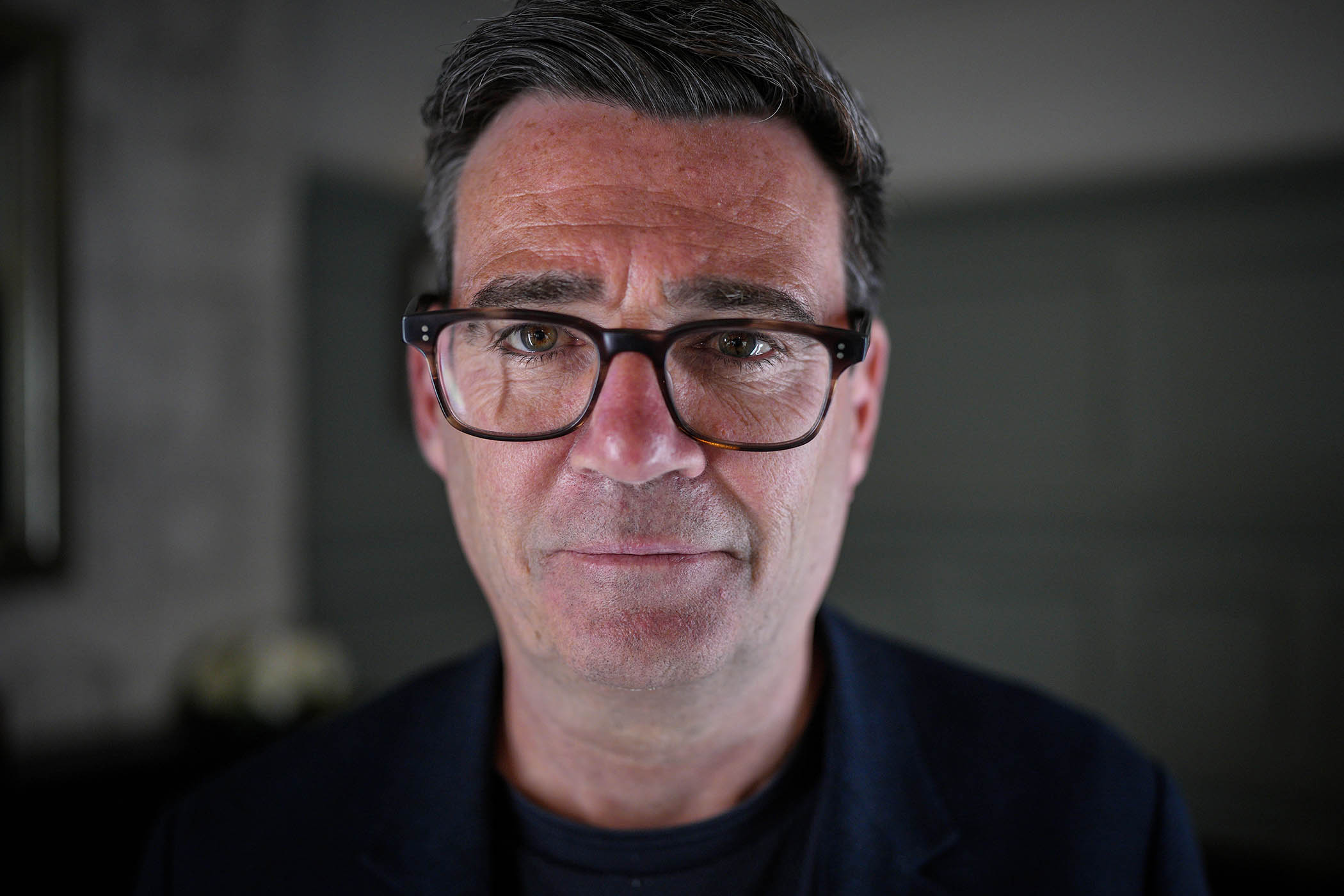
Sissay was chancellor of Manchester University for seven years and is a “real fan” of Andy Burnham, the Greater Manchester mayor who is standing in the byelection. “He’s a good communicator. I think the skills he’s shown in Manchester would be utterly transferable, even if it’s just a wave of positivity.” He is “proud” that Burnham has chosen Makerfield for his attempt to return to parliament. “He’s made this town famous. It’s part of the history books now.”
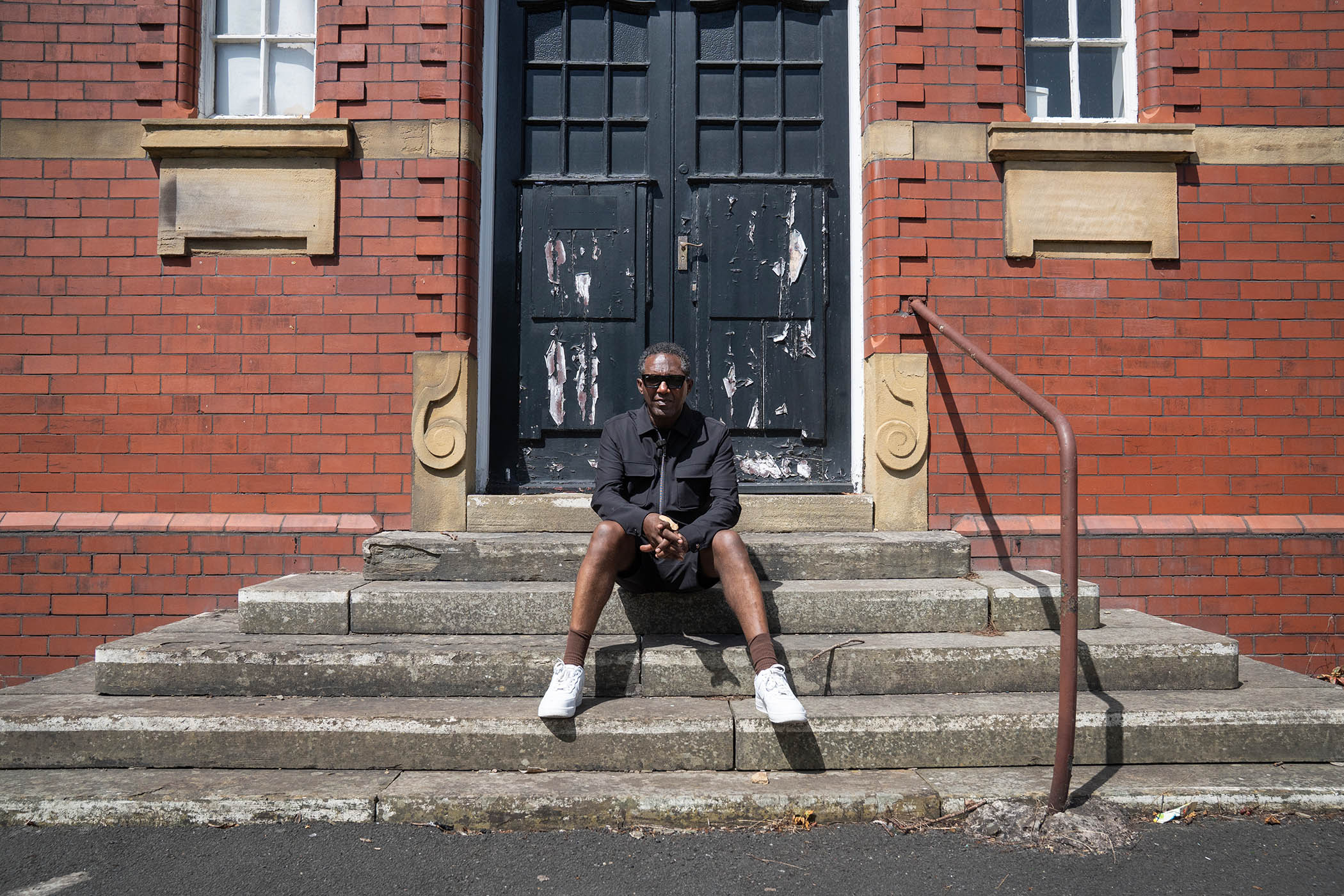
We are following the route Sissay took to RL Hughes primary school every day. “I absolutely loved it; I was loved by the teachers and staff,” he says when we reach the gates. But as one of the only black children in the town he experienced racism from an early age. “My foster mum was spat at because she had a baby of colour. I used to have to wipe the spit off the back of my coat when I came back from school.”
We stroll on, past the old police station, pharmacy and library. The “Ashton in Bloom” boxes are full of brightly coloured flowers. Sissay points out the 610 bus to Wigan. “I had friends living in all these houses around here. I was taken away from everybody who had ever known me.” The sense of abandonment was intense. “I slowly began to realise that there was nobody coming for me, nobody was going to hug me. It was the realisation of not being loved.”
He arrived at the children’s home with no clothes, books or toys. “To centre myself, to be able to form some sort of recognition that all of this was really happening, I wrote poetry. It gave me that sense of place. Writing is a connection between how you feel, where you are, what happened in the past and what will happen in the future.”
We turn into another park, past the swings and roundabout where Sissay spun as a boy. Why did he choose poetry rather than prose? “Who knows? I wish I could tell you but it was a very immediate recognition that I’d arrived at something that makes me feel alive,” he replies. “Every poem is a witness statement. The imagination allowed me to aspire and to find truth in a non-linear way through imagery and metaphor and simile. I found that I could explain myself.”
At the age of 17 Sissay used his unemployment benefit money to self-publish his first poetry pamphlet. He released his first book three years later.
As we walk past the tennis court, I ask whether he would have been as great a poet if he had had a happy childhood. “I’d have been better,” he says. “I’ve had to spend a lot of my life searching for my family rather than publishing books. The story of my life has taken over my life.” He rejects the idea that creativity is forged in fire. “Look at Tracey Emin’s work about the pain she’s been through. She’s not a great artist because of that pain – she was already a great artist in the making who then applied herself to the subject,” he says. “People are very quick to say, ‘You’ve suffered pain and that’s helped you become the artist you are.’ Nobody ever says if there had not been the pain, imagine how great an artist you would have been. This has all been a distraction.”
There is a stream running through the park, surrounded by cow parsley and ferns. This is where Sissay used to come to find tadpoles. He points out the tree where he and his first girlfriend carved their initials. It is idyllic but the poet insists it is wrong to romanticise suffering. “Marilyn Monroe was fostered 10 times between the ages of 9 and 18. That’s trauma upon trauma. That’s ‘love me, drop me, love me, drop me, I’m not worth it’. She’s an amazing character, artist, actress and writer in spite of what happened to her, not because of it.”
Sissay says that if poets are created through traumatic childhoods “why don’t we do workshops on how to abuse kids so that they can grow up into adults who are great writers? It’s not true. It’s like saying to somebody, ‘Oh, you’re really good at the disabled olympics. If your legs weren’t chopped off you wouldn’t be able to run in the disabled olympics.’ Well, no, you wouldn’t because you’d be able-bodied, but there’s something about you that is incredible. When people are put under pressure their essence comes out, it’s who they are.”
Sissay’s work is recognised and celebrated globally. His words are carved into giant stone tablets around the world and his poems are read at countless weddings. He is adored locally in Makerfield too by people who seem proud of their most famous local boy.
As we return to Osborne Road, he says it was his birthday last month and he heard from “just one aunty” whom he had not seen for years. “I would give all of this away to have a family, but that would never happen so I’m in the realms of fantasy,” he says. “I’ve done the best with what I’ve got.”
Thank you for reading. Tell us what you think by writing to letters@observer.co.uk