
In cities across Syria in December, crowds gathered in the streets to mark the anniversary of President Bashar al-Assad’s downfall. Fireworks and chanting stretched into the early hours of the morning. Cars crawled through dense streets, black, white and green revolution flags hanging from windows. In neighbourhoods that once fell silent after dark, cafes stayed open and vendors sold coffee long after midnight. People were partying outside – simply because they could.
In the capital, Damascus, Hossam walked through the crowd in Umayyad Square. Until Assad’s fall, the 34-year-old – clean-shaven and wrapped in a black jacket against the cold – used to work for state-controlled media outlets and as a guide for foreign journalists. As an Alawite from Latakia, the Assad regime’s stronghold, Hossam had managed a dangerous balancing act: using his family’s connections to avoid army conscription, and concealing his dislike for the regime despite working for it.
“Not any more,” he said, as fireworks went off above our heads. He reached into his pocket and pulled out a small plastic bag. Inside were a few pale yellow pills, stamped with twin crescents. “Many people here have these,” he said quietly. “They’ll help us celebrate all night.”
The pills are captagon, an amphetamine-type stimulant that for more than a decade flowed out of Syria in industrial quantities. Associated with fighters across the Middle East since the early years of the Syrian civil war and the rise of Isis, captagon suppresses fatigue and heightens alertness, making it the drug of choice on the battlefield. But it is also widely used by civilians, from partygoers to construction workers across the Gulf, and is now considered one of the most common drugs in the region.
Under Assad, captagon production and trafficking became a central pillar of Syria’s economy, generating income for the regime to circumvent international sanctions. The New Lines Institute in Washington estimates the drug had an annual market value of over $5.7bn a year before the regime fell.
Hossam isn’t blind to the paradox. “It’s nothing but ironic that I am celebrating the fall of the regime by getting high on the regime’s own drugs,” he said. “But if you knew what we have been through, you’d understand.”
The collapse of the Assad regime’s captagon drug industry is one of the least visible yet most consequential transformations facing post-Assad Syria. But it has also created a rare and dangerous moment in the global drug trade: a multibillion-dollar industry lost its dominant supplier almost overnight. So what happens now?
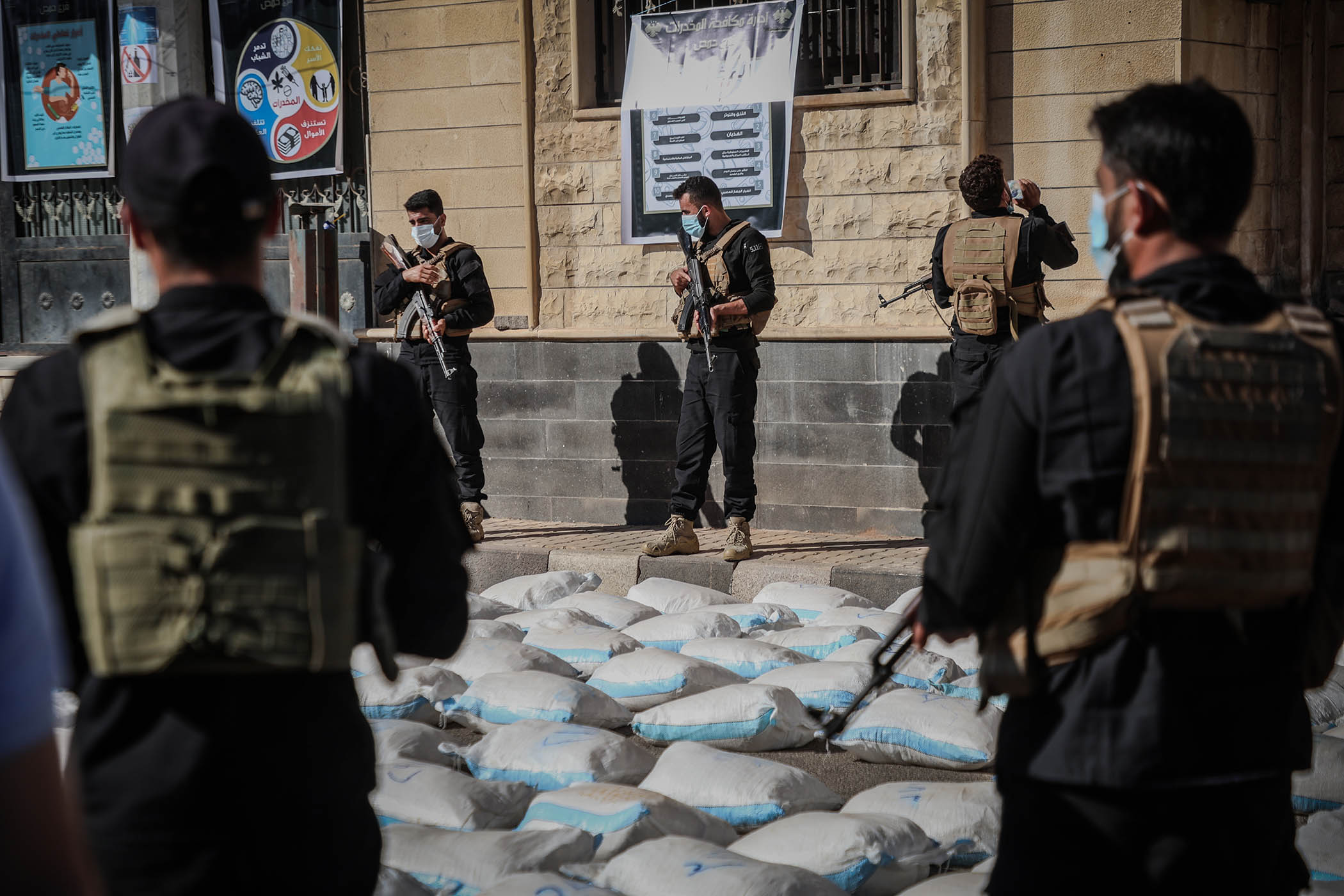
When Sheikmous Abdeh opens the door to his office, he gestures toward the floor with evident pride. “You came at the right time,” he says. “We seized another load yesterday.” Abdeh, in his early 30s, is a senior officer in a new counter-narcotics unit in Homs, set up under Syria’s Ministry of Interior. He gestures to dozens of plastic sacks laid out in neat rows, each packed with hundreds of pale yellow pills. He steps carefully between them, lifting one of the bags. “Three hundred in every sack,” he says. “These were seized in Wadi Hanna, close to the Lebanese border.”
When Assad fled Syria in late 2024, the system that had underpinned the country’s vast captagon trade collapsed with his regime. The speed surprised everyone, including the opposition forces of Hayat Tahrir al-Sham (HTS), which advanced on Damascus far more quickly than anticipated.
In the weeks and months that followed, HTS, now at the helm of an interim government, pledged to dismantle the narco-economy. New counter-narcotics units were quickly formed and tasked with tracking down factories, stockpiles and smuggling networks across the country.
Newsletters
Choose the newsletters you want to receive
View more
For information about how The Observer protects your data, read our Privacy Policy
Security forces have now seized or destroyed dozens of production and storage sites across Damascus, Homs, Latakia and the Syrian coast. These raids uncovered hundreds of millions of pills, vast quantities of chemicals, industrial pill-pressing machines and packaging equipment in dozens of facilities. Syria’s interim government claims to have dismantled most of the industrial-scale production of the Assad-era captagon economy, a claim largely backed by recent UN reports from the Office on Drugs and Crime.
“The regime made and sold captagon to survive. And the side-effect was that Syria became a country of drug addicts,” Abdeh says. “Living under the regime, or being displaced in a refugee camp abroad, leaves you with very few choices. I don’t blame those who turned to drugs to escape reality. But if we don’t stop this, who are we rebuilding the country for?”
Abdeh’s unit conducts large, highly visible raids involving dozens of vehicles, canine units and forensic teams. Yet enforcement is uneven due to limited resources. Abdeh acknowledges the limits. “We’re building this from nothing,” he says. “It will take time.”
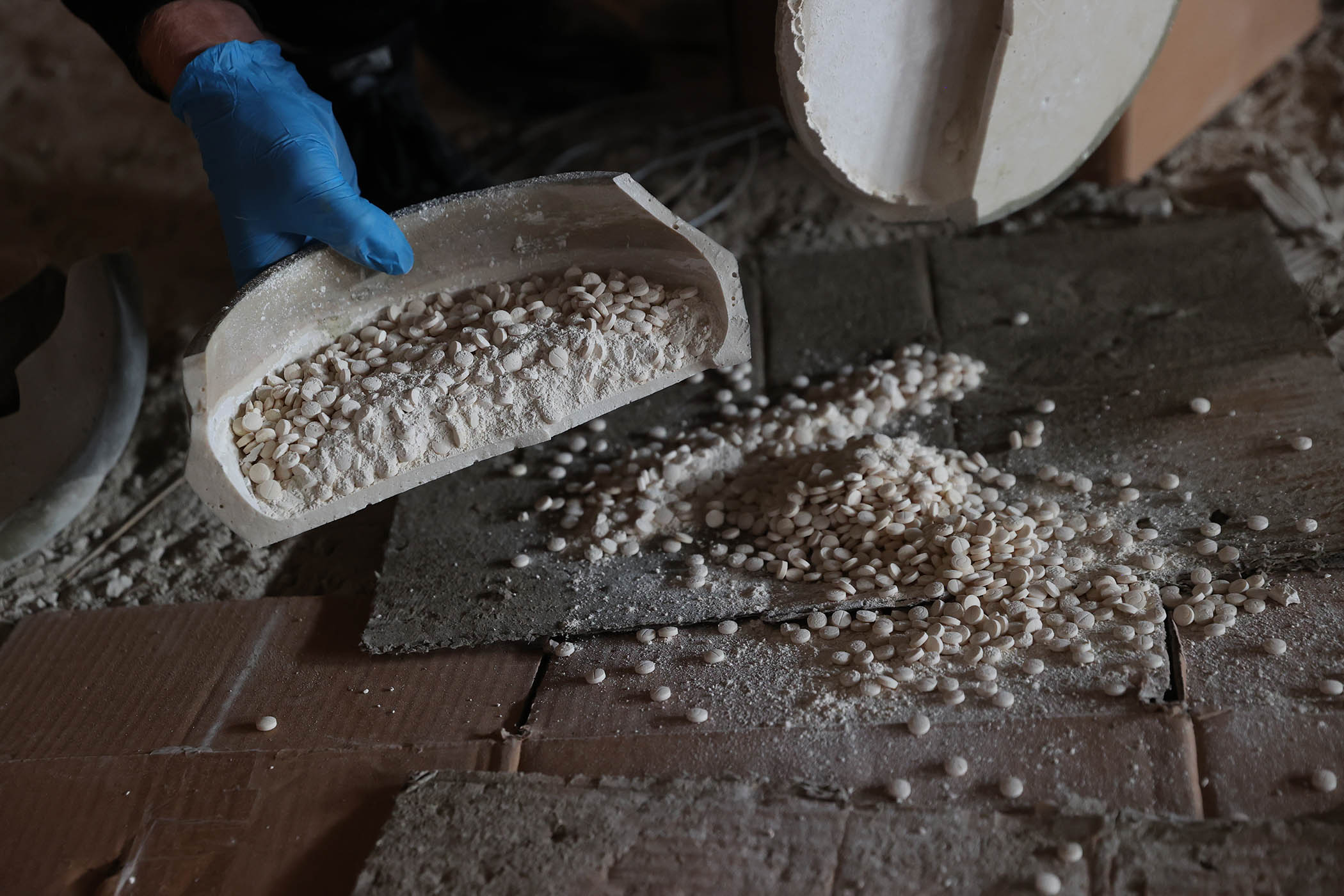
But there have been successes: in Douma, east of Damascus, a sprawling plant officially registered as a crisps factory was found to contain multiple industrial pressing machines, mixing rooms and sacks of powdered chemicals, stacked like cement, used to make captagon.
The site was linked to Amer Khiti, a sanctioned businessman closely associated with the 4th Armoured Division, the elite military unit of the Syrian army led by Assad’s brother, Maher al-Assad, who is believed to have fled to Russia after the fall of the regime. Maher al-Assad has not been seen publicly since, though footage circulating in 2025 appeared to show him in Moscow. He remains wanted under international warrants over alleged war crimes.
At Mezzeh military airport, near Damascus, officials also discovered sealed pallets of pills branded “Lexus”, the most expensive variety of captagon on the market, wrapped and ready for export to Saudi Arabia, which today remains the largest destination market in the Middle East.
In suburbs such as Yafour and Al-Dumayr, villas belonging to figures close to the regime were found to have been converted into production facilities under military protection, part of a system whose true scale has become fully visible only in the past year. At the port of Latakia, millions of pills were uncovered, concealed in children’s clothes and toys prepared for shipment abroad.
Abdeh’s days are spent collecting intelligence, attending briefings and preparing police raids. In the early months after the regime’s fall, he says, the scale of the drug trade surprised even seasoned officers. “We expected large factories,” he says. “Not also hundreds of medium to small production sites in the back of people’s homes.
“These places weren’t just hidden. They were protected around the clock by regime elite units who oversaw the production and international trafficking of captagon but also regulated hundreds of regime-affiliated intermediaries and smugglers to get into the business.”
On the Lebanese side of the mountains, we meet Mohammed al-Najah, who under the old regime worked for years as a narcotics middleman on the Jordanian border. He agreed to speak after Assad’s fall – and after he had escaped to Lebanon – knowing he is likely to be on the “wanted” list for men such as Abdeh.
“Back then, everything had a schedule,” he says, stirring sugar in a small cup of coffee. “Who produced, who protected, who moved the pills. Little space for improvisation.” Najah was part of it, but he’s not nostalgic. He describes the old system as a hierarchy enforced through violence.
At the centre of this system stood Maher al-Assad’s elite military unit. “It was like a tax system,” Najah says. “Producers paid protection fees to the 4th Armoured Division. These could reach 50% of profits.”
For intermediaries such as Najah, the job was to guarantee imports of necessary chemicals and machinery and to connect producers with smugglers at the border. Royalties were paid to the regime to secure safe passage.
Najah’s account reflects what has been reported in courts during the trials of high-level intermediaries, which led in 2022 and 2023 to US and EU sanctions being imposed on high-profile individuals and companies in Syria and Lebanon.
Najah helped us identify at least a dozen large captagon factories across Syria, sites that we were able to verify through triangulation with experts and local sources. Mixing, drying and storage were frequently distributed across multiple sites to minimise risks.
These large factories were used as plants to synthesise captagon, relying on large quantities of imported chemicals such as ephedrine or ephedrine-type substitutes, widely used in the pharmaceutical industry to make nasal decongestants. Further sources indicated how Syrian pharmaceutical front companies were deeply involved in importing chemicals and machinery through both licit and illicit channels.
“The pill-pressing machines that were used in the largest captagon factories were of European make. We are talking of machines that could press about 1m pills per day,” explains Najah. “These machines were sourced through traders and importers working for the regime in Europe.”
Smuggling routes radiated outward. From Latakia’s port, shipments moved by sea toward Europe, North Africa and the Gulf. From southern Syria, pills were transported through Sweida and Daraa into Jordan, then on to Saudi Arabia and the UAE. Eastward routes passed into Iraq, while Hezbollah-linked corridors facilitated cross-border movement into Lebanon. “The smuggling routes were global,” Najah adds. “But the main captagon market is in Saudi Arabia.”
By 2023, Syria accounted for the majority of the world’s captagon supply. Experts modelling this trade suggest people linked to the regime made up to $1.8bn annually at the wholesale level, with far higher value realised downstream in consumer markets.
The scale of the trade really became known only after police seizures. In June 2020, Italian authorities at the port of Salerno seized approximately 84m captagon pills, a shipment valued by police at more than €1bn (£900m). In March 2021, Malaysian authorities intercepted roughly 94m captagon pills at Port Klang, one of the largest synthetic drug seizures ever made. Both consignments were traced back to networks linked to Syria.
The end of the Assad regime did not signalled the end of captagon. Sources such as Mohammed al-Najah, as well as those still involved in trafficking, confirm that while the volume of trade has drastically reduced, the trade itself is far from over. “The fall of the regime has had a chilling effect,” says Najah. “But the vacuum will soon be filled by those who will take the opportunity first. Where there is a demand, there will be a supply.”
There is, so far, no clear evidence that HTS or figures within Syria’s new administration are directly involved in the production of the drug. Instead, much of the remaining activity appears to be carried out by the same networks that operated under Assad, particularly in the south, where long-standing smuggling routes and local intermediaries remain in place.
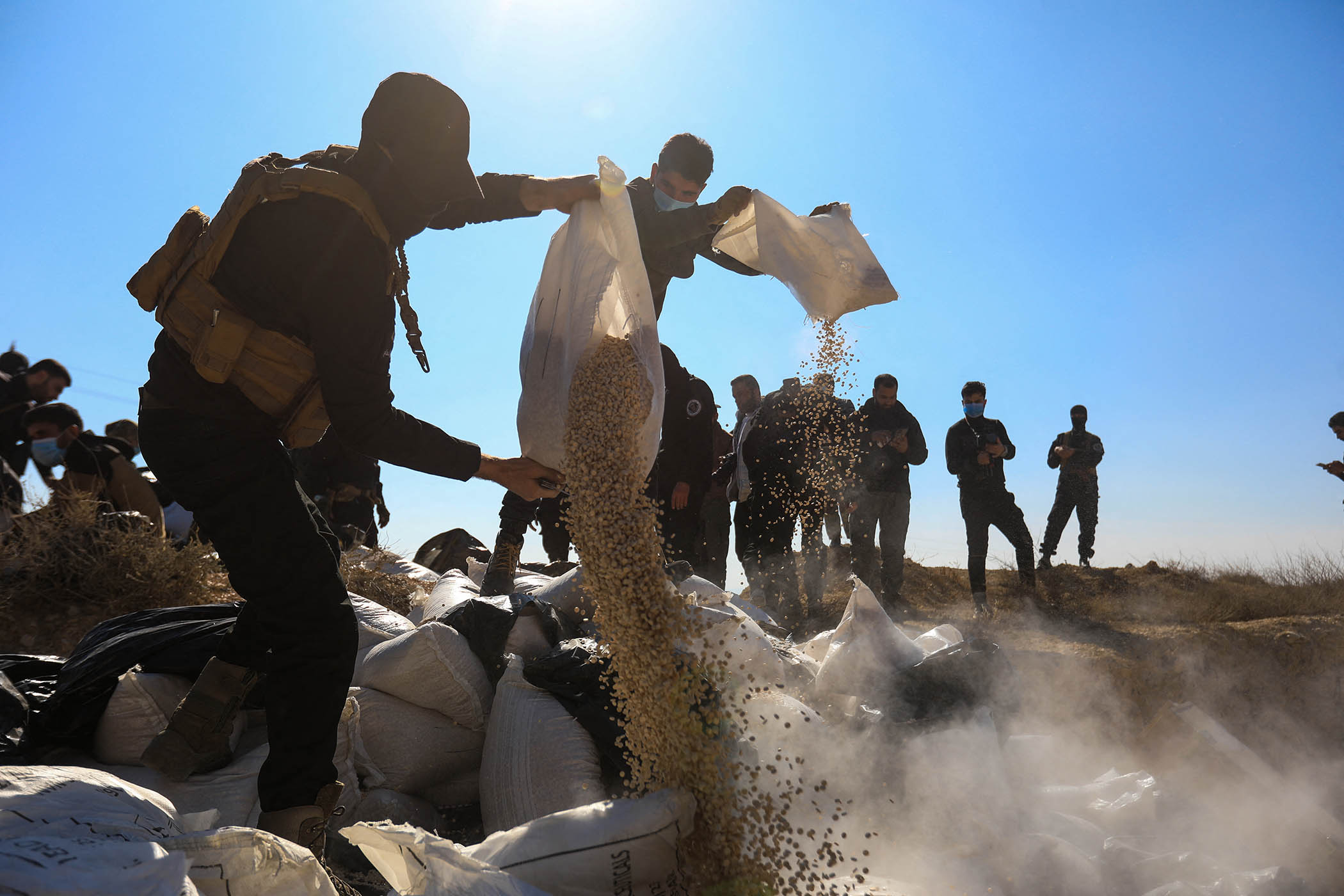
Small-scale production continues in parts of southern Syria, including Tafas, rural Sweida and pockets of rural Homs. These operations rely on semi-manual presses and supplies stockpiled before the regime fell, rather than the industrial pill-presses that were used in large factories.
“We think there are still those who manage to produce thousands rather than millions of pills per day. These levels are insufficient to meet regional demand, but are enough to supply an internal demand of users in Syria,” says Sheikmous Abdeh.
For the people who use captagon, or are reliant on it, disruption has brought volatility rather than relief. Back in Damascus, Hossam explains that in recent months, gaps in captagon supply have been increasingly filled by crystal meth, known locally as shabu. Much of it comes from the east, through areas bordering Iraq and Iran, both countries known for high rates of meth consumption.
“Shabu is stronger than captagon” he says. “I know many people who take it now that captagon is harder to get. It’s even more addictive.”
Earlier this year, Hossam’s aunt was killed in a home invasion. The attacker, a woman, had broken in to steal valuables to fund a meth addiction. When Hossam went to the local police station to ask what had happened, officers confirmed the details of the case. “That never would have happened before,” he says. “Not like this.”
Caroline Rose, an expert on illicit trade for the New Lines Institute, said that “when a central patron like the Assad regime disappears, illicit economies don’t vanish. They fragment and reorganise until new actors rush in to claim the seams.” In places such as Daraa and Sweida, she notes, local militias are elbowing their way into the voids once controlled by Assad’s army and Hezbollah. “Disrupting drug supplies without addressing demand rarely eliminates the issue,” she adds. “If anything, violence and harm increase in the short term, while new actors reshape the market.”
Syria’s captagon economy is now in a period of dangerous flux. A billion-dollar market still exists, but there is no longer a single authority capable of controlling it. Militias, the remnants of the former regime and smugglers are competing to shape what comes next.
For the interim government in Damascus, the stakes are high. Crushing the old monopoly was necessary to signal the end of Assad’s narco-state. But dismantling an illicit narco-economy without fixing the conditions that sustained it – lifting people out of poverty and strengthening state support – risks something much worse taking its place.
This investigation was supported by a grant from the Investigative Journalism for Europe, and by the Free Press Unlimited cross-border collaborative grant.
Leon Spring – a pseudonym – is an investigative journalist reporting on borders and state crime.
Photographs by Abobaker Alsaka/Anadolu via Getty Images, Izz Aldien Alqasem/Anadolu via Getty Images, Bakr Alkasem/AFP/Getty Images