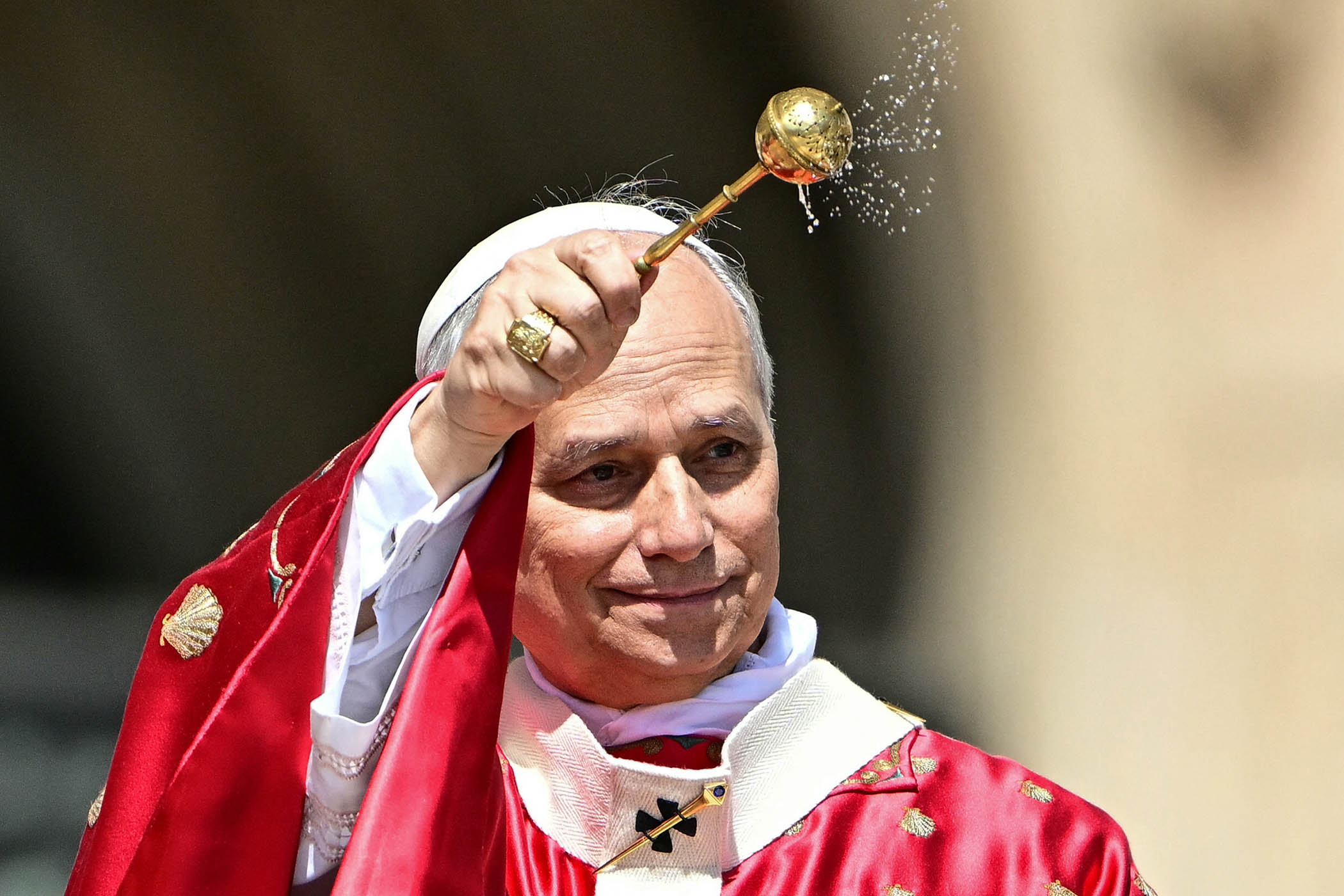

Pope Leo has unexpectedly waded into the information wars – backing investigative journalists and taking aim at “loveless” partisan rhetoric, as his war of words with Donald Trump continues.
His message arrived in a letter blessing the attendees of the annual Sir Harry Evans Investigative Journalism Summit in London. “One of the most important challenges is to promote communication that can bring us out of the ‘Tower of Babel’ in which we sometimes find ourselves,” Leo wrote, warning against language that is “ideological or partisan” and urging a more attentive form of journalism. “We do not need loud, forceful communication, but rather communication that is capable of listening and of gathering the voices of the weak who have no voice.”
Direct “divine” intervention at an investigative reporting event is a rare step beyond traditional Vatican engagement with the media. This week marks one year of a papacy during which Leo has regularly stood up to Trump. In April, the president called the pontiff “WEAK on Crime” and “terrible for Foreign Policy” and shared a controversial AI-generated meme of himself as a Jesus-like figure. Yesterday Trump was on the offensive again as he accused Leo of “endangering a lot of Catholics” with his stance on the Iran war.
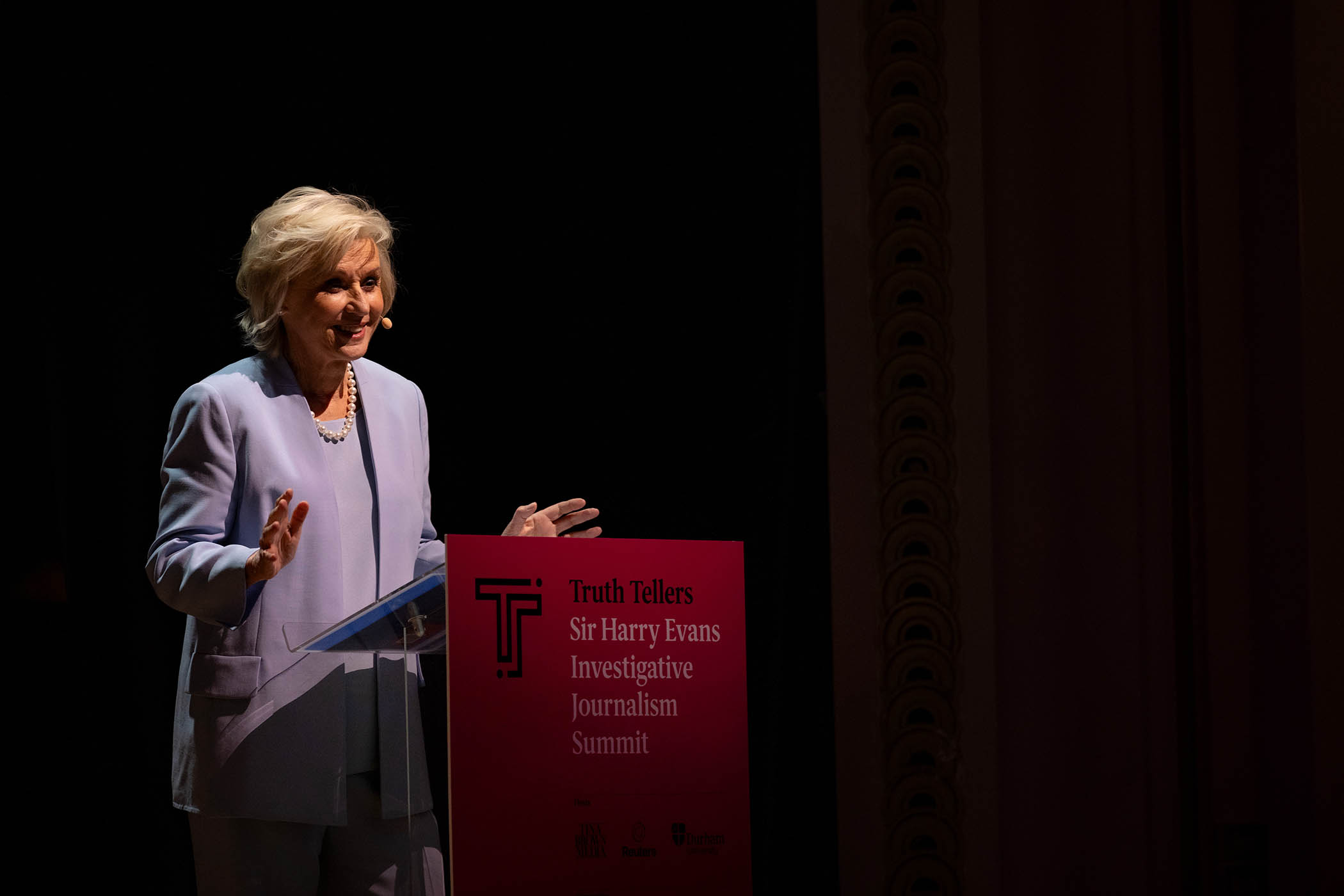
Tina Brown, former editor of the New Yorker magazine and widow of Harry Evans
Marco Rubio, the US secretary of state, is set to visit the Vatican this week to meet Leo but denies the trip is to smooth things over, insisting it was planned to “advance bilateral relations”.
Prof Anna Rowlands, a theologian at Durham University who specialises in Catholic social thought, said it was a misreading of the situation to think of Leo’s fight with Trump as political. “That’s what he’s got in common with investigative journalism,” she added. “There’s no space where the gospel isn’t relevant, no institution where it doesn’t have a right to speak. That’s the same with journalists. Pope Leo believes no one should be looking to control and limit whose voices are heard.”
The pontiff’s message was projected onto a screen in Vision Hall in central London as the journalist Tina Brown, former editor of the New Yorker magazine and widow of Harry Evans, opened the conference, which led into a discussion about the state of the media.
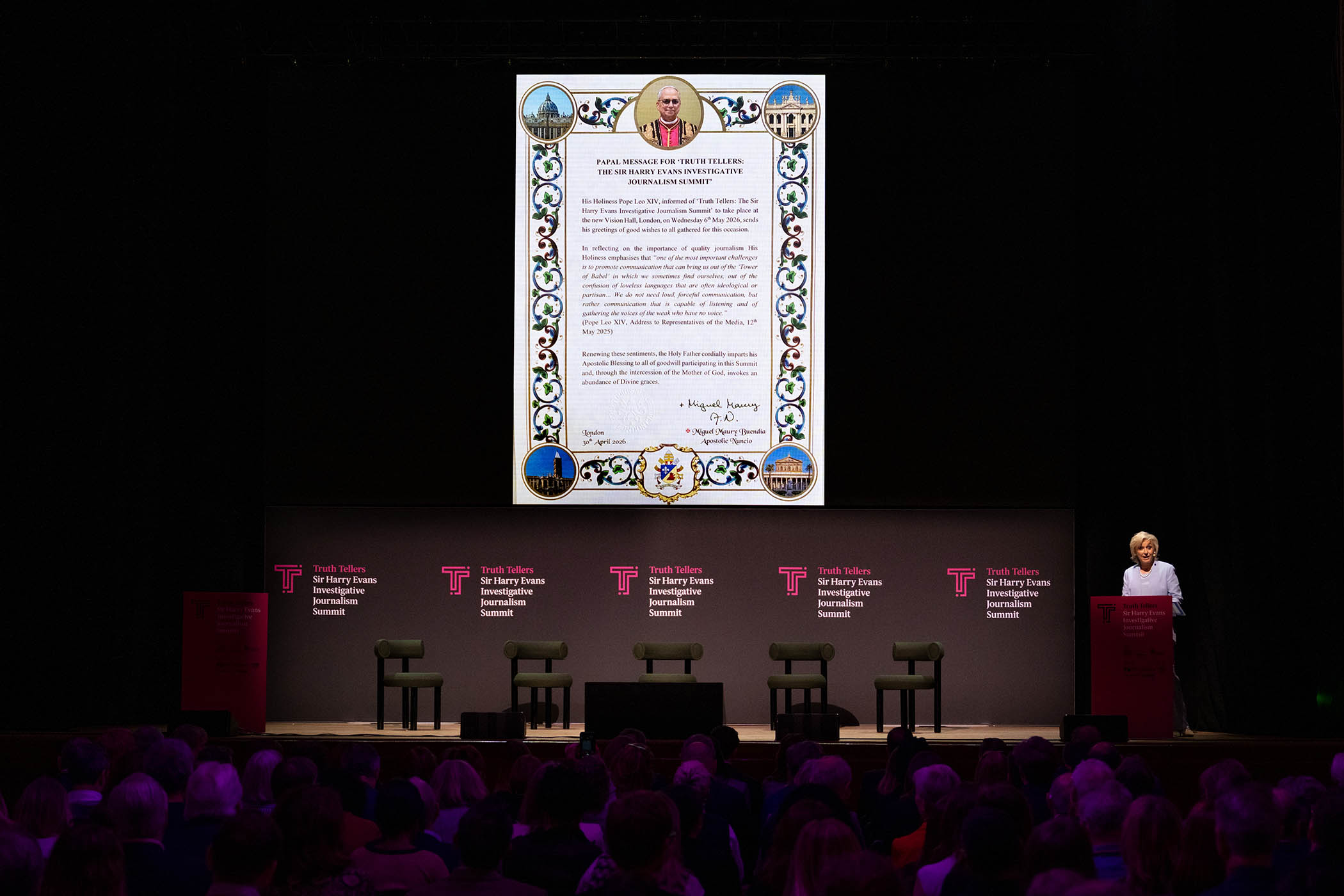
It was chaired by the journalist and broadcaster Emily Maitlis, with panelists Christiane Amanpour, CNN International anchor; Emma Tucker, the Wall Street Journal’s editor-in-chief; the New Yorker reporter Patrick Radden Keefe; and Katharine Viner, the editor-in-chief of the Guardian.
Amanpour made the case for solidarity between journalists and argued that all White House correspondents should respond to Trump’s personal attacks on individual journalists by walking out, while Radden Keefe suggested journalism might actually be benefiting from Trump’s deranged behaviour. “Whether or not we like it,” he said, “it’s great copy.”
The panel agreed that the world had begun to take on a sense of unreality due to the proliferation of AI and the increased threats towards journalists. “We’re undergoing an assault on reality itself,” Radden Keefe warned. “We just need to hold on to truth as a process.”
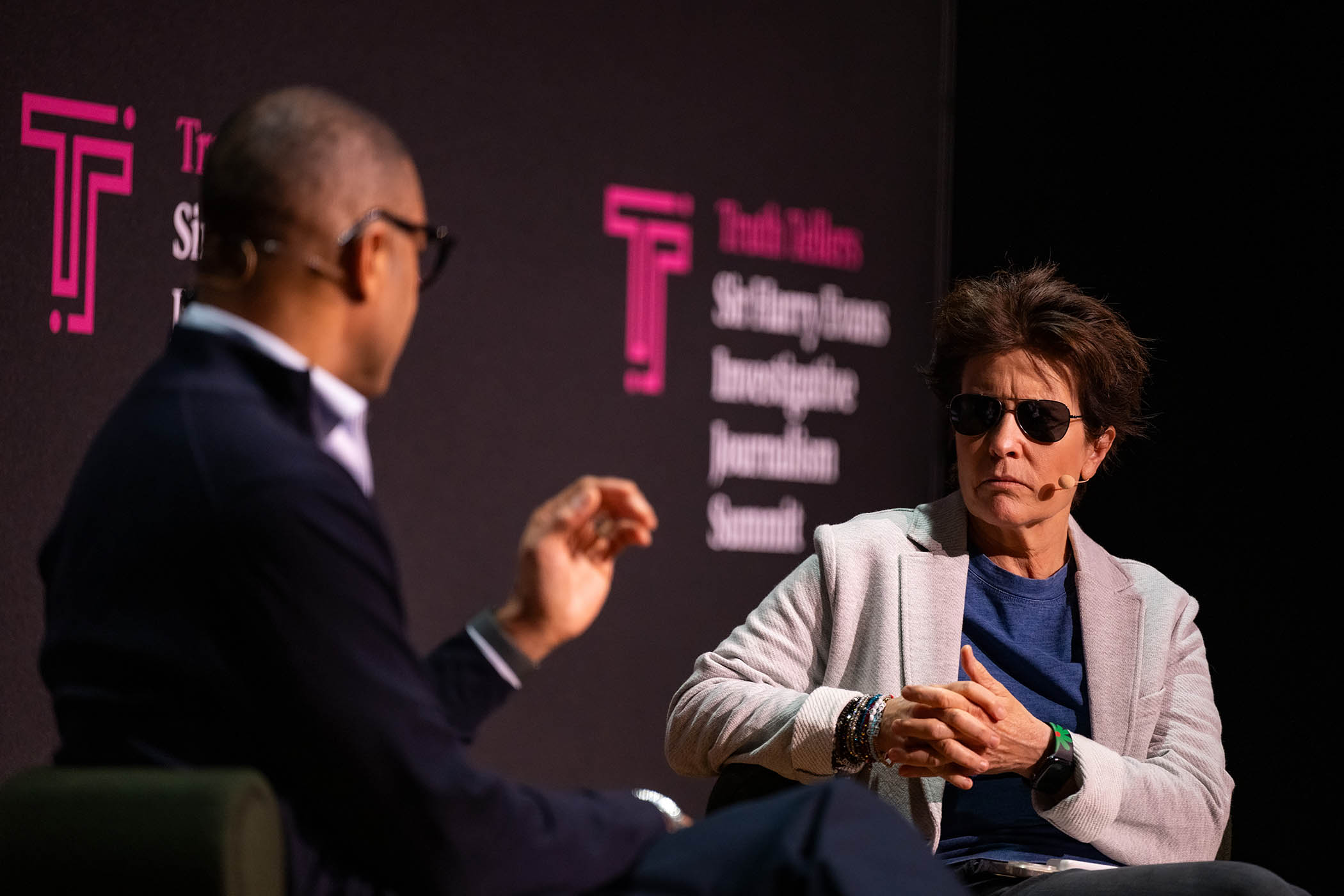
Kara Swisher interviewing Don Lemon, an American journalist charged with federal civil rights crimes after covering an anti-ICE church protest
Kara Swisher, the American journalist and podcaster, told The Observer she was invested in what might emerge from this chaos. “I don’t mind it collapsing as much as other people,” she said, “because I think that the rise of independent media is really interesting.” She agreed with the panel members that AI might be able to produce “AI slop, but it is basically just regurgitating vomit”. The key tenets of journalism will remain human, she said, adding: “Reporting is at the heart of everything we do, and it cannot be replicated by AI. It’s not conscious, it’s not a person and never will be.”
Newsletters
Choose the newsletters you want to receive
View more
For information about how The Observer protects your data, read our Privacy Policy
Swisher – a lapsed Catholic – was especially pleased by the pope’s letter. “He’s very interested in AI,” she said. “I even thought about going back to church for him.”
But for Leopoldo López, the Venezuelan opposition leader who in 2014 was tortured by Nicolás Maduro’s regime and exiled from his home, it struck an even deeper chord. “When I was in solitary confinement, I learned to pray for gratitude every day,” he said, “because it’s more impactful than hope.”
When he lets himself hope, López said he dreams of a free Venezuela with a robust press. “When you live in a place like Venezuela or any autocratic country, you can see why free speech is so critical,” he said. “It’s talked about in democratic countries, but when you don’t have it, you know how suffocating it is to be surrounded by lies, by fake news, by attacks by the regime.”
Fearless journalism, López added, “marks the beginning of true freedom and opportunity”.
Photographs by Getty Images, Chris J Ratcliffe/Reuters